
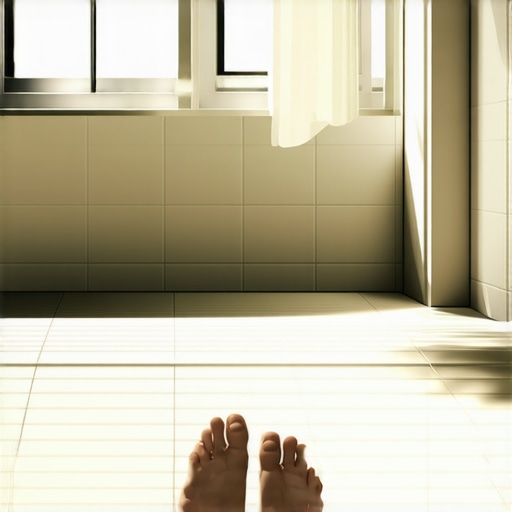
Why Your Bathroom Floor is Always Cold Even in Summer
Most guys skip the leveling compound. They think the underlayment will hide the dip. It won’t. I spent three days grinding concrete on a job last month just so the floor wouldn’t click like a castanet. The dust was everywhere, but it was the only way to get the slab flat enough for the large format tile the client wanted. While I was down there, I realized the subfloor was sitting right over a vented crawlspace with zero insulation. The client wondered why her feet froze in July. It was the physics of the slab, plain and simple. If you do not respect the subfloor, the subfloor will not respect your comfort. I have spent twenty five years on my knees with a moisture meter and a level. I know when a floor is lying to me. A bathroom floor that stays ice cold while the sun is beating down outside is not a mystery, it is a structural failure of thermal planning.
The thermal mass trap
A cold bathroom floor in summer is usually the result of high thermal conductivity and thermal mass in tile materials. Tile and stone are dense, meaning they move heat away from your feet faster than materials like wood or carpet. This process, known as thermal effusivity, makes the surface feel much colder than the actual air temperature in the room. When you step on a piece of ceramic, the material acts as a heat thief. It is not that the tile is naturally cold, it is that the tile is incredibly efficient at stealing the warmth from your skin. This is why a bath mat feels warm while the tile next to it feels like an ice cube, even though they are in the same room. The density of the porcelain body allows for rapid energy transfer. We measure this through the specific heat capacity and the rate of conduction. In a bathroom, where the tile is often bonded directly to a cementious backer board or a concrete slab, you are effectively standing on a massive battery that stores cold energy from the ground or the crawlspace below.
“A floor is only as good as the subfloor beneath it; deflection is the enemy of every joint.” – Master Flooring Axiom
Why your subfloor acts like a heat sink
The subfloor serves as the primary thermal regulator for your finished flooring surface and dictates the surface temperature. If your bathroom is on the ground floor and built on a concrete slab, that slab is in direct contact with the earth. The earth stays a consistent temperature around fifty five degrees Fahrenheit once you get a few feet down. Concrete is a porous, heavy material that absorbs this subterranean temperature. Without a thermal break, such as a layer of cork or specialized uncoupling membrane, the cold from the concrete migrates upward through the thin-set and into your tile. This is why your floor feels like a walk-in freezer. I have seen installers slap tile directly onto a cold slab in the middle of a desert summer and the homeowners still need wool socks. It is a fundamental misunderstanding of thermodynamics. The heat of the air cannot compete with the massive cold energy stored in a four inch thick concrete slab. You need to understand that concrete is a thermal bridge. It connects the cool earth to your living space. If you are building showers with a style trendy ideas for small bathrooms, you must account for this bridge before the first piece of tile is set.
The hidden role of baseboards in air leaks
Poorly installed baseboards allow cold air to infiltrate the perimeter of the floor, cooling the edges of the tile. Many people ignore the gap between the bottom of the drywall and the subfloor. If this gap is not properly sealed, air from the wall cavities or the basement can seep into the room right at floor level. Because cold air is denser, it sits on the floor and chills the tile surface. When I install chic baseboard designs that transform rooms in 2025, I always ensure there is a tight seal or a bead of caulk where the baseboard meets the floor. This prevents the stack effect from pulling cold air across your toes. A drafty bathroom will always have a cold floor because the air movement accelerates the evaporative cooling on the tile surface. If your baseboards are just decorative and not functional seals, you are losing the battle against the cold. You can see baseboards makeover ideas to elevate your space but remember that their primary job is to close the envelope of the room. A drafty perimeter is the most common reason for a cold floor in an otherwise warm house.
The microscopic truth about grout density
Grout is a porous material that can absorb moisture and contribute to evaporative cooling on the floor surface. If your grout is old or unsealed, it acts like a sponge. When water from the shower or high humidity in the bathroom enters those pores, it eventually evaporates. Evaporation is a cooling process. This is the same reason you feel cold when you get out of a pool. The water taking leave of the grout pulls heat from the surrounding tile. I tell my clients that grout restoration secrets for long lasting results are about more than just looks. It is about moisture control. If you want to stop this, you should learn how to refresh grout without replacing it to keep the seal tight. High-density epoxy grouts are much better at resisting this thermal loss than standard portland cement grouts. The molecular structure of epoxy is closed, meaning it does not allow for the capillary action that leads to damp, cold grout lines. If your grout lines feel colder than the tile itself, you have a moisture and density issue that needs immediate attention.
Thermal properties of common flooring materials
To understand why your tile is cold, you have to look at the numbers. The following table compares the thermal conductivity and specific heat of various materials. High conductivity means the floor will feel colder because it moves heat away from your body faster. Specific heat tells you how much energy is required to change the temperature of the material.
| Material Type | Thermal Conductivity (W/mK) | Specific Heat (J/kgK) | Standard Thickness |
|---|---|---|---|
| Porcelain Tile | 1.50 | 800 | 3/8 inch |
| Ceramic Tile | 1.30 | 840 | 5/16 inch |
| Concrete Slab | 1.70 | 880 | 4 inches |
| Hardwood (Oak) | 0.17 | 2000 | 3/4 inch |
| LVP (Vinyl) | 0.20 | 1500 | 5 mm |
As you can see, tile has nearly ten times the conductivity of wood. This is why it is the perfect material for radiant heating systems but a terrible material for retaining heat on its own. If you do not have a heat source under that porcelain, it will always gravitate toward the temperature of the subfloor rather than the air in the room.
“The movement of moisture through a slab is a constant pressure that dictates the temperature and stability of the finish material.” – NWFA Technical Guidelines
The 1/8 inch gap that ruins everything
Air gaps between the tile and the subfloor create pockets of uninsulated air that stay cold and prevent the floor from warming up. When an installer uses the wrong trowel size, they fail to get eighty percent coverage on the back of the tile. This leaves voids in the thin-set. These voids act as mini refrigerators. They trap air and moisture. In a bathroom, where humidity is always high, these pockets can become damp. This damp air never warms up. It sits under the tile and keeps the surface temperature low. I have pulled up floors where the thin-set was so poorly applied that you could see the shadows of the trowel ridges through the tile. This is lazy work. A proper installation requires a collapsed ridge, ensuring the tile is fully bonded to the substrate. This eliminates the air pockets and creates a solid thermal mass that can eventually reach room temperature. Without that solid bond, you are walking on a series of cold air chambers.
Your bathroom floor warmth checklist
- Check the crawlspace insulation directly beneath the bathroom floor joists.
- Seal the gap between the baseboard and the tile with a high quality silicone or caulk.
- Ensure the HVAC register in the bathroom is not blowing directly across the floor surface.
- Verify that the grout is sealed with a penetrating sealer to prevent moisture absorption.
- Install a thermal break underlayment if you are planning a renovation.
- Check for leaks around the toilet or shower that could be saturating the subfloor.
Radiant heat is not a luxury
In modern bathroom construction, electric radiant heat is the only way to completely solve the cold tile problem. Because of the physics we discussed, tile will always try to be cold. Adding a heating cable or mat beneath the tile changes the equation. It turns the floor from a heat thief into a heat provider. I always recommend people look into eco friendly tile solutions for sustainable homes in 2025 that incorporate high efficiency heating elements. These systems use very little electricity once they reach a steady state because the thermal mass of the tile holds the heat for a long time. It is about working with the physics of the material instead of against it. If you are tired of the ice-cold shock every morning, a retrofit of a heating system is the only permanent fix. Everything else is just a band-aid. You can put down rugs and you can turn up the thermostat, but the slab will always win unless you put a heat source between it and your feet.
Comments
One response to “Why Your Bathroom Floor is Always Cold Even in Summer”
This article really sheds light on the physics behind why bathroom floors remain cold even during summer. I’ve experienced this myself in my old house where the concrete slab was directly exposed to the ground and poorly insulated. The idea of the slab acting as a massive battery or thermal bridge makes so much sense now. I also appreciate the mention of sealing gaps around baseboards and ensuring proper thin-set application — often overlooked but crucial details. In my upcoming remodel, I plan to incorporate a thermal break underlayment and consider installing electric radiant heating. It’s surprising how many underestimate the impact of proper insulation and moisture management on comfort. Has anyone here used epoxy grout for moisture resistance and thermal benefits? Would love to hear how it worked in real-world applications, especially in humid climates.