
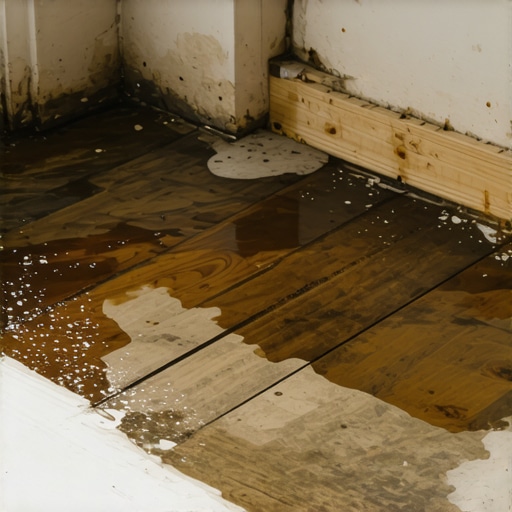
That sinking feeling under your heel when you step out of the shower is not a minor cosmetic annoyance. It is a structural alarm bell ringing from the depths of your home. You feel the floor give way, perhaps only a fraction of an inch, but your brain registers the movement immediately. This sensation usually indicates that the integrity of your subfloor has been compromised by chronic moisture exposure. I have spent twenty-five years on my knees with a moisture meter and a level, and I can tell you that a spongy floor is the final stage of a long, invisible war between water and wood. Most guys skip the leveling compound or ignore a slight dip. They think the underlayment will hide the mistake. It won’t. I spent three days grinding concrete on a job last month just so the floor wouldn’t click like a castanet, and that was just for a dry living room. In a bathroom, the stakes are exponentially higher because water is always looking for a way down. When you step near your shower and feel that softness, you are feeling the results of lignin degradation and the structural failure of the cellulose fibers that hold your house together. This is not about the tile. It is about the foundation beneath it.
The physics of the spongy subfloor sensation
Bathroom subfloors feel spongy near the shower because water has penetrated the surface layer and saturated the wood fibers, causing them to lose their structural rigidity. This typically happens through failed grout, cracked tiles, or poor waterproofing at the shower pan transition. When plywood or OSB remains wet for extended periods, the adhesives holding the wood layers together begin to dissolve, leading to delamination and a complete loss of load-bearing capacity. I once walked into a house where a homeowner thought they just needed some new caulk. I pulled up one tile and my finger went straight through the plywood. The subfloor had the consistency of wet oatmeal. This happens because of a process called capillary action. Water molecules are sticky. They pull each other through the tiniest cracks in your grout until they reach the porous wood below. Once the wood reaches a moisture content above 20 percent, wood-decay fungi begin to feast on the wood’s cellular structure. This is not a fast process. It is a slow, silent rot that eats the strength of the floor until the weight of a human body is enough to compress the hollowed-out fibers.
“A floor is only as good as the subfloor beneath it; deflection is the enemy of every joint.” – Master Flooring Axiom
The hidden rot behind the tile
Tile is a waterproof surface but a tile installation is rarely a waterproof system unless specific membranes were used during the construction phase. Most older homes rely on a simple layer of cement board over plywood, which is a recipe for disaster near high-moisture areas like showers. Cement board is moisture-stable, meaning it won’t rot, but it is not waterproof. It is a sponge that holds water against your plywood subfloor. Imagine a wet rag sitting on a wooden table for five years. That is exactly what is happening under your bathroom floor. The water migrates through the porous grout lines and is wicked up by the cement backer board. From there, it has nowhere to go but down into the subfloor. This is why you might see your baseboards starting to swell or discolor. If you are noticing changes in your trim, check out baseboards makeover ideas to understand how water damage often manifests at the perimeter first. The wood begins to swell as it absorbs the water, then it begins to break down. The chemical bonds of the urea-formaldehyde or MDI resins used in OSB are literally ripped apart by the expanding water molecules. This is why I always tell people that a ‘waterproof’ floor is a marketing myth. If the installation doesn’t account for the physics of water migration, the floor will fail.
Why grout is not a waterproof barrier
Grout is a cementitious product that is naturally porous and will absorb water unless it is perfectly sealed and maintained with professional products. Many homeowners assume that as long as the grout looks intact, the floor is safe, but this is a dangerous misconception. Grout acts like a filter. It allows liquid water to pass through while trapping dirt on the surface. Over time, the movement of the house causes micro-cracks in the grout that are invisible to the naked eye. These cracks are large enough for water to enter through the force of gravity and surface tension. If you want to know how to refresh grout without replacing it, you must first ensure that the structure beneath is dry. If the floor is already spongy, refreshing the grout is like putting a band-aid on a broken leg. The moisture vapor transmission rate (MVTR) in a bathroom is extremely high. When you take a hot shower, you are creating a pressurized environment that forces moisture into every available gap. If your shower pan wasn’t flashed correctly against the subfloor, that steam turns into liquid water that pools in the lowest point of the floor, usually right in front of the shower door. This is why the spongy feeling is localized to that specific area.
| Subfloor Material | Moisture Resistance | Typical Failure Mode | Recovery Potential |
|---|---|---|---|
| Solid Plywood | Moderate | Delamination of veneers | Low once rot starts |
| OSB (Standard) | Low | Edge swelling and binder failure | Zero |
| Enhanced OSB | High | Slow moisture absorption | Moderate |
| Cement Board | N/A (Inorganic) | Transfers moisture to wood | High |
The baseboard betrayal and perimeter leaks
Baseboards often act as the primary witness to a subfloor failure by showing signs of swelling, mold, or paint peeling at the floor line. When the subfloor near a shower becomes saturated, the water travels horizontally through the wood fibers. It eventually reaches the edges of the room where the baseboards meet the floor. Because many modern baseboards are made of MDF, they act like a wick. They pull the water up from the rotting subfloor and display it as warped wood or bubbling paint. If you see black spots on your baseboards, that is not just dirt. That is mold growing on the sugars and starches in the wood. In a humid climate like Florida or the Gulf Coast, this process is accelerated by the high ambient moisture in the air. The wood never gets a chance to dry out. It stays in a constant state of saturation, which is the perfect environment for structural decay. You must also consider the gap between the tub or shower and the floor. If that caulk line is cracked, every time you step out of the shower with wet feet, you are injecting a few milliliters of water directly into the subfloor. Do that three hundred times a year, and you have a recipe for a structural collapse.
The structural engineering of a bathroom floor
A bathroom floor must meet the L/360 deflection standard to support the weight of tile and water without cracking or failing over time. This means that under a full load, the floor should not bend more than the length of the span divided by 360. When the subfloor becomes spongy, your deflection rating drops to nearly zero. The floor is no longer a rigid plane; it is a flexible membrane. This flexibility is what causes the tiles to pop and the grout to crumble. It is a vicious cycle. The more the floor moves, the more the grout cracks. The more the grout cracks, the more water gets in. The more water gets in, the more the subfloor rots and moves. To fix this, you cannot just screw down a new piece of wood over the old one. You have to cut out the cancer. You have to remove the wet wood entirely until you find a dry joist. I’ve seen ‘handymen’ try to bridge a soft spot with a piece of sheet metal or an extra layer of thin-set. That is professional negligence. You are trapping moisture in the joist, which will eventually lead to the entire floor system failing. You need to understand the chemistry of the wood. Once the cellulose is gone, the strength is gone. There is no ‘wood hardener’ that can restore the structural integrity of a rotted 2×10 joist.
“Tile itself is waterproof, but a tile installation is not necessarily a waterproof system.” – TCNA Handbook Logic
The precise steps to diagnose a spongy floor
- Check the moisture level with a pin-type meter specifically in the grout lines and at the baseboard junction.
- Inspect the shower door seal and the transition strip for signs of standing water or mineral deposits.
- Remove the baseboards near the spongy area to see if the drywall or the bottom plate of the wall is wet.
- Apply localized pressure to individual tiles to see if water or ‘slurry’ squeezes out of the grout lines.
- Examine the crawlspace or the ceiling below the bathroom for water stains or hanging droplets.
If you find that the moisture content is above 16 percent, you have a problem. If it is above 20 percent, you have rot. The bottom line is that a spongy floor is a symptom of a deeper infection. You are dealing with the chemical breakdown of the subfloor’s adhesive resins. In a standard sheet of plywood, those resins are designed to withstand occasional moisture, but not the hydrostatic pressure of a leaking shower. When you fix this, you need to look into eco-friendly tile solutions that utilize modern waterproofing membranes like Kerdi or Wedi. These systems create a truly waterproof envelope that protects the subfloor from the inevitable water that will escape the shower. Don’t let a contractor tell you that ‘it’s just a little soft spot.’ There is no such thing as a little soft spot in a bathroom. There is only rot that hasn’t finished its job yet. If you need professional advice on how to handle a total floor failure, you can always contact us for a consultation. We have seen the worst-case scenarios and we know how to rebuild a floor so it lasts for another fifty years. The science of flooring is the science of moisture management. Ignore it, and your house will pay the price.