
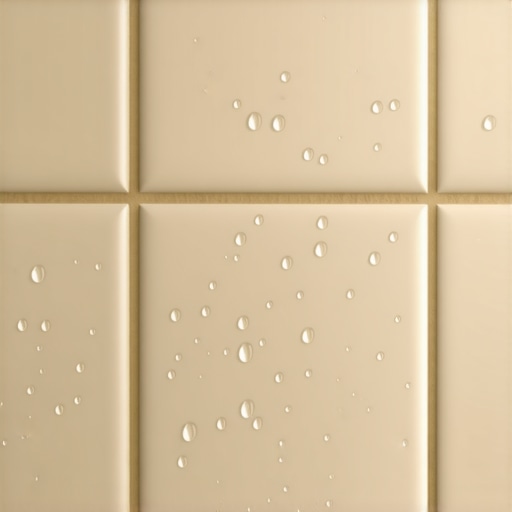
The physics of the bathroom dew point
Bathroom tile condensation occurs when the ambient air temperature and relative humidity levels reach a point where the air can no longer hold water vapor. When this saturated air touches a cold tile surface, the vapor transforms into liquid water. This physical phenomenon is driven by the temperature differential between the room air and the tile surface.
I have spent twenty-five years with a moisture meter in my pocket and grit under my fingernails. I have seen the same mistake a thousand times. People call me because their bathroom looks like it just ran a marathon, with water dripping off the walls and pooling on the floor. Most folks think it is just a steam problem from the shower. They are only half right. The real issue is usually hiding under the surface, in the subfloor or the wall assembly. I spent three days grinding concrete on a job last month just so the floor would not click like a castanet, and while I was there, I found a slab that was reading twenty percent moisture. That tile was not sweating; it was drowning from the bottom up. Most guys skip the leveling compound and ignore the slab moisture. They think the underlayment will hide the dip or the dampness. It won’t. If your subfloor is cold because it is sitting on an uninsulated crawlspace or a damp slab, that tile is going to stay cold. When you turn on the hot water, that cold surface acts like a magnet for every bit of steam in the air. You end up with a mess that ruins your grout and rots your baseboards.
The subfloor is the real culprit
A cold subfloor acts as a heat sink that keeps bathroom tiles significantly below the room dew point during humid conditions. This thermal bridging usually happens when concrete slabs lack proper vapor barriers or when joist cavities are not insulated. Stopping the sweat requires breaking the thermal bridge between the ground and the tile.
When you walk onto a bathroom floor and it feels like stepping onto an ice cube, you have a thermal mass problem. Concrete is a dense material that holds temperature for a long time. If that concrete is in contact with the earth, it stays at the ground temperature, which is often around fifty-five degrees. When you fill a bathroom with hundred-degree steam, physics takes over. The water molecules in the air lose energy the moment they touch that fifty-five-degree tile. They slow down, clump together, and turn into droplets. It is the same thing that happens to a cold beer on a summer day. To fix this, you have to look at the assembly. You cannot just wipe the water away and hope for the best. You need to consider the R-value of your floor. Installing a thermal break, like a high-density foam underlayment or a dedicated uncoupling membrane, can raise the surface temperature of the tile just enough to stay above the dew point. I always tell homeowners that if they are going to rip up tile, they should put down electric radiant heat. It is not just about warm toes. It is about keeping the surface temperature high enough that condensation cannot form. It turns the floor into a dry, stable surface instead of a swamp.
“A floor is only as good as the subfloor beneath it; deflection is the enemy of every joint.” – Master Flooring Axiom
The invisible water factory in your bathroom
High humidity levels in bathrooms are caused by inadequate ventilation and the lack of proper CFM ratings in exhaust fans. When air cannot circulate, moisture builds up in the grout lines and on the tile face, leading to mold and structural decay. Proper airflow requires a fan that can move at least one cubic foot of air per minute per square foot of room space.
Most people have a bathroom fan that sounds like a jet engine but moves about as much air as a straw. If you leave a shower and the mirror is fogged for more than five minutes, your ventilation is failing. You need to look at the CFM, or cubic feet per minute. A standard five-by-eight bathroom needs a fifty CFM fan at minimum, but I always recommend bumping that to eighty or a hundred. You also need a gap under the bathroom door. Air cannot be pulled out of a room if new air cannot get in. I have seen high-end showers that wow homeowners but fail within two years because the steam just sat in the room and ate the paint off the ceiling. The moisture works its way into the tile cleaning tips you see online, but no amount of scrubbing will save grout that is constantly saturated. You are fighting a losing battle against biology if you do not move the air. Use a timer switch for your fan. It should run for twenty minutes after you leave the room. That is the only way to ensure the moisture is actually gone and not just hidden in the nooks and crannies of your hardware.
Grout is a vertical river
Cementitious grout is a porous material that absorbs water through capillary action, which can lead to deep-seated moisture issues behind the tile. When tile sweats, the water does not just sit on the surface; it migrates into the grout and travels toward the substrate. Sealing grout or using epoxy alternatives is the only way to prevent this moisture migration.
I have spent a lot of time talking about grout restoration secrets with guys who have been in the trade for forty years. We all agree on one thing. Sanded grout is basically a hard sponge. If your tile is sweating, that water is being sucked into the joints. From there, it goes straight to your backer board. If the installer did not use a proper vapor barrier behind that board, you are going to get mold in your wall studs. It is a slow-motion car crash. You can tell if this is happening because the grout will start to look dark or patchy even when it is supposedly dry. That is called shadowing. It means there is water trapped behind the tile. If you find yourself in this spot, you need to look into how to refresh grout without replacing it, but only after you have addressed the humidity. If you do not stop the sweat, the new grout will just fail the same way. Epoxy grout is an option for some, as it is non-porous and waterproof, but it is a nightmare to install if you do not know what you are doing. It sets up fast and can ruin a tile job if you leave a haze.
The molecular reality of tile materials
Not all tiles are created equal when it comes to condensation. Different materials have different thermal conductivity ratings and porosities. If you choose a natural stone like marble, you are inviting more condensation than if you chose a dense, glazed porcelain. Porcelain is fired at higher temperatures and is much denser, meaning it has a lower water absorption rate. This density also affects how it holds heat. A dense porcelain tile will stay cold longer than a lighter ceramic tile. When I am looking at a job, I check the specs of the material. You want something with a water absorption rate of less than point five percent. This is why porcelain is the king of the bathroom. It does not give the moisture a place to hide. If you are dealing with a sweating floor, the material choice is your first line of defense. Below is a comparison of how different materials handle the thermal and moisture loads in a typical bathroom environment.
| Material Type | Thermal Conductivity | Porosity Level | Sweat Risk |
|---|---|---|---|
| Glazed Porcelain | High | Very Low | Moderate |
| Ceramic Tile | Medium | Moderate | Low |
| Natural Marble | Very High | High | High |
| Slate Stone | High | High | Very High |
| Vinyl Plank (LVP) | Low | Impervious | Very Low |
As you can see, natural stone is the most difficult to manage. It is a thermal bridge that also absorbs the water it creates. If you must have marble, you better have a top-tier HVAC system and a heated floor. Otherwise, you are just building a prehistoric cave that will stay damp and cold forever. I have pulled up enough rotten subfloors to know that the aesthetic choice usually loses to the structural reality every single time.
The 1/8 inch gap that saves your drywall
Baseboards and perimeter joints must include a small expansion gap to allow for air movement and material fluctuation. When tiles sweat, the water pools at the edges of the room. If the baseboard is tight against the tile without a silicone seal, it will wick that water up into the wall.
I have seen beautiful baseboards makeover ideas ruined in a single season because the installer did not understand water migration. Water follows gravity. It runs down the sweating tile and hits the floor. It then travels to the perimeter. If your chic baseboard designs are sitting directly on the tile, they are going to act like a wick. Most baseboards are made of MDF or pine. Both are basically compressed sawdust. They will soak up that condensation and swell. Then the paint peels. Then the mold starts. You need to leave a tiny gap and fill it with a high-quality 100% silicone caulk. Do not use acrylic caulk in a bathroom. It will crack and fail within a year. Silicone stays flexible and creates a waterproof dam that keeps the sweating tile from ruining your trim. It is a small detail that most guys skip because they are in a hurry. I never skip it. I spent too many years replacing baseboards that had turned into mush because of a missing bead of silicone.
“Standard ceramic tile is practically impervious, but the joints are the gateway for moisture migration.” – TCNA Handbook Guidance
The anti-sweat protocol for bathrooms
If you want to stop the water from running down your walls, you have to be methodical. You cannot just buy a bigger fan and call it a day. You have to address the temperature of the surfaces and the volume of the moisture. This is my personal checklist for every bathroom I troubleshoot. It covers the structural and the mechanical aspects of the room.
- Install an exhaust fan rated for at least 1.5 times the square footage of the room.
- Check the ducting for the fan to ensure it is not kinked and vents directly to the exterior, not the attic.
- Maintain a 1/2 inch to 3/4 inch gap at the bottom of the bathroom door for make-up air.
- Apply a high-quality penetrating sealer to all grout lines every six months.
- Keep the bathroom temperature consistent to prevent the tiles from dropping below the dew point.
- Use a dehumidifier during the humid months if you live in a coastal or swampy climate.
- Switch to a 100% silicone caulk at all change-of-plane joints, like where the floor meets the wall.
These steps are not suggestions. They are the requirements for a functional wet area. If you ignore the physics of the room, the room will eventually fail. I have seen it in multi-million dollar mansions and in small apartments. The water does not care how much you paid for the tile. It only cares about the temperature and the air. If you are planning a remodel, look at showers with a style that incorporates modern waterproofing systems. Systems like Schluter or Wedi provide a complete vapor management layer that protects your home from the inevitable condensation that happens in a bathroom. These systems are expensive, but they are cheaper than mold remediation. If you are worried about the environment, there are eco-friendly tile solutions that still offer great performance, but the installation rules remain the same. Physics is a constant. If the surface is cold and the air is wet, you will have water. If you want to know more about how to protect your home, you can always contact us for a deep dive into your specific subfloor needs. We have seen it all, and we have fixed it all. Do not let a sweating tile ruin your biggest investment.