
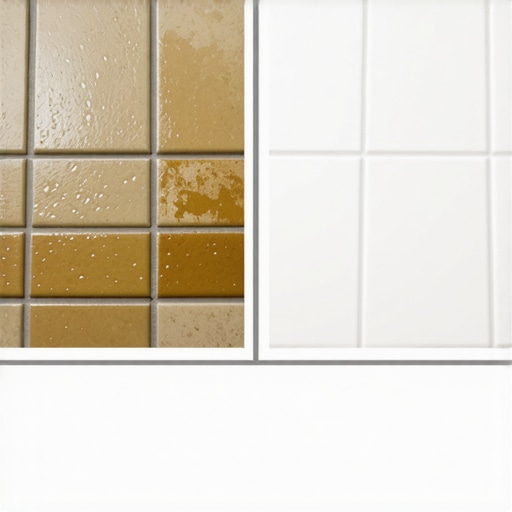
The subfloor secret that ruins a perfect finish
Grout color changes after drying because the hydration process of Portland cement interacts with the porosity of your tile and the moisture levels in your subfloor. Most installers ignore the subfloor and think the underlayment will hide the dip. It won’t. I spent three days grinding concrete on a job last month just so the floor wouldn’t click like a castanet. That same job taught the homeowner a hard lesson about grout pigment. When you are on your knees for twenty five years with a moisture meter, you see how a slab that is too wet will pull the minerals out of the grout and turn a dark espresso color into a chalky mess. This happens because of a chemical migration where the water in the mortar bed travels upward through the grout joint and carries salts to the surface. It is a structural failure of chemistry disguised as a cosmetic issue.
The lie on the plastic sample stick
Grout samples provided by manufacturers are made of plastic or cured under laboratory conditions which fail to account for the site-specific absorption rates of your ceramic or stone tile. The plastic stick is a uniform color because it is non-porous. In the real world, the edge of a tile acts like a sponge. If you are working with a high-porosity natural stone, that stone will suck the water out of the grout mixture before the cement has a chance to fully hydrate. This leaves the pigment stranded on the surface without enough binder to hold its true shade. I have seen guys try to match a light beige grout to a travertine tile only to have it turn white because the stone was not pre-sealed. This is why site-mockups are the only way to verify color. You cannot trust a piece of plastic when you are dealing with the physics of mineral saturation. Using grout restoration secrets for long-lasting results can sometimes mitigate these initial surprises after the floor has cured.
“A floor is only as good as the subfloor beneath it; deflection is the enemy of every joint.” – Master Flooring Axiom
The chemistry of hydration and evaporation
The chemical transformation of grout involves the formation of calcium silicate hydrate crystals that lock pigments into place through a process called hydration. If the water evaporates too quickly or is absorbed by the subfloor, the crystals do not grow to their full size. This lack of structural integrity at the molecular level changes how light reflects off the surface. When light hits a well-hydrated grout line, it penetrates deep into the pigment. When it hits a flash-dried grout line, it scatters off the loose salt crystals and looks significantly lighter. This is often mistaken for fading, but it is actually a failure of the curing process. In regions like the humid Southeast, the grout might stay wet for days and darken. In the dry air of the desert Southwest, the grout might dry so fast it turns into a brittle powder that looks nothing like the bag sample. You have to control the environment if you want the color to stay true.
Why the bucket water ruins the finish
Using too much water during the cleanup phase is the most common reason for grout color inconsistencies across a single room. Every time you dip your sponge into the bucket, you are introducing more liquid to the grout joint. If you do not wring that sponge until it is nearly dry, you are essentially diluting the pigment. I have seen installers get lazy and leave puddles in the joints. Those spots will always be lighter than the rest of the floor. The excess water washes the fine pigment particles off the surface and leaves the sand grains exposed. This creates a gritty, washed-out look that no sealer can fix. It is a matter of discipline. You must use a dual-bucket system. One bucket for the initial wipe and a second bucket of clean water for the final pass. If you are not changing your water every fifty square feet, you are just moving dirty pigment around the room. Proper maintenance later on involves tile cleaning tips for a sparkling bathroom in 2025 to keep that color from being buried under grime.
The specific physics of shower floor saturation
Shower floors experience extreme grout color shifts due to the constant presence of standing water and the high mineral content of municipal tap water. When you build showers that wow modern designs for 2025, you have to account for the capillary action of the grout. Grout is porous by nature. In a shower, the water doesn’t just sit on top. It migrates into the grout and stays there. This makes the grout look darker for hours or even days after a shower is used. If the pre-slope under the liner was done incorrectly, water will sit in the mortar bed and keep the grout saturated from underneath. This leads to permanent dark spots that look like mold but are actually just wet cement. You have to ensure the weep holes in the drain are clear so the system can breathe. Without proper drainage at the sub-base level, your grout color will never be consistent. For smaller spaces, showers with a style trendy ideas for small bathrooms require even more precision because the moisture has fewer places to go.
| Grout Type | Porosity Level | Color Stability Rating | Best Application |
|---|---|---|---|
| Sanded Grout | High | Moderate | Large joints over 1/8 inch |
| Unsanded Grout | High | Low | Wall tile and narrow joints |
| Epoxy Grout | Near Zero | Maximum | Showers and high-traffic areas |
| High-Performance Cement | Medium | High | Commercial flooring |
The optical illusion of the baseboard transition
The intersection of the floor and the wall creates a shadow line that makes grout appear darker at the perimeter than it does in the center of the room. This is a simple trick of physics and light. When you install chic baseboard designs that transform rooms in 2025, you are changing the way light hits the floor. The vertical surface of the baseboard blocks light and casts a shadow over the perimeter grout joints. I have had homeowners complain that the grout is darker near the walls. I usually have to bring in a work light to show them it is the same color. However, if you used a different batch of grout for the edges, or if you used caulk instead of grout at the transition, the color will never match perfectly. Caulk is a synthetic polymer and grout is a mineral product. They reflect light differently. For a better visual flow, consider baseboards makeover ideas to elevate your space that use deeper profiles to hide these transitions.
“Consistency in grout is found in the bucket, but preserved in the environment.” – Tile Council of North America Manual
Methods to salvage the mismatched pigment
If your grout has already dried and the color is patchy, the most effective fix is a professional-grade grout colorant or epoxy-based stain. You cannot just smear more grout over the old stuff. It will not stick. You need a product that penetrates the pores of the cement and binds with the minerals. First, you must clean the joints thoroughly. If you want to know how to refresh grout without replacing it, you start with an acid-based cleaner to open the pores. Then you apply a colorant with a small brush. This is tedious work. It takes a steady hand and a lot of patience. This colorant acts as a sealer and a dye at the same time. It is often more durable than the original grout pigment because it is an epoxy hybrid. This is the only way to get a perfectly uniform color across a floor that was ruined by poor installation or excessive water during cleanup. For those looking for a greener path, eco-friendly tile solutions for sustainable homes in 2025 often include low-VOC colorants that are safer for indoor air quality.
Checklist for perfect grout color every time
- Always dry-mix the entire bag of grout before adding water to ensure pigment distribution.
- Use distilled water if your local tap water has high mineral or sulfur content.
- Measure your water precisely with a graduated cylinder instead of eyeballing it.
- Allow the grout to slake for ten minutes to let the chemicals fully activate.
- Wring your cleanup sponge until no water drips when squeezed.
- Avoid using fans or heaters to speed up the drying process as this causes flash-curing.
- Seal the grout only after it has fully cured for at least forty eight hours.
A contrarian fact that most homeowners hate to hear is that the thickest underlayment is not the best. Too much cushion causes the locking mechanisms on LVP to snap under pressure, and in tile, too much flex in the subfloor will crack your grout lines regardless of what color they are. If your grout is cracking, the color is the least of your problems. You have a structural deflection issue. Fix the floor first, then worry about the pigment. If you have questions about your specific project, you can always contact us for expert advice. Please review our privacy policy for information on how we handle your data.