
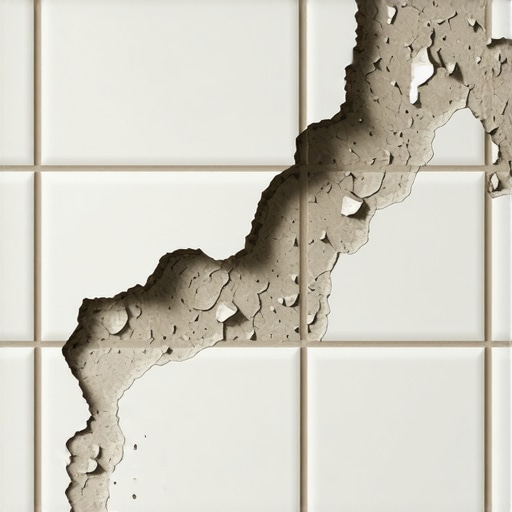
I have spent twenty five years on my knees with a moisture meter and a level. I have smelled enough oak dust and WD-40 to last three lifetimes. Most guys skip the proper backer board prep. They think the tile will hide the flex. It won’t. I spent three days ripping out soggy drywall on a job last month just so the grout wouldn’t crumble like a dry cookie. This is not about aesthetics. This is about structural engineering. When you see chunks of grout hitting the shower floor, you are not looking at a cleaning problem. You are looking at a failure of the mechanical bond between the substrate and the finish material. I have seen homeowners cry over a fifteen thousand dollar bathroom renovation that lasted six months because the installer used the wrong thin-set or ignored the deflection of the wall studs. A shower is a high-stress environment where moisture, heat, and structural movement collide. If you do not respect the physics of the assembly, the assembly will fail.
The structural lie behind your shower wall
Substrate deflection is the primary cause of grout failure in residential showers. When the underlying wall or floor flexes beyond one three hundred sixtieth of the span, the rigid cementitious grout cannot accommodate the movement. This structural instability forces the grout to crack and detach from the tile edges. I see this often when installers use standard gypsum board or even moisture-resistant green board behind tile. These materials have zero structural integrity when they get damp. The weight of the tile alone causes the board to bow. As you lean against the wall or as the house settles, that bow turns into a flex. Grout is essentially a thin ribbon of concrete. Concrete does not bend. It breaks. If your wall moves even a fraction of a millimeter, that ribbon of grout snaps. This is why you need a rigid substrate like cement backer units or high-density extruded polystyrene foam panels. These materials are engineered to resist the lateral forces that a shower wall faces daily. Most hacks skip the fiberglass tape on the joints of the backer board too. That is like trying to build a brick wall without mortar. The joints move, the tile shifts, and the grout falls out.
“A floor is only as good as the subfloor beneath it; deflection is the enemy of every joint.” – Master Flooring Axiom
The chemistry of a failed bond
Polymer modified thin set creates a chemical bridge between the tile and the substrate. If the mixing ratio is off or the grout is burned by adding too much water during the wash, the molecular structure collapses. This results in a powdery, brittle substance that cannot withstand thermal expansion. I see guys using a drill on high speed to mix their grout. They are whipping air into the mix like they are making a meringue. That air stays in the grout lines. Once it dries, you have a honeycomb structure instead of a solid mass. It looks fine for a month. Then the first time the water hits it, the surface tension of the water pulls at those air pockets and the whole thing crumbles. You have to mix grout by hand or on very low RPM. You have to let it slake. Slaking is when you let the chemicals sit for ten minutes so the polymers can fully hydrate. If you skip the slake, you are just putting wet sand in your wall. The hydration process of Portland cement involves the formation of calcium silicate hydrate crystals. These crystals grow into the microscopic pores of the tile. If the water evaporates too fast or if there is too much water, those crystals never form a dense web. You end up with a chalky mess that you can scrape out with a fingernail.
Why your shower pan is actually a trampoline
A shower floor that lacks a solid mortar bed will bounce under the weight of a standing adult. This microscopic trampoline effect is a death sentence for grout lines on the floor of the shower. I have walked into brand new builds where the acrylic pan was set on a pile of spray foam. That foam compresses. Every time you step in to wash your hair, the tile moves down. The grout stays put against the tile but shears away from the neighboring tile. Within weeks, you have leaks. Those leaks go under the tile and start rotting the subfloor. I prefer a traditional mud bed. I want four inches of packed sand and cement. That does not move. When you combine a solid base with high-quality tile, you get a surface that lasts a century. If you are dealing with a failing floor, you might want to look into grout restoration secrets for long lasting results to see if it can be saved, but usually, if it is bouncing, you are looking at a tear-out. There is no magic sealant that fixes a moving floor.
The ghost in the expansion gap
Soft joints are required at every change of plane in a shower to manage thermal expansion. Many installers make the mistake of filling the corners where two walls meet with hard grout. This is a violation of TCNA standards. Houses breathe. They expand in the summer and contract in the winter. The corner where two walls meet is a pivot point. If that pivot point is filled with hard grout, the pressure will cause the grout to explode out of the joint. You must use a color-matched 100 percent silicone sealant in these areas. It looks like grout, but it behaves like rubber. This is the 1/8 inch that ruins everything. If you don’t leave that gap, the tile will eventually tent or the grout will fail. This same logic applies to the transition between the tile and the baseboards outside the shower. If the baseboards are tight against the tile without a gap, moisture can wick up into the wood and cause the tile at the edge to pop. I always leave a sixteenth of an inch gap and fill it with a flexible sealant.
Comparison of Grout Materials and Performance
| Material Type | Water Absorption | Flexibility Rating | Best Use Case |
|---|---|---|---|
| Sanded Cement Grout | High | Low | Joints wider than 1/8 inch |
| Unsanded Cement Grout | High | Very Low | Narrow joints and polished stone |
| High Performance FA Grout | Low | Moderate | Heavy traffic and wet areas |
| Epoxy Grout | Zero | High | Industrial and steam showers |
The 1/8 inch that ruins everything
Precision in joint width ensures that the grout has enough mass to maintain its structural integrity. If a joint is too narrow, the grout cannot penetrate deep enough to grab the sides of the tile. It sits on the surface like a thin crust. This is common with large format tiles where people want a seamless look. They try to do a 1/32 inch joint. It is a disaster. There is not enough material there to hold together. On the other hand, if the joint is too wide and you use unsanded grout, the grout will shrink as it dries. This creates hairline cracks that eventually lead to the grout falling out in chunks. You have to match the grit of the sand to the width of the gap. For anything over an eighth of an inch, you need the aggregate of the sand to act as a skeleton for the cement. Without that skeleton, the grout is just a weak paste. I have seen guys try to save money by using leftovers from different jobs. They mix different brands. Never do that. The chemical formulations are different. One might have more latex than the other. They will cure at different rates and pull away from each other. If you want a floor that lasts, you follow the bag instructions exactly. No guessing. No eyeballing the water.
Checklist for a Permanent Grout Bond
- Verify that the substrate has no more than 1/360 deflection.
- Use a waterproof membrane over cement board.
- Mix grout at low speeds to prevent air entrainment.
- Allow grout to slake for at least 10 minutes before application.
- Maintain a minimum 1/8 inch joint for sanded grout.
- Install silicone soft joints at all inside corners and floor-to-wall transitions.
- Use distilled water if your local tap water has high mineral content.
Modern designs for 2025 and why they fail
Many trendy shower designs prioritize aesthetic minimalism over proven mechanical drainage and structural support. We see a lot of people asking for showers that wow modern designs for 2025 but they forget that a zero-entry shower requires a much deeper structural commitment. You are essentially lowering the floor of your house. If the joists are not reinforced, that new floor is going to move. When it moves, the grout in those beautiful large format porcelain tiles is going to crack. I have also seen a rise in the use of pebble floors. Pebble floors are grout nightmares. There is more grout than stone. If that grout is not mixed with a high-polymer additive, it will start to peel up like a sunburn. People think it looks natural, but it is a maintenance trap. If you are going for a modern look, stick to rectified edges and use a high-performance grout that can handle the lack of a traditional bevel. If you are struggling with old grout, you can learn how to refresh grout without replacing it as a temporary fix, but if the substrate is the problem, you are just putting a band-aid on a broken leg.
The humidity trap inside your wall cavity
Improperly sealed grout allows water to permeate the substrate, leading to hydrostatic pressure that ejects grout chunks. In humid regions like the Gulf Coast or the Pacific Northwest, moisture doesn’t just stay on the surface. It gets behind the tile. If you used a plastic vapor barrier behind the backer board, the water gets trapped in a sandwich. It can’t go forward through the tile and it can’t go backward into the wall. It just sits there and rots the back of the grout. This is why I advocate for topical waterproofing membranes. You want the water to stop at the very first layer. If the water never reaches the cement board, the grout stays dry from the back. A dry grout line is a stable grout line. When grout stays wet for weeks at a time, the chemicals begin to leach out. This is called efflorescence. It looks like white powder on your grout. That powder is actually the minerals that hold the grout together. Once they are gone, the grout is just a pile of loose sand. It will fall out in chunks. This is not a mystery. It is simple chemistry. Keep the water out of the wall and the grout stays in the joint. Use a high-quality sealer after the grout has fully cured for thirty days. Not before. If you seal it too early, you trap the moisture in and you cause the very problem you are trying to prevent. It is all about the details. If you cut corners on a shower, the shower will cut you back. For any serious concerns about your installation, it is best to contact us and get a professional eyes on the situation before the mold takes over.