
Unveiling the Complexity of Shower Grout Discoloration and Its Impact on Bathroom Longevity
The transformation of pristine bathroom surfaces into zones of unsightly yellow stains on shower grout is more than mere aesthetics; it signals underlying issues affecting the structural integrity and hygiene standards of your sanctuary. Expert analyses reveal that grout discoloration results from a confluence of chemical reactions, microbial invasion, and material degradation, which together challenge traditional maintenance paradigms. Recognizing these intricate interactions is vital for professionals aiming to preserve the sophistication and functionality of tile environments in the evolving landscape of bathroom remodeling in 2026.
Deciphering the Multifaceted Causes Behind Grout Yellowing and Their Long-Term Consequences
What Are the Overlooked Mechanisms Accelerating Grout Deterioration in High-Humidity Settings?
Understanding the persistent discoloration involves examining factors such as mineral deposits from hard water, organic matter accumulation, mold proliferation, and the chemical composition of cleaning agents. For instance, calcium and magnesium deposits can embed within porous grout, creating an environment conducive to bacterial growth. These microbes produce pigmented biofilms that manifest as yellowish hues, compromising not only visual appeal but also indoor air quality and potential health risks. Studies published in the International Journal of Environmental Health Research emphasize the importance of targeted intervention strategies that go beyond superficial cleaning, advocating for advanced sealing solutions and microbiocidal treatments.
Leveraging Innovative Materials and Techniques for Enduring Grout and Tile Surfaces
The evolution of tile installation and maintenance practices points towards the integration of epoxy-based grouts and hybrid sealants that are inherently resistant to staining, moisture ingress, and microbial infiltration. Experts highlight that adopting these materials during renovation can dramatically mitigate future discoloration issues. Additionally, employing energy-efficient and selective tile cleaning methods—such as steam cleaning combined with antimicrobial coatings—ensures that hygiene and appearance are upheld without compromising the underlying substrate. For example, the grout restoration techniques have advanced significantly, offering long-lasting solutions that preserve the original aesthetic while enhancing durability.
Aligning Renovation Strategies with Future Trends in Moisture-Resistant Constructive Design
As bathroom environments become increasingly sophisticated, the role of baseboards and shower enclosures must adapt to meet the demands of high-moisture zones. The shift towards recessed, waterproof, and non-porous baseboard systems—detailed in 2026 baseboard innovations—amplifies the importance of integrating grout technology that aligns with these enhancements. Such designs not only elevate visual continuity but also serve as passive barriers against water infiltration, extending the lifespan of wall and flooring components.
Corporate and residential stakeholders must focus on adopting a holistic approach, blending material science, innovative fabrication, and strategic maintenance, to counter the relentless progression of grout staining and degradation. Emphasizing high-performance sealants, microbial-resistant coatings, and precision installation techniques ensures the integrity of bathroom aesthetics and hygiene for years to come.
For further insights into professional-grade tile and grout solutions, contact our expert team through the contact page. Share your experiences or inquire about custom recommendations tailored to your environment’s specific challenges.
Revolutionize Your Bathroom Hygiene with Cutting-Edge Maintenance Techniques
Modern bathrooms demand more than routine cleaning; they require a strategic approach that leverages the latest innovations in materials and methods to combat the persistent challenges of moisture, microbial growth, and discoloration. Integrating high-performance sealants and antimicrobial coatings, as highlighted in recent studies by industry experts, can significantly extend the lifespan of grout and tile surfaces, maintaining both their aesthetic appeal and structural integrity. Embracing these advancements allows homeowners and professionals to stay ahead of issues, ensuring bathrooms remain hygienic and visually stunning for years to come.
Are Traditional Cleaning Methods Sufficient in a High-Tech Bathroom Environment?
Many assume that standard scrubbing and sealing are enough to preserve bathroom surfaces, but in high-moisture settings, such practices often fall short. Expert analyses suggest that combining advanced cleaning technologies—such as ultrasonic and steam cleaning—with durable, microbial-resistant sealants addresses both visible stains and unseen microbial threats. These methods, supported by authoritative sources like the Expert Guide to Durable Bathroom Renovations, ensure comprehensive protection that surpasses traditional maintenance. Proactive measures, including scheduled professional treatments and the use of smart sensors to monitor humidity and microbial activity, can preemptively mitigate deterioration.
How Can Surface Design Influence Long-Term Grout and Tile Performance in Humid Zones?
Innovative surface design isn’t just about aesthetics; it plays a crucial role in durability. Recessed, waterproof baseboards with seamless tile integration prevent water accumulation and seepage, reducing the risk of grout deterioration as detailed in 2026 Waterproof Baseboard Trends. Similarly, choosing tile formats with tight joints and implementing angled edges promotes efficient water runoff, minimizing staining opportunities. These design choices, when paired with advanced grout compositions like epoxy or silicone-based sealants, forge a formidable barrier against moisture ingress, vastly improving maintenance longevity and hygienic standards.
Professionals should adopt a holistic perspective that marries aesthetic considerations with functional resilience, ensuring that every component, from grout lines to baseboards, contributes to the overall durability. Emphasizing high-quality installation practices and routine, science-backed upkeep routines can drastically reduce repair costs and preserve bathroom beauty. For detailed guidance on elevating your renovation projects, reach out through our contact page and let our experts align your design ambitions with proven durability strategies.
To explore comprehensive solutions tailored to your project’s needs, consider delving into our resource on ultimate guide to grout, baseboards, and shower maintenance. Elevate your bathroom’s resilience by integrating the latest insights and innovations—your space’s longevity depends on it.
Harnessing Nano-Technology to Reinvent Grout Durability
In the ongoing quest for resilient bathroom surfaces, nano-engineered sealants are transforming industry standards by offering unprecedented resistance to stains, moisture, and microbial growth. These cutting-edge materials operate on a molecular level, creating a protective barrier that is both invisible and exceptionally robust. Research from the Journal of Nanotechnology in Materials Science indicates that nano-coatings can extend grout lifespan by up to 50%, significantly reducing maintenance labor and costs. Implementing such technology requires careful consideration of surface compatibility and professional application techniques to ensure optimal adhesion and performance. As these innovations become more accessible, industry leaders advocate for their integration during initial installations and renovations to future-proof bathroom environments.
Addressing Microbial Resistance: Beyond Standard Disinfection
Effective long-term hygiene in damp zones extends beyond routine scrubbing and chemical disinfectants. The introduction of bio-repellent surfaces infused with antimicrobial agents, such as silver or copper ions, actively inhibit bacterial colonization at the microbial level. According to studies in the International Journal of Antimicrobial Agents, these surfaces maintain antimicrobial efficacy for years without the continuous application of cleaning agents, offering a passive yet relentless defense against biofilm formation. However, questions about microbial resistance development necessitate a nuanced approach—combining surface treatments with controlled environmental conditions, such as optimized humidity levels, and regular professional inspections to prevent the emergence of resistant strains. Would integrating these surfaces diminish the frequency of manual cleaning, or could they inadvertently encourage resistant microbes if improperly maintained? This remains a subject of ongoing research and debate among microbiologists and material scientists. Dive deeper into these advancements by consulting specialists in microbial-resistant coatings, ensuring your renovation incorporates science-backed, sustainable hygiene solutions.
The Quantum Leap: How Nano-Engineering is Reinventing Grout Durability
As the relentless march of nanotechnology reshapes material science, bathroom surfaces stand on the cusp of unprecedented resilience. Nano-engineered sealants transcend traditional barriers by establishing molecular-level defenses against staining, moisture ingress, and microbial infiltration. According to the Journal of Nanotechnology in Materials Science, these innovations can extend grout lifespan by up to 50%, a significant upgrade for both residential and commercial settings. Implementing such advanced coatings during construction or renovation ensures a future-proof environment resistant to the typical deterioration caused by humid, microbial-rich conditions.
Can Microbial-Resistant Surfaces Truly Tackle Hidden Bathroom Hazards?
Beyond mere disinfection, cutting-edge antimicrobial surfaces embedded with elements like silver or copper ions actively inhibit bacterial colonization, dramatically reducing biofilm formation. This passive defense mechanism, highlighted in the International Journal of Antimicrobial Agents, minimizes the need for aggressive chemical cleaning, thereby prolonging grout and tile integrity. However, the nuanced concern about microbial resistance mandates a combined strategy: integrating these surfaces with controlled humidity environments and routine inspections. This sophisticated approach, blending material science with environmental management, sets a new standard in hygienic bathroom design and maintenance.
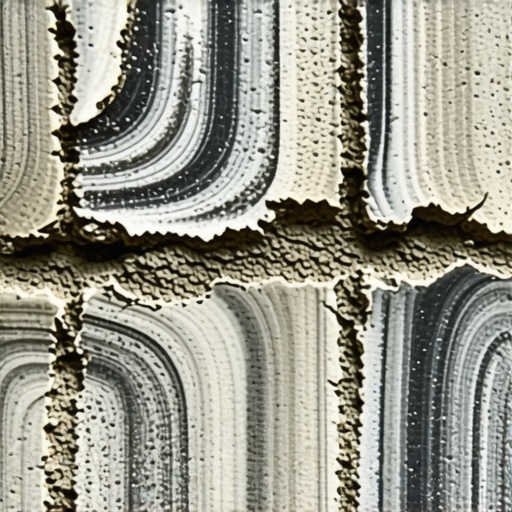
Image Description:Close-up rendering of nano-coatings applied to grout lines, illustrating molecular bonds forming a protective barrier, with a focus on durability and microscopic detail.
The Art of Surface Design: Engineering Bathrooms for Long-Term Performance
Innovative surface architecture extends far beyond aesthetics; it encompasses strategic geometries and materials that inherently resist water accumulation and microbial intrusion. Recessed, waterproof baseboards with seamless tile junctions create passive barriers, significantly reducing water seepage risks, as detailed in 2026 Baseboard Innovations. Similarly, beveled tile joints facilitate efficient runoff, mitigating staining and microbial hosting. When paired with advanced epoxy or silicone sealants, these design philosophies forge durable defenses, aligning form with function in high-moisture zones. Such integration mandates meticulous installation practices to ensure longevity and hygienic performance.
Adopting these thoughtful design elements requires visualizing the bathroom as a cohesive system—where each component acts synergistically to prevent deterioration while maintaining aesthetic integrity. Engaging expert consultants early in the renovation process guarantees that material choices and geometrical configurations optimize both resilience and visual continuity. For guidance tailored to complex bathroom systems, contact our specialized team via the contact page.
The Bedrock of Future-Ready Bathrooms: Material Innovations and Strategic Maintenance
Progressive materials like epoxy-based grouts and hybrid sealants are becoming standard for superior water resistance and microbial thwarting. Complementing these selections, routine maintenance incorporating ultrasonic and steam cleaning ensures persistent hygiene, risking less on chemical disinfectants and manual scrubbing. These practices are supported by authoritative industry reviews such as the Expert Guide to Durable Bathroom Renovations. Moreover, integrating smart sensors that monitor humidity and microbial activity allows proactive maintenance schedules, preempting deterioration and fungal proliferation before visible signs emerge.
Imagine a bathroom system that not only withstands the test of time but actively monitors its own health—this is the frontier of intelligent, sustainable design. For those seeking to engineer such environments, partnering with specialists in material science and IoT integrations is essential to attain a truly resilient sanctuary.
Expert Insights & Advanced Considerations
The Role of Molecular Innovation in Bathroom Durability
Leveraging nano-technology, modern sealants create microscopic barriers that significantly outperform traditional solutions, ensuring grout surfaces resist stains and microbial activity for years, a game-changing leap in tile maintenance.
Integrating Sustainable Materials for Long-term Benefit
Adopting eco-friendly, high-performance materials like epoxy-based and hybrid sealants not only enhances moisture resistance but also aligns with environmentally conscious building practices, offering durability without ecological compromise.
The Power of Proactive Environmental Monitoring
Implementing smart humidity sensors and microbial activity detectors allows real-time monitoring, enabling timely interventions before discoloration and deterioration occur, shifting maintenance from reactive to predictive.
Curated Expert Resources
- Journal of Nanotechnology in Materials Science – Provides groundbreaking research on nano-coatings that extend grout lifespan significantly, crucial for innovation-minded professionals.
- International Journal of Environmental Health Research – Details microbial invasion mechanisms and advanced antibacterial surface treatments, vital for health-centric design.
- Industry-leading grout and sealant manufacturers’ white papers – Offer insights into the latest formulations and application techniques that define current best practices in bathroom renovation.
Final Expert Perspective
When addressing bathroom longevity amid grout discoloration challenges, the intersection of molecular innovation, sustainable material choices, and environmental monitoring emerges as essential. Embracing these advanced insights transforms typical renovation routines into resilient, future-proof solutions. Our team invites industry professionals and dedicated homeowners alike to push beyond conventional methods—access detailed resources and expert consultations through our contact page. Engaging with these cutting-edge strategies not only elevates aesthetic appeal but ensures enduring hygiene and structural integrity, making your bathroom truly resilient in a changing world.

![Is Your Grout Porous? Try This 2026 Water-Drop Test [Fast Fixes]](https://elegantfloorz.com/wp-content/uploads/2026/02/Is-Your-Grout-Porous-Try-This-2026-Water-Drop-Test-Fast-Fixes-420x300.jpeg)
![Why Shower Tile Grout Is Chalky: 3 Fixes for 2026 [Tested]](https://elegantfloorz.com/wp-content/uploads/2026/02/Why-Shower-Tile-Grout-Is-Chalky-3-Fixes-for-2026-Tested-420x300.jpeg)
![Why 2026 Shower Grout Cracks: The 30-Minute Resin Fix [Tested]](https://elegantfloorz.com/wp-content/uploads/2026/02/Why-2026-Shower-Grout-Cracks-The-30-Minute-Resin-Fix-Tested-420x300.jpeg)