
I spent three days grinding concrete on a job last month just so the floor wouldn’t click like a castanet, and while I was there, I saw the homeowner’s shower pressure was a joke because the installer let grout debris into the lines. Most guys skip the leveling compound and think the underlayment will hide the dip. It won’t. I smelled like WD-40 and oak dust while I explained to this client that their pretty bathroom tiles were covering up a plumbing disaster. When your shower mixer starts to fail, it is rarely a sudden event. It is a slow, agonizing crawl toward a trickle that leaves you shivering under a lukewarm stream. You might think it is the city water lines or a ghost in the pipes, but the reality is usually buried in the chemistry of your water and the mechanical limits of the valve itself. Most people focus on the aesthetic of their showers that wow, but they ignore the structural engineering behind the wall. A shower mixer is a precision instrument, and like any tool, it suffers from the wear and tear of friction, minerals, and poor installation habits. I have seen 20,000 dollar bathroom remodels ruined because the contractor did not flush the lines before installing the cartridge. The result is a slow death for your water pressure.
The phantom drop in flow
Loss of water pressure in a shower mixer usually stems from mineral calcification, a failing pressure-balance cartridge, or debris trapped in the internal screens. These factors restrict the liters-per-minute flow, often masquerading as a major plumbing failure when it is actually a localized maintenance issue within the valve housing itself. You have to understand that water is not just a liquid. It is a carrier for minerals like calcium carbonate and magnesium. These minerals are looking for a place to precipitate, and the small orifices inside a mixer valve are the perfect target. When water heats up, the solubility of these minerals changes, causing them to latch onto the brass and plastic components of your mixer cartridge. This is not just a surface stain. It is a structural blockage that reduces the internal diameter of your water paths. Over time, a 1/2 inch pipe effectively becomes a 1/4 inch pipe. The physics of fluid dynamics dictates that as the diameter decreases, the friction increases, and your pressure at the showerhead drops off a cliff. If you ignore this, you are not just losing pressure, you are putting stress on the entire plumbing assembly.
“A floor is only as good as the subfloor beneath it; deflection is the enemy of every joint.” – Master Flooring Axiom
This flooring axiom applies perfectly to plumbing. A shower is only as good as the infrastructure behind the tile. If the valve is not anchored properly, every time you turn that handle, you are putting micro-strains on the copper or PEX connections. Eventually, those strains lead to pinhole leaks. These leaks might not flood your house today, but they will rot your subfloor and ruin your chic baseboard designs from the inside out. I have seen moisture travel fifteen feet from a leaky shower mixer to cup a hardwood floor in a hallway. It is all connected. You cannot separate the plumbing from the structural integrity of the home.
The calcification of the internal cartridge
Hard water deposits act as a slow-moving cement that eventually seizes the moving parts of your pressure-balance or thermostatic valve. When these minerals build up, they create a sandpaper-like surface on the rubber O-rings and seals, leading to internal bypass where hot and cold water mix improperly or simply do not flow at all. We are talking about the molecular level here. Calcium ions in the water carry a positive charge, while the surfaces of your valve components often have a slight negative charge due to the friction of water flow. This attraction creates a bond that is incredibly difficult to break without chemical intervention. Most homeowners try to scrub the showerhead, but the real problem is three inches deep in the wall. The cartridge is the heart of the system. If it is clogged with scale, no amount of cleaning the surface tile cleaning tips will bring back your pressure. You have to pull the cartridge and either soak it in a heavy-duty descaler or replace it entirely. I tell people all the time that a water softener is not a luxury. It is an insurance policy for your plumbing and your floors. Without it, you are just waiting for the minerals to win.
| Mineral Type | Hardness Rating | Impact on Flow | Solution |
|---|---|---|---|
| Calcium Carbonate | High | Severe scaling in valves | Acidic descaling or replacement |
| Magnesium | Medium | Friction increase in pipes | Water softening system |
| Iron Oxide | Low | Staining and screen clogging | Filtration at the main line |
| Silica | Very High | Permanent glass-like coating | High-end membrane filtration |
Why tile dust is a plumbing nightmare
Construction debris like grout particles and tile shards often find their way into the water lines during a renovation if the pipes are not capped properly. These solids travel through the system until they hit the first restriction, which is almost always the mixer valve screens or the showerhead flow restrictor. I have seen guys cutting tile right next to open plumbing lines. That fine porcelain dust gets everywhere. It gets into the pipes and turns into a slurry the moment the water is turned on. That slurry then hits the fine mesh filters inside your mixer and stays there. It does not wash away. It stays there and collects more minerals. This is why you might have great pressure for the first month after a remodel and then see it die off. It is not the valve failing. It is the installer’s laziness coming back to haunt you. If you are doing grout restoration, you must keep that debris away from your fixtures. I have spent decades seeing how a little bit of dust can cause thousands of dollars in damage. It is about the discipline of the job site. You keep it clean, or you pay the price later. This is the same reason I spend so much time on subfloor prep. You cannot hide a mess under a finished product and expect it to last.
The mechanical failure of the pressure balance spool
Inside most modern shower mixers is a small metal spool or diaphragm that balances the pressure between the hot and cold lines. This is a safety feature designed to prevent you from getting scalded when someone flushes a toilet. However, this spool is a high-precision part. If the tolerances are off by even a fraction of a millimeter, the spool can get stuck. When it gets stuck, it limits the flow of one or both sides of the water supply. You might find that you have great cold pressure but zero hot pressure, or vice versa. This is rarely a pipe issue. It is a mechanical failure of the valve. The grease that lubricates these parts from the factory eventually washes away or gets contaminated by the very minerals we discussed earlier. Once the lubrication is gone, the metal-on-metal friction increases. The spool hitches. The pressure drops. It is a simple mechanical reality that many people mistake for a much larger problem. You do not need a new water main. You need a new five-dollar spool or a fresh cartridge. But you also need to make sure your grout refresh did not let water seep behind the trim plate, because that external moisture will corrode the valve body from the outside in.
The structural cost of a leaking valve
Low pressure is often the first warning sign of a slow leak occurring behind the wall, which can lead to catastrophic subfloor rot and mold growth. If the pressure drop is accompanied by a damp smell or a soft spot in the flooring outside the shower, you have a major structural problem on your hands. Water is a patient destroyer. It will find the smallest gap in your waterproofing and exploit it. If your mixer is losing pressure because of an internal leak, that water is going somewhere. Often, it is running down the back of the valve, hitting the floor plate, and then soaking into your subfloor. By the time you see the damage on your baseboards makeover, the plywood is already mush. I have torn out entire bathrooms where the subfloor was so rotted from a slow mixer leak that I could put my foot through it. This is why you never ignore a change in water flow. It is the house telling you that something is wrong. You have to listen to it.
- Check the showerhead for external mineral buildup before touching the valve.
- Remove the handle and check the cartridge for visible debris or cracked seals.
- Inspect the area around the mixer for any signs of moisture behind the tile.
- Flush the water lines without the cartridge installed to clear out construction sediment.
- Test the water hardness to determine if a softener is necessary for long-term health.
- Ensure the shower arm and flange are sealed to prevent water from entering the wall cavity.
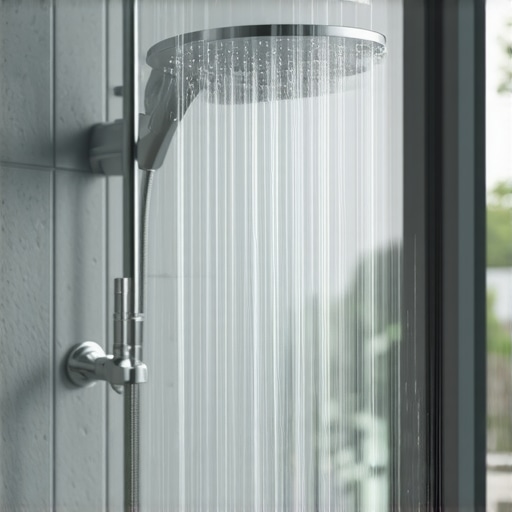
One contrarian point that people hate to hear is that the thickest, most expensive showerheads are often the first to fail. They have more complex internal passages that are easier to clog. If you have hard water, a simple, cheap showerhead will often outperform a 500 dollar rain-head because it can handle the mineral load without choking. It is the same with flooring. Sometimes the simplest, most robust material is better than the fancy, high-maintenance option that requires perfect conditions to survive. You have to build for the reality of your environment, not for a magazine photo. If you live in an area with high mineral content, you need to be proactive about maintenance. Do not wait for the water to stop. Pull the mixer apart every two years and clean the screens. It is a thirty-minute job that will save you thousands in the long run. And while you are at it, check your showers with a style for any cracks in the grout or silicone. That is how you keep a house standing for fifty years instead of ten.
“Deflection is the enemy of every joint.” – Master Flooring Axiom
The final reality is that plumbing and flooring are two sides of the same coin. They both rely on a stable, clean, and well-prepped environment to function. When your shower mixer loses pressure, it is a symptom of a larger environmental issue. Whether it is chemistry, mechanics, or just poor installation habits, you have to address the root cause. Do not just swap the showerhead and hope for the best. Dig into the valve. Check the subfloor. Ensure your waterproofing is intact. That is how a professional handles a home. We do not look at the surface. We look at the bones. If the bones are good, the rest will follow. If you take care of the guts of your plumbing, your floors, your walls, and your peace of mind will stay intact for decades.