
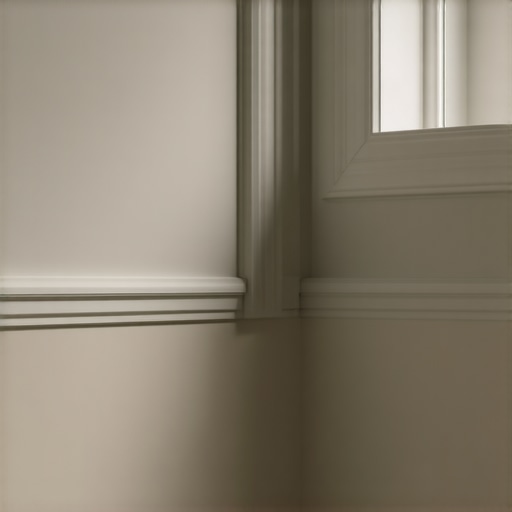
I have spent twenty five years on my knees with a moisture meter and a level, crawling across subfloors and sniffing out the scent of rotting joists. I have seen the same scene play out in a thousand bathrooms across the country. A homeowner calls me in a panic because their expensive bathroom renovation looks like it is falling apart. They point at the baseboards. There is a gap between the wood and the wall big enough to slide a nickel through. They think the house is settling or the foundation is cracking. Most of the time, the truth is much simpler and far more scientific. It is a matter of physics and the brutal reality of moisture levels in the winter months. A bathroom is not just a room. It is a high pressure moisture chamber that fluctuates between swampy humidity and desert dryness in the span of an hour. When you combine that with the cold, dry air of winter, your trim has nowhere to go but out. I remember a job in a Chicago high rise where the owner had installed custom walnut baseboards. By February, the gaps were so wide the homeowner thought the building was swaying. I had to explain that his HVAC system was essentially sucking the life out of the wood cells, causing them to collapse and shrink. It was not a structural failure of the building, but a fundamental misunderstanding of wood movement.
The humidity heist that shrinks your wood
Relative Humidity and Atmospheric Moisture are the primary drivers of wood movement in residential bathrooms. When winter air enters a home, it is often heated by furnaces or forced air systems, which strips the air of its moisture content. This creates a moisture gradient between the wood baseboards and the surrounding environment, leading to volumetric shrinkage and gap formation. Wood is a hygroscopic material. It is a bundle of cellulose and lignin fibers that act like a sponge. When the air is dry, the wood gives up its water. This happens at the molecular level within the cell walls. When those cells lose water, they get smaller. This is why you see the gaps. If you want to avoid this, you need to look at chic baseboard designs that transform rooms in 2025 while also considering the material stability. The physics of this contraction is relentless. A piece of solid oak can shrink by as much as eight percent across its grain if the humidity drops from summer peaks to winter lows. In a bathroom, this effect is magnified because the wood is constantly being hit by steam from showers and then dried out by exhaust fans. It is a cycle of stress that eventually breaks the bond of the caulk or the holding power of the finish nails.
“A floor is only as good as the subfloor beneath it; deflection is the enemy of every joint.” – Master Flooring Axiom
Why your bathroom is a structural war zone
Moisture Vapor Drive and Capillary Action transform bathrooms into high stress environments for trim installations. The presence of tile, grout, and waterproofing membranes creates impermeable surfaces that force excess moisture to find porous exit points like wood baseboards and drywall. Most installers treat baseboards as a cosmetic finish, but in a bathroom, they are part of the moisture management system. If you do not seal the back of your baseboards, you are asking for trouble. This is called back priming. It involves applying a coat of sealer or paint to the hidden side of the wood before it is nailed to the wall. This slows down the rate of moisture exchange. Without it, the front of the board stays dry while the back absorbs moisture from the damp wall cavity. This uneven distribution of water causes the board to cup and pull away from the wall. You also have to think about your showers that wow modern designs for 2025 and how they vent. If your fan is underpowered, that steam is sitting on your baseboards for hours. This constant swelling and shrinking weakens the wood fibers around the nails until the board literally pushes itself off the wall. It is a slow motion mechanical failure driven by the weather.
The chemistry of caulk failure
Elastomeric Joint Sealants and Acrylic Latex Caulks fail when their Modulus of Elasticity is exceeded by the mechanical movement of the baseboard. When a baseboard shrinks in winter, it exerts tensile stress on the caulk bead, leading to cohesive failure or adhesive failure at the wall interface. Most people reach for the cheapest tube of caulk they can find. That is a mistake. Standard painters caulk has very little flexibility. It dries into a hard, plastic like state. When the wood moves, the caulk cannot stretch, so it snaps. You need a high performance sealant with at least twenty five percent movement capability. We are talking about the chemical bond between the sealant and the substrate. In a bathroom, the substrate is often a mix of painted drywall and ceramic tile. These materials have different expansion rates. If your caulk cannot handle the divergence, it will pull away, leaving a jagged, ugly crack that invites even more moisture into the wall. I always recommend using a silicone or a high grade siliconized acrylic that remains flexible for decades. This is the difference between a floor that lasts and one that requires a mid winter repair every single year.
How tile installations impact trim stability
Thinset Mortar and Cementitious Grout provide a rigid foundation that does not contract at the same rate as wood trim. This thermal expansion mismatch causes the baseboard to slide across the tile surface, often breaking the grout seal at the perimeter joint. I have seen guys grout the baseboard right to the floor. Never do that. Grout is a rock. Wood is a living thing. When the wood tries to move and it is locked in place by grout, something has to give. Usually, the grout cracks and falls out in chunks. This is why the TCNA (Tile Council of North America) requires a movement joint at every perimeter. You should leave a small gap between the bottom of the baseboard and the tile, then fill that gap with a flexible color matched sealant. This allows the house to breathe without destroying your hard work. If your grout is already failing, you might need grout restoration secrets for long lasting results to get it back into shape. But remember, the restoration will only last if you address the movement issues first. The subfloor also plays a role here. If there is any deflection in the floor joists, the baseboard will bounce as people walk, which accelerates the gapping process in the cold months.
“Wood is a hygroscopic material, meaning it gains or loses moisture until it is in equilibrium with the humidity and temperature of the surrounding air.” – NWFA Technical Manual
The physics of the floating floor trap
Floating Floor Systems such as LVP or Engineered Hardwood require a perimeter expansion gap that is often pinned or clamped by heavy baseboards. When the floor shrinks during winter, it can pull the baseboard away from the wall if the trim is nailed too low or if the flooring material lacks the space to slide. This is a common failure in modern bathrooms. People think LVP is indestructible because it is waterproof. But it still moves with temperature changes. If you nail your baseboard through the flooring and into the wall, you have locked that floor in place. When the cold hits and the floor tries to contract, it will pull on the nails. Since the floor has more mass and power than a 2 inch finish nail, it will win every time. It will either buckle the floor or pull the baseboard off the wall. You must ensure the baseboard is floating just a hair above the floor surface. Use a spacer during installation. This simple mechanical gap prevents the floor from becoming a lever that prys your trim away from the drywall. It is a tiny detail that separates a professional installation from a weekend warrior disaster.
Comparison of material stability in high moisture zones
Material Selection is the foundation of seasonal stability in bathroom environments. Choosing materials with low hygroscopic coefficients can minimize shrinkage and reduce gaps during the winter heating season. Below is a breakdown of how different materials handle the stress of a bathroom.
| Material Type | Expansion Rate | Moisture Sensitivity | Best Use Case |
|---|---|---|---|
| Solid Oak | High | Extreme | Living Areas Only |
| MDF (Medium Density Fiberboard) | Medium | Very High | Dry Climates |
| PVC (Polyvinyl Chloride) | None | None | Wet Bathrooms |
| Engineered Wood | Low | Moderate | Modern Bathrooms |
| Finger-Jointed Pine | Moderate | High | Utility Rooms |
A checklist for winterizing your bathroom trim
Preventative Maintenance and Environmental Control are essential for protecting your bathroom baseboards from winter damage. By monitoring humidity and inspecting seals, you can prevent the structural pulling that leads to costly repairs. Follow this checklist to keep your trim in place.
- Install a digital hygrometer to monitor relative humidity levels, aiming for 35 to 45 percent.
- Use a humidistat controlled exhaust fan to remove excess steam without over-drying the room.
- Apply a high quality wood sealer to the back and ends of all trim pieces before installation.
- Replace brittle acrylic caulk with high movement silicone sealants at all wall and floor joints.
- Ensure finish nails are driven into the wall studs, not just the drywall or the bottom plate.
- Check the crawlspace or basement for rising dampness that might be affecting the subfloor moisture.
The final verdict on seasonal movement
Wood moves. It is a law of nature that no amount of glue or nails can fully stop. The goal is not to stop the movement but to manage it. By understanding the physics of moisture and the chemistry of the products we use, we can build bathrooms that look just as good in the dead of winter as they do in the heat of summer. Do not be afraid of a tiny hair line crack. That is just the house breathing. But when your baseboards are pulling away with force, it is time to look at your humidity levels and your installation techniques. Treat your floor like an engineering project. Use the right materials, respect the expansion gaps, and always keep your moisture meter handy. If you follow the science, you will not be the one calling me in February to ask why your house is falling apart. You will be the one with a bathroom that stands the test of time and the elements.
Comments
One response to “Why Your Bathroom Baseboards Are Pulling Away from the Wall in Winter”
Wow, reading this post really opened my eyes to the complexity behind what seems like simple trim issues in bathrooms during winter. I had always thought that gaps were just cosmetic flaws or signs of some sort of foundation problem, but now I see it’s more about the science of moisture and material movement. I remember doing a bathroom renovation where the baseboards pulled away after a few cold months, and we simply thought it was because of poor installation. If I knew then what I know now, I would definitely incorporate back priming and flexible sealants from the start, along with choosing materials with lower hygroscopic coefficients. I’m curious—has anyone experimented with different sealants or baseboard materials to best tackle this seasonal movement? I’d love to hear about effective solutions or experiences that helped minimize this kind of damage. It seems like managing moisture is the secret rather than just trying to fix the symptoms after the fact.