
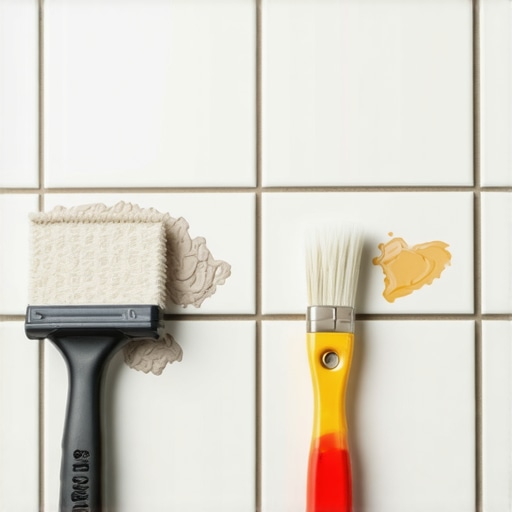
You spent four hours on your knees with a scrub brush and a bottle of what the label promised was a miracle cleaner. You rinsed. You dried. And then the nightmare started. As the moisture evaporated, your grout did not return to its original uniform slate gray or toasted almond. Instead, it looks like a topographical map of a disaster zone. One spot is dark, the next is chalky white, and another has a weird orange tint that definitely wasn’t there before. This is what happens when chemistry meets a porous cementitious matrix without a plan. I have seen this a thousand times. I spent three days grinding concrete on a job last month just so the floor would not click like a castanet, and grout issues are just as structural as they are cosmetic. Grout is not just a filler; it is a complex lattice of Portland cement, sand, and pigments. When you hit it with aggressive cleaners, you are often performing an unplanned chemical extraction. If you want to fix this, you have to stop thinking about cleaning and start thinking about restoration and molecular bonding.
The shadow of the failed deep clean
Fixing patchy grout color requires identifying if the discoloration is caused by efflorescence, pigment washout, or chemical etching from acidic cleaners. To resolve the issue, you must neutralize the pH of the grout surface, allow for total dehydration, and then apply a high-quality grout colorant or epoxy-based stain to create a uniform finish across the entire floor or shower. This process ensures the pigment bonds to the cement particles rather than sitting on top of a layer of soap residue.
Grout is essentially a thin concrete. It has pores. It has a specific gravity. It has a hydration cycle. When you deep clean, you are usually using surfactants to lift dirt, but if you do not rinse perfectly, those surfactants stay in the pores. They attract new dirt instantly. Or, even worse, you used an acid based cleaner that ate the top layer of the cement. This is common in showers where people use harsh lime scale removers. The acid reacts with the calcium carbonate in the grout, weakening the structure and bleaching the pigment. This is why your deep clean made things look worse. You did not just clean the dirt; you chemically altered the material. You can find more about this in our tile cleaning tips for a sparkling bathroom in 2025 which covers the basics of avoiding these traps.
“A floor is only as good as the subfloor beneath it; deflection is the enemy of every joint.” – Master Flooring Axiom
Why your grout looks like a map of the moon
The patchiness you see is often a result of uneven evaporation rates. This is a physics problem. If your subfloor has damp spots or if the airflow in the room is inconsistent, some areas of the grout will dry faster than others. In the world of cement, speed of drying equals color density. When grout dries too fast, the pigments do not have time to set properly. This leads to a phenomenon called shading. You might also be dealing with efflorescence. This is when water carries soluble salts from the mortar bed or the subfloor up through the grout. When the water evaporates, it leaves a white, crusty salt deposit behind. If you scrubbed the floor and left it soaking wet, you likely triggered a massive move of salts to the surface. It is not dirt. It is minerals. Scrubbing it again with more water will only make it return. You need to understand grout restoration secrets for long lasting results to break this cycle of mineral migration.
The chemistry of efflorescence and polymer migration
Modern grouts are polymer modified. This means they have plastic like additives that make them stronger and more flexible. However, these polymers can migrate. If you use too much water during the cleaning process, the polymers float to the top. When they dry, they form a film that looks blotchy and plastic. This film also prevents sealers from soaking in. If you see a spot that looks shiny while the rest is matte, that is polymer migration. To fix this, you need a professional grade grout haze remover. This is usually a mild acid, but it must be used with extreme caution. You are essentially doing a controlled etching of the surface to get back to the raw, uniform cement. This is high stakes work. If you leave it on too long, you will turn your grout into sand. I once walked into a house where the homeowner tried to use muriatic acid on their tile floor. The grout was so soft I could scrape it out with a fingernail. Don’t be that person. Look into how to refresh grout without replacing it before you reach for the heavy chemicals.
| Grout Type | Porosity Level | Common Patchiness Cause | Fix Strategy |
|---|---|---|---|
| Sanded Grout | High | Efflorescence / Dirt Trapping | Deep Extraction and Color Seal |
| Unsanded Grout | Moderate | Pigment Washout | Penetrating Colorant |
| Epoxy Grout | Low | Improper Mixing / Haze | Mechanical Abrasion |
| High Performance | Low | Surface Contamination | Neutral pH Cleaning |
Tools for a chemical intervention
You cannot fix a chemistry problem with a mechanical solution alone. If the color is gone, scrubbing will not bring it back. You need to reintroduce pigment. The gold standard for this is a grout colorant. This is not paint. Paint sits on top and peels. A colorant is a water based epoxy resin that penetrates the pores and bonds to the cement. It also acts as a permanent sealer. Before you apply it, the grout must be clean and dry. Not just dry to the touch, but bone dry. I tell people to wait 48 hours after cleaning before applying colorant. Any moisture trapped in the joint will push the colorant off as it tries to escape. This is especially true near baseboards where moisture tends to linger in the gap between the wall and the floor. If you are doing a full room update, check out baseboards makeover ideas to elevate your space to make sure the whole transition looks professional.
The physics of the 1/8 inch gap
Grout joints are usually between 1/16 and 1/4 of an inch. In that tiny space, a lot can go wrong. If the installer didn’t mix the grout long enough, the pigment might not have been fully dispersed. This creates pockets of light and dark color that only show up after a deep clean removes the surface layer of grime. If you are dealing with a showers installation, the stakes are higher because of the constant water exposure. If the grout was not packed tightly into the joint, water will sit in the voids. This leads to mold growth behind the grout, which can make the surface look dark and patchy from the inside out. In these cases, you are not just fixing color; you are fixing a structural failure. For modern bathroom ideas that avoid these pitfalls, see showers that wow modern designs for 2025.
- Test the pH of your grout before applying any new products.
- Use a stiff nylon brush, never steel, to avoid leaving metal traces that will rust.
- Apply colorant in small sections to ensure it doesn’t dry on the tile surface.
- Check the moisture content with a meter if you are working on a concrete slab.
- Always ventilate the room to ensure even drying of the pigments.
The specific gravity of grout stains
A contrarian fact that most big box stores won’t tell you is that the thickest underlayment or the most expensive sealer isn’t always better. In fact, too much sealer can cause a nightmare. If you apply a film forming sealer over a patchily cleaned floor, you are locking in the discoloration forever. The sealer will also create a refractive layer that can make the color look even more inconsistent depending on the angle of the light. You want a penetrating sealer, or better yet, a colorant that combines the two. The goal is to reach a state of uniform surface tension so that water beads up everywhere, not just in some spots. This is the difference between a amateur job and a master installation. For those looking for more sustainable options, eco friendly tile solutions for sustainable homes in 2025 offers insights into materials that are easier to maintain.
“Proper hydration is the key to pigment stability in cementitious matrices; premature drying leads to splotchy results.” – TCNA Handbook Fragment
Why the wrong sealer ruins the finish
Many homeowners think they are doing a favor to their floor by piling on the sealer. This is a mistake. Most modern tiles are porcelain, which is nearly non-porous. If you splash sealer all over a porcelain tile floor, it will not soak into the tile. It will only soak into the grout. But if you use too much, it pools in the low spots of the grout line. As it dries, it becomes a magnet for hair, dust, and lint. Within weeks, those low spots look dark and dirty again, while the high spots look light. This creates a cycle of endless cleaning that only makes the problem worse. You must wipe the excess sealer off the tile faces immediately. It is a tedious, painstaking process, but it is the only way to get a professional result. If you are working in a tight space, our guide on showers with a style trendy ideas for small bathrooms can help you navigate the logistics of a localized repair.
Fixing the baseboard transition
One of the most overlooked areas during a grout fix is the perimeter. This is where the floor meets the wall. Usually, there is a bead of caulk or a grout line tucked under the baseboards. If this area is patchy, it draws the eye and makes the whole room look unfinished. When you apply your grout colorant, you must be surgical at the edges. Use a small artist brush to get right up to the wood. This is also a good time to inspect your baseboards for moisture damage. If the grout is patchy there, it might be because the wall is wicking moisture down into the joint. Fixing the color is useless if you have a leak behind the wall. Consider checking out chic baseboard designs that transform rooms in 2025 if you find that your trim needs more than just a cleaning.
Modern shower standards for the future
The days of just slapping some mud on a wall are over. We have better technology now, but it requires more knowledge. If your shower grout is patchy, it is a warning sign. It means the environment is not controlled. Whether it is hard water deposits or poor ventilation, you need to address the root cause. A deep clean is just the first step. The real work is in the chemical stabilization of the grout surface. Once you have fixed the color, maintain it with a neutral pH cleaner. Stop using vinegar. Stop using bleach. Those are the enemies of cement. They are too aggressive. Use a dedicated tile and grout cleaner that is designed to protect the bond you just worked so hard to restore. If you ever need professional guidance, you can always contact us for a consultation on your specific flooring challenges.
Comments
3 responses to “How to Fix Patchy Grout Color After a Deep Clean”
This article hits home! After trying to give my bathroom a quick deep clean, I was shocked to see my grout turn into a patchwork of white and dark spots. I didn’t realize that using acidic cleaners could actually weaken and bleach the cementitious material—definitely a lesson learned the hard way. I appreciate the detailed explanation about pH neutralization and the importance of thorough dehydration before applying any colorant or stain. I’ve also noticed that uneven drying can really cause shading issues; sometimes I wonder if better ventilation or setting more consistent drying conditions could help avoid this problem from the start. Has anyone here experimented with specific drying techniques or room setups to ensure even moisture evaporation? I’m curious if small modifications can make a noticeable difference in preventing patchy discoloration in the future.
This post really resonated with my last DIY project. I vividly remember the frustration of seeing my previously bright white grout turn dull and uneven after cleaning, especially in the shower. It dawned on me that I had used a vinegar-based cleaner, not knowing the damage it could inflict on cementitious surfaces. Since then, I’ve learned that neutral pH cleaners are the way to go for maintaining grout integrity. What especially stood out was the point about uneven evaporation causing shading. In my case, I noticed that the room’s ventilation was inconsistent, leading to some areas drying faster than others. I’ve experimented with slight modifications, such as better airflow and evenUsing a dehumidifier during drying, and the results seem promising. Has anyone tried employing a humidity-controlled environment for larger grout surfaces or showers? Would love to hear if such techniques can really mitigate patchiness or shading issues down the line.
This article really highlights how crucial the pre-application process is, especially regarding ensuring the grout surface is completely neutralized and dry. From my experience, controlling room humidity and airflow during the drying phase can dramatically improve the uniformity of your grout color, especially in humid environments like bathrooms. I’ve set up a small dehumidifier and used fans to circulate air gently, which helped with even drying. Has anyone tried more advanced climate control solutions, like portable drying chambers or humidity monitors, especially for larger projects? It seems like small investments here could save a lot of trouble in the long run. Also, I appreciate the caution about using acids—there’s quite a bit of misinformation around chemical cleaning, so understanding the chemistry makes a real difference. Would love to hear from others about the techniques they’ve used to prevent shading or patchiness after deep cleaning, especially in tricky spaces like showers or behind fixtures.