
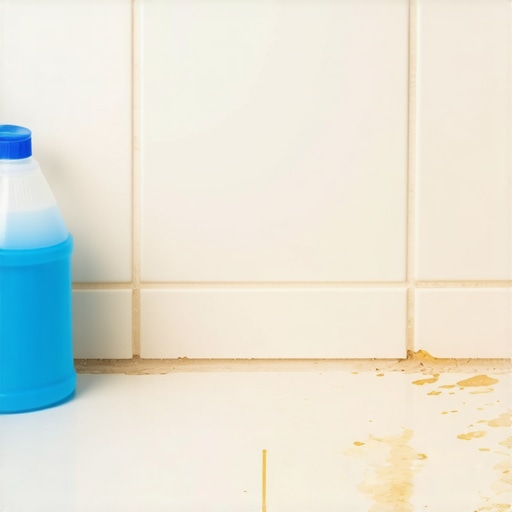
Why Bleach Destroys Shower Grout and How to Protect Your Tile Investment
I once spent four days ripping out a custom walk-in shower in a high-end condo where the homeowner was a clean freak. She bleached that stall every Sunday for five years. From the outside, the white grout sparkled like a new diamond. But when I put my pry bar under the first tile, the whole wall fell away like wet cardboard. The bleach had eaten the sealer, then the grout, then the modified thin-set, and finally turned the gypsum board behind it into a mushy soup of mold and chemicals. It was a twelve thousand dollar mistake caused by a five dollar bottle of cleaner. Most people think bleach is the ultimate weapon for a clean bathroom, but in the world of professional tile installation, we view it as a slow-acting solvent that dismantles the structural integrity of your shower. I have spent twenty five years on my knees with a moisture meter and a level, and I can tell you that a floor is a performance surface, not just a decoration. When you pour harsh oxidizers onto cementitious materials, you are starting a chemical timer that ends in a total system failure. You can find more about high-end installations at showers that wow modern designs for 2025.
The chemical betrayal of sodium hypochlorite
Bleach is a high-pH oxidizer that aggressively attacks the calcium carbonate binders found in traditional cement-based grout. While it effectively kills surface mold, it simultaneously dissolves the crystalline lattice that holds the sand and pigment together, leading to increased porosity, chalking, and eventual structural crumbling of the joint. You have to understand the molecular reality of grout. It is a porous, cement-based product. When you apply sodium hypochlorite, the bleach penetrates the microscopic voids. It does not just sit on top. It goes deep into the grout line. Once there, it reacts with the polymers and the calcium. This reaction creates a brittle environment. Over time, the grout loses its flexibility. In a shower, flexibility is everything. The house shifts. The water temperature changes from fifty degrees to a hundred degrees in seconds. This causes thermal expansion. If the grout is brittle because the bleach ate the binders, it will crack. Those cracks are microscopic at first. You will not see them with the naked eye. But water will find them. Water is the most patient enemy of a floor installer. It will sit in those cracks and travel via capillary action into the wall cavity. This is why grout restoration secrets for long-lasting results are about more than just aesthetics; they are about keeping your house dry.
“A floor is only as good as the subfloor beneath it; deflection is the enemy of every joint.” – Master Flooring Axiom
The physics of capillary water transport
Water transport in a shower occurs through the porous network of the grout lines when the protective sealer has been stripped away by harsh chemicals. Once the sealer fails, the grout acts like a wick, pulling moisture into the mortar bed and the wall substrate through osmotic pressure. I have seen guys skip the waterproofing membrane because they think the tile is the barrier. It is not. Tile is a shed, not a tank. The grout is the weakest link. When you use bleach, you are stripping the sealer. Most sealers are fluoropolymers or siliconates. They are designed to sit in the pores and repel water. Bleach is a base with a pH of around twelve or thirteen. It is caustic. It breaks the bond of the sealer. Once the sealer is gone, the grout is wide open. Think of it like a sponge. Every time you shower, that sponge gets saturated. If the water cannot evaporate quickly, it stays there. This creates an environment where mold can grow inside the wall, even if the surface looks white. This is why tile cleaning tips for a sparkling bathroom in 2025 emphasize pH-neutral cleaners. A neutral cleaner does not fight the chemistry of the grout. It removes the dirt without removing the protection.
The structural failure of the grout lattice
Structural failure in grout begins when the chemical binders are leached out, leaving only the aggregate behind. This process, known as chalking, reduces the compressive strength of the grout joint and allows tiles to shift, which eventually leads to cracked tiles and leaking shower pans. If you rub your finger across your grout and a white powder comes off, you are looking at a dead floor. That powder is the cement that should be holding your sand grains together. Bleach speeds this up. It is like an acid wash in slow motion. Once the grout begins to chalk, it loses its ability to resist compression. When you step on a floor tile, the grout is supposed to distribute that load. If the grout is soft, the tile edges are unsupported. They will chip. They will crack. It is a chain reaction. This is especially dangerous around the baseboards. I have seen water travel behind the tile, down the wall, and rot out the wooden baseboards in the hallway next to the bathroom. If you are looking to fix those areas, check out baseboards makeover ideas to elevate your space for inspiration on how to repair the damage. The damage is often hidden until the wood starts to turn black and soft.
| Cleaning Agent | pH Level | Effect on Grout | Long-term Structural Impact |
|---|---|---|---|
| Standard Bleach | 11 to 13 | Dissolves cement binders | High risk of cracking and leaks |
| White Vinegar | 2 to 3 | Acidic erosion of calcium | Severe thinning of grout joints |
| Neutral Cleaners | 7 | Lifts dirt only | Maintains integrity for 20+ years |
| Epoxy Cleaners | Variable | Safe for resins | Ideal for industrial-grade grout |
Transition zones and the baseboard rot trap
Transition zones where the shower tile meets the bathroom floor or baseboards are the primary failure points for water intrusion. If the grout in these junctions is compromised by bleach, water will seep into the subfloor, causing wooden elements to swell and decay. I always tell my clients that the shower does not end at the glass door. The waterproofing needs to be a continuous envelope. When you use bleach, it runs down the walls and pools at the floor junction. This is usually where the caulk or the grout meets the baseboards. Bleach is even harder on caulk than it is on grout. it makes the silicone brittle. It causes it to peel away from the tile. Once that happens, you have an open door for water. The water wicks into the end grain of your baseboards. You might notice the paint peeling or a weird smell. That is the smell of a rotting house. It is why chic baseboard designs that transform rooms in 2025 often focus on moisture-resistant materials. Wood and water are enemies. Bleach is the bridge that lets them meet. I have replaced entire subfloors because a shower curb leaked for two years straight. The homeowner never saw a drop of water on the floor, but the joists were like wet bread.
“Water is a persistent architect of ruin; any breach in the grout is a gateway to structural decay.” – Master Flooring Axiom
The molecular zoom into grout porosity
Let us look at grout through a microscope. It looks like a mountain range of sand and cement. The cement acts as the glue. When you apply bleach, the sodium hypochlorite ions move into the capillaries. They start a process called leaching. They pull the calcium out of the cement. This leaves behind a honeycomb of empty spaces. This makes the grout more absorbent. The more absorbent the grout, the more dirt it holds. This is the irony of bleach. You use it to clean the grout, but it actually makes the grout get dirty faster in the future because the surface is now full of holes. You are creating a cycle of destruction. You bleach it because it is dirty, the bleach makes it more porous, the pores hold more dirt, so you bleach it again. Eventually, there is no glue left. The sand just falls out. If you are at this stage, you need to look into how to refresh grout without replacing it before the tiles start falling off the wall. You cannot just keep bleaching a dying surface. You have to stop the chemical attack and rebuild the barrier. Most homeowners think they are being hygienic. They are actually just being destructive.
Maintenance protocols for a lasting shower
Professional maintenance protocols for tile involve the use of pH-balanced detergents and regular re-sealing to maintain the hydrophobic barrier of the grout. This approach prevents water absorption and eliminates the need for aggressive oxidizers like bleach. To keep a shower healthy, you need a plan. It is not about hard scrubbing. It is about chemistry. You want a cleaner that has a pH of seven. This will lift the body oils and the soap scum without eating the sealer. You also need to check your sealer every year. Put a few drops of water on the grout line. If the water beads up, the sealer is working. If it soaks in and turns the grout dark, the sealer is gone. You need to dry the shower out with a fan for twenty four hours and then apply a high-quality penetrating sealer. This is the only way to protect the subfloor. If you have neglected this, you might need grout restoration secrets for long-lasting results to bring the surface back to life. It is much cheaper than a full tear-out. I have seen people save thousands of dollars just by switching their cleaning products and spending twenty dollars on a bottle of sealer.
- Inspect grout lines monthly for hairline cracks or pinholes.
- Test the water bead response on the sealer every six months.
- Switch to a pH-neutral cleaner for daily maintenance.
- Ensure the shower has adequate ventilation to prevent mold growth.
- Recaulk junctions between the tile and baseboards every two years.
- Never mix bleach with other cleaners as it creates toxic gas and ruins grout.
- Use a soft brush rather than a wire brush to avoid scratching the tile glaze.
- Check the crawlspace or basement for signs of leaks under the shower.
- Keep the weep holes in the shower drain clear of debris.
- Consult a professional if the grout begins to feel soft or chalky.
The regional reality of moisture and grout
Depending on where you live, the bleach problem can be worse. If you are in a high-humidity area like Florida or Houston, the grout never really dries out. If you add bleach to a wet environment, the chemical stays active for longer. It just sits in the pores and eats away at the structure. In dry climates, the bleach might dry out, but then it leaves behind salt crystals. These crystals grow inside the grout pores. This is called efflorescence, but in a destructive form known as sub-florescence. As the crystals grow, they exert pressure on the walls of the grout pores. This pressure is strong enough to crack the grout from the inside out. It is like ice breaking a pipe. Your cleaning habit is literally exploding your grout at a microscopic level. It is a slow death for a floor. If you are planning a new bathroom, think about the long term. Look at showers with a style trendy ideas for small bathrooms and consider using epoxy grout. Epoxy grout is not cement-based. It is a resin. It is waterproof. It is stain-proof. And it is bleach-resistant. It costs more to install, but you will never have to worry about the chemistry of your cleaner again. For any questions on specialized materials, you can always contact us to get the right advice for your specific region and tile type. Protecting your home starts with understanding the materials you are living on.