
The Best Tools for Scraping Grout Out of Tight Tile Joints
I spent three days grinding concrete on a job last month just so the floor wouldn’t click like a castanet. That job taught me that shortcuts in the preparation phase are the fastest way to a structural failure. Most guys skip the leveling compound and think the underlayment will hide the dip. It won’t. The same logic applies to tile. If you think you can just slap new grout over old, crumbly material in a 1/16 inch joint, you are dreaming. My hands smell like WD-40 and oak dust most days, and I have seen enough failed showers to know that a clean joint is the only joint that lasts. Scraping grout out of tight spaces is not about brute force. It is a game of physics and chemistry. You are fighting a mechanical bond that was designed to be permanent. To win, you need the right leverage and the right abrasive surface.
The mechanical reality of narrow grout lines
Removing grout from narrow joints requires precision tools like carbide-tipped hand scrapers or oscillating multi-tools equipped with diamond-grit blades. These tools allow for the controlled removal of Portland cement-based materials without fracturing the delicate edges of the surrounding ceramic or porcelain tile. The process involves breaking the chemical bond at the microscopic level through friction and vibration while maintaining a steady hand to avoid over-penetration into the thin-set layer below.
“A floor is only as good as the subfloor beneath it; deflection is the enemy of every joint.” – Master Flooring Axiom
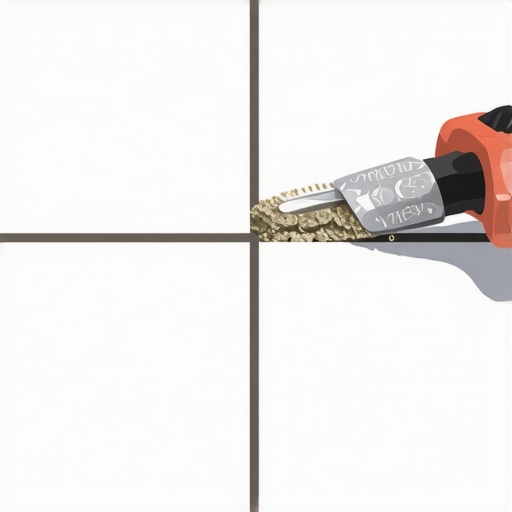
When you are dealing with showers or high-traffic tile floors, the grout is the first line of defense against moisture. Over time, that defense fails. If you are looking for grout restoration secrets for long-lasting results, you have to start with total evacuation of the old material. In tight joints, typically defined as anything less than 1/8 of an inch, the aggregate in the grout is much finer. This means the material is denser and harder to penetrate than the sandy slop used in wide patio stones. You need a tool that can bite into that density without skipping across the face of your tile. [IMAGE_PLACEHOLDER]
Manual scrapers and the physics of the carbide tip
Manual grout saws and scrapers rely on tungsten carbide grit to grind away material through repetitive linear motion. This method provides the highest level of control for the installer, as it minimizes the risk of heat buildup which can cause porcelain to thermal-shock and crack. The physical force applied is direct and focused, allowing you to feel the resistance of the grout and adjust your pressure before you hit the tile edge. It is slow work, but it is honest work.
The classic pull-scraper is a beast. It usually features a triangular blade with three usable edges. When one side dulls, you flip it. The angle of the handle is vital. You want a tool with a high-clearance handle so your knuckles aren’t dragging against the tile surface. I have seen guys try to use flathead screwdrivers. That is a crime. A screwdriver has no abrasive quality. It just acts as a wedge, and a wedge is designed to split things. You will split your tile long before you clear that joint. If you want to know how to refresh grout without replacing it, you still need to scrape out the top 2 millimeters to give the new material a place to live. Anything less is just a cosmetic band-aid that will peel off in a month.
Oscillating multi-tools and high-frequency vibration
Oscillating multi-tools use high-frequency vibration between 10,000 and 20,000 oscillations per minute to pulverize grout into a fine powder. When paired with a diamond-coated blade, these tools can clear a bathroom floor in a fraction of the time a manual scraper would take. However, the danger increases exponentially with the speed. One slip and you have a permanent scar across a custom tile. You have to let the tool do the work. If you push too hard, you generate heat. Heat expands the metal blade and the tile, leading to edge chipping that no grout will ever hide.
| Tool Type | Precision Level | Speed Rating | Risk of Tile Damage |
|---|---|---|---|
| Carbide Hand Saw | High | Low | Minimal |
| Oscillating Diamond Blade | Medium | High | Moderate |
| Rotary Dremel Bit | Low | Very High | Extreme |
| Dental Pick | Maximum | Microscopic | Zero |
The diamond blade is the king of the job site for a reason. Diamond is harder than the ceramic glaze. It eats through the Portland cement and the latex additives without breaking a sweat. If you are working on showers that wow modern designs for 2025, you are likely dealing with large format tiles and paper-thin joints. In these cases, a standard 1/16 inch diamond blade might even be too thick. You have to hunt down the specialty thin-kerf blades. These are expensive, but they are cheaper than replacing a 24×48 inch slab of Italian porcelain.
The chemical softeners and molecular prep
Chemical grout softeners work by breaking down the calcium carbonate bonds within the cementitious matrix of the grout. Applying these agents 20 to 30 minutes before scraping can significantly reduce the physical effort required. This is particularly helpful in old homes where the grout has been cured for decades and has become as hard as the rock it was made from. I often use a 50/50 mix of white vinegar and water for a mild acid etch, but for the tough stuff, you need a professional-grade sulfamic acid solution.
Be careful with chemicals around your baseboards makeover ideas to elevate your space. Acid will eat the finish right off a wooden baseboard or a piece of painted trim. I always tape off my perimeter with blue painter’s tape and a layer of plastic. You have to respect the chemistry. If the acid sits too long, it can soak into the subfloor. If you have a plywood subfloor, that moisture can cause the wood fibers to swell, which will eventually lead to the very deflection that ruins floors. It is all connected. The tile, the grout, the adhesive, and the wood underneath.
Protecting the tile edge during removal
Protecting the tile edge requires a steady hand and the use of a sacrificial guide like a metal straightedge or thick tape. Most damage occurs when the tool jumps out of the joint. This usually happens because the installer is pulling the tool toward their body instead of pushing it away or using a staggered stroke. In tight joints, there is no room for error. The moment the carbide hits the glaze, it is over. You can’t un-chip a tile.
- Vacuum the joint every few inches to keep the path clear of debris.
- Use a headlamp to see the exact depth of the grout removal.
- Keep a damp sponge nearby to cool the tile surface if using power tools.
- Always wear a respirator because grout dust is basically powdered silica.
- Check the integrity of the thin-set to ensure it isn’t crumbling.
The dust is another monster. Silica dust is a silent killer in this industry. When you are grinding grout in a small bathroom, that dust fills the air in seconds. Use a vacuum attachment on your oscillating tool. It saves your lungs and saves you hours of cleaning later. If you are doing tile cleaning tips for a sparkling bathroom in 2025, you will realize that the best way to keep a floor clean is to avoid making a mess in the first place. A shop vac with a HEPA filter is just as important as the scraper itself.
The microscopic debris field and final prep
A clean joint must be free of all dust, loose aggregate, and old adhesive before new grout can be applied. I use a stiff nylon brush and a dental pick for the final pass. This ensures that the new grout can form a mechanical bond with the sides of the tile. If there is even a thin layer of dust left behind, the new grout will not stick. It will look good for a week, then it will start to crack and pop out in long, brittle needles. That is the hallmark of a hack job.
I have seen guys try to use a pressure washer on indoor tile. Don’t be that person. You will flood the subfloor and create a mold farm under your beautiful tile. Stick to the scrapers and the vacuum. It is a slow, methodical process. It requires patience that most modern contractors don’t have. They want to get in and get out. But a floor is a permanent structure. It deserves the time it takes to do it right. After the joints are clear, wipe them down with a microfiber cloth and denatured alcohol. This removes any lingering oils or chemical residues from the softening agents.
The ghost in the expansion gap
Expansion gaps at the perimeter of the room must be cleared of grout to allow for the natural movement of the building. This is the most common mistake I see. People grout right up to the baseboards. When the house settles or the humidity changes, the floor has nowhere to go. It buckles. The grout cracks. The tile tents. You must leave that 1/4 inch gap around the edges. Cover it with your baseboards or a bead of 100% silicone caulk that matches your grout color. Silicone is flexible. Grout is not.
While most people want the thickest underlayment for comfort, too much cushion actually causes the locking mechanisms on LVP to snap under pressure, and in tile, it causes the grout to crack due to vertical deflection. The same principle applies here. Your grout joints are the shock absorbers for your floor. If they are too tight and filled with rigid material without any relief at the edges, the system will fail. Take the time to scrape the perimeter joints manually. It is the only way to ensure the floor can breathe.
Final inspection of the joint
Once the scraping is done, take a bright light and look at the joints from a low angle. You are looking for any remaining islands of old grout. These islands create weak points in the new install. They are like rocks in a river, causing turbulence in the flow of the new material. If you find one, get the pick out and clear it. It might take another hour, but it will save you a decade of repairs. The goal is a uniform trench that is deep enough to hold a substantial amount of new grout. That is how you build a floor that lasts long after I am gone. The smell of dust might linger, but the quality of the work will remain clear. Use the right tools, respect the physics of the material, and never trust a subfloor you haven’t leveled yourself.