
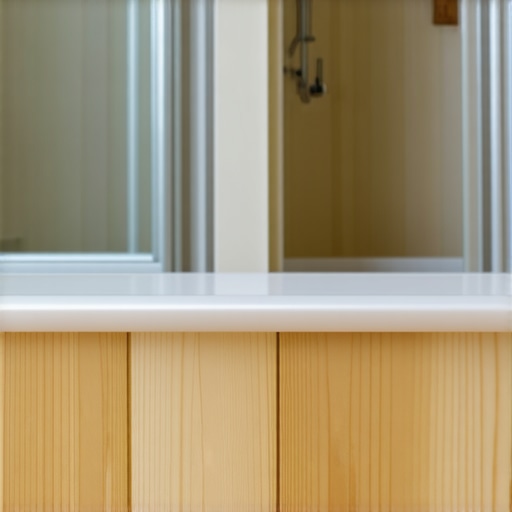
I smell like oak dust and knee pads. For twenty-five years I have seen homeowners dump thousands of dollars into beautiful walk-in showers only to ruin the entire aesthetic by installing wood baseboards. It is a structural engineering failure masquerading as a design choice. Wood is a living, breathing organic material made of cellulose. Water is its natural predator. When you put wood trim within eighteen inches of a high-moisture zone like a shower, you are starting a countdown to rot. Most guys skip the leveling compound. They think the underlayment will hide the dip. It won’t. I spent three days grinding concrete on a job last month just so the floor wouldn’t click like a castanet. That same job had baseboards that looked like soggy crackers because the previous contractor used MDF near the pan. If you want a bathroom that lasts until 2050, you have to stop thinking about looks and start thinking about the physics of the splash zone. Wood baseboards near a shower will fail every single time.
The biology of baseboard decay
Wood baseboards fail near showers because cellulose fibers absorb water through capillary action. This moisture uptake causes the wood cells to expand and contract, eventually breaking the lignin bonds that hold the wood together. In a bathroom environment, the relative humidity often fluctuates between forty and ninety percent, causing constant stress on the wood structure. When wood is exposed to liquid water from a shower splash, the moisture wicks upward through the end grain. This creates a dark, damp environment behind the trim where mold spores thrive. I have seen solid oak baseboards turn into black mush in less than two years because the homeowner thought a coat of semi-gloss paint would act as an impermeable shield. It doesn’t. Paint is a skin, not a vapor barrier. Moisture finds the micro-fissures in the paint and the gaps in the caulk, and once it gets inside, it never gets out.
The physics of the splash zone
A walk-in shower creates a micro-climate of high vapor pressure and direct water impact. This environment is hostile to any material that is not non-porous and chemically stable. When you step out of a shower, water doesn’t just sit on the floor; it moves. It migrates into the grout lines and travels toward the walls via surface tension. If your baseboard is wood, it acts like a sponge, pulling that water away from the tile and into the drywall. This leads to the infamous soft spot at the bottom of the wall. I always tell clients that if they want a bathroom to stay dry, they need to think about the showers that wow modern designs for 2025 which prioritize waterproof transitions. You aren’t just building a room; you are building a vessel. If the vessel leaks into the trim, the structural integrity of the floor joists is the next thing to go.
“A floor is only as good as the subfloor beneath it; deflection is the enemy of every joint.” – Master Flooring Axiom
Why porous materials fail in high moisture zones
Porous materials like pine or MDF cannot withstand the hydrostatic pressure found in modern bathrooms. MDF is particularly dangerous because it is essentially compressed sawdust and glue. When MDF gets wet, the glue dissolves and the fibers expand like a balloon, a process that is irreversible. Even solid hardwood is a risk because of the Janka scale reality. While a wood might be hard, its resistance to moisture is a different metric entirely. I have seen gorgeous walnut trim curl like a potato chip because the installer ignored the vapor transmission rate of the concrete slab. You need materials that don’t care about water. This is why I advocate for tile base or high-density PVC. If you are looking for chic baseboard designs that transform rooms in 2025, look at porcelain options that mimic the look of wood without the organic weakness.
The subfloor secret and leveling reality
Most guys skip the leveling compound. They think the underlayment will hide the dip. It won’t. I spent three days grinding concrete on a job last month just so the floor wouldn’t click like a castanet. If your subfloor isn’t flat to within one-eighth of an inch over ten feet, your baseboards will never sit right. In a bathroom, a gap under the baseboard is an invitation for water to pool under the finish floor. Once water gets under your tile or LVP, it starts a slow-motion disaster. It dissolves the thin-set or the adhesive and eventually rots the subfloor itself. I have pulled up floors where the plywood was so rotten I could put my thumb through it, all because someone didn’t use a self-leveling underlayment and didn’t seal the baseboards correctly. You have to be a stickler for the details. If you are struggling with old installations, you might need grout restoration secrets for long-lasting results to stop the leak at the source.
| Material | Moisture Resistance | Durability | Best Use Case |
|---|---|---|---|
| Solid Oak | Low | Medium | Living Rooms |
| MDF | Zero | Low | Closets |
| PVC/Composite | High | High | Bathroom Perimeters |
| Porcelain Tile | Extreme | Extreme | Shower Transitions |
The chemistry of grout and tile protection
Grout is a cementitious product that is naturally porous and requires chemical sealing to prevent water ingress. Many people assume that because a floor is tiled, it is waterproof. That is a lie. Water can and will pass through grout if it isn’t maintained or if the wrong type was used. In a walk-in shower area, the transition between the floor and the wall is the most vulnerable point. If you use a wood baseboard here, the grout at the edge will eventually crack due to the expansion of the wood. This is why I always use 100 percent silicone caulk at the change of plane. Silicone stays flexible, while grout is rigid. If the grout cracks, the water goes straight into the wood. For those looking to maintain their space, checking out tile cleaning tips for a sparkling bathroom in 2025 is a good start, but cleaning won’t save a rotten baseboard.
“Deflection in the subfloor leads to catastrophic failure of the surface bond, especially in wet environments.” – TCNA Technical Manual
- Check moisture levels in the subfloor before installation using a pinless meter.
- Use a liquid-applied waterproofing membrane like RedGard on the bottom six inches of the wall.
- Choose a non-porous baseboard material such as PVC or matching floor tile.
- Seal all transitions with high-grade silicone caulk rather than rigid grout.
- Ensure the shower curb is pitched toward the drain at a quarter-inch per foot.
Modern shower designs and waterproof trim
Modern walk-in showers require integrated waterproofing systems that extend from the drain to the baseboard. In 2025, the trend is moving toward curbless entries. These are beautiful but dangerous if you don’t know what you are doing. Without a curb, water has no barrier. If you have wood baseboards in a curbless bathroom, you are inviting a flood into your walls every time someone takes a long shower. You need to look at showers with a style trendy ideas for small bathrooms to see how the pros handle these transitions. We use tile as the baseboard. It is the only way to ensure a zero-fail environment. It also allows you to wash the floor without worrying about splashing the trim. If your current grout looks terrible, you should learn how to refresh grout without replacing it before the moisture causes permanent damage to the framing.
The final word on bathroom durability
When you are planning a renovation, do not let an architect or a designer talk you into wood baseboards for the sake of “flow” from the bedroom. Flow doesn’t matter when the wood is turning black and the drywall is crumbling. Use baseboards makeover ideas to elevate your space that incorporate waterproof materials. If you must have the look of wood, buy the PVC versions that are molded to look like crown or base trim. They won’t rot, they won’t swell, and they won’t grow mold. They are the only logical choice for a high-performance floor. Remember, the floor is a structural system. Every piece, from the subfloor to the trim, must work together to keep water where it belongs. For more eco-friendly options, consider eco-friendly tile solutions for sustainable homes in 2025. Stay dry and keep your subfloors level.