
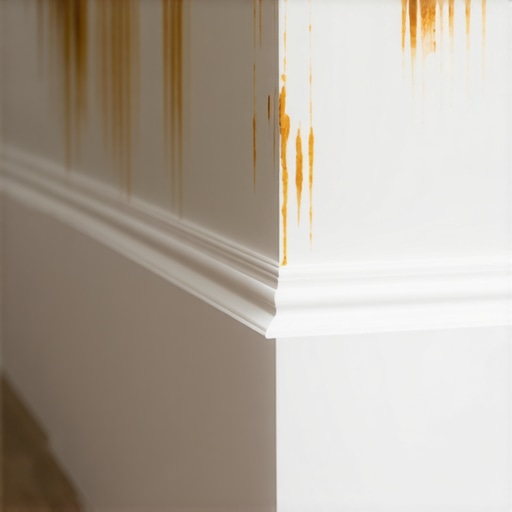
The physics of oxidation in your flooring trim
Most guys skip the leveling compound. They think the underlayment will hide the dip. It won’t. I spent three days grinding concrete on a job last month just so the floor wouldn’t click like a castanet. During that job, the homeowner asked me why the baseboards in her bathroom looked like they were bleeding. Small, orange-brown circles were blooming through the pristine white paint. That is not just a cosmetic flaw. It is a structural warning. When you see rust on your trim, you are witnessing a chemical reaction between iron, oxygen, and moisture that has found its way into the substrate. I have spent twenty-five years on my knees looking at these failures. It usually boils down to a fundamental misunderstanding of moisture vapor drive and the wrong choice of fasteners. If you want to avoid this, you have to stop thinking about your house as a static object and start viewing it as a porous organism that breathes moisture. Most people looking for chic baseboard designs that transform rooms in 2025 forget that the most beautiful trim will look like garbage if the nails are bleeding through the finish. This is about the science of the subfloor and the chemistry of the hardware.
The moisture trap behind your trim
Baseboard nail rust occurs when moisture vapor or liquid water reacts with non-galvanized steel fasteners. This oxidation creates iron oxide, which bleeds through the paint film. Often, this signifies high relative humidity or a failing vapor barrier in the subfloor or shower area. This is not a mystery. It is basic thermodynamics. Water moves from areas of high concentration to low concentration. If your concrete slab is damp, that water is going to find a way out. Usually, it wicks up the back of the baseboard. When that moisture hits a standard bright steel finish nail, the clock starts ticking. The metal begins to break down. The iron atoms lose electrons to the oxygen in the water. This creates that unsightly orange stain that no amount of topcoat can hide forever. You need to understand that the wall cavity is often a different microclimate than the room itself. While your thermostat says sixty-eight degrees and forty percent humidity, the space behind that baseboard might be sitting at eighty percent relative humidity because of a slow leak or a cold slab. This is why baseboards makeover ideas to elevate your space must always include a moisture assessment.
“A floor is only as good as the subfloor beneath it; deflection is the enemy of every joint.” – Master Flooring Axiom
Chemical warfare in your walls
Corrosion of fasteners is accelerated by the tannins in wood and the chemicals in MDF. When moisture is present, these acidic compounds eat away at the protective coating of the nail. This leads to premature failure of the paint bond and permanent staining of the trim. Medium Density Fiberboard is essentially a sponge held together by glue. It is incredibly popular because it is cheap and straight. However, if MDF gets wet, it holds that water against the nail for a long time. Unlike solid pine which might dry out, MDF stays damp. This prolonged exposure is a catalyst for rust. If you are working in a bathroom, the situation is even more dire. I often see guys installing trim right up against a shower curb. If the grout is failing, that water is going to wick right into the trim. You can check out grout restoration secrets for long-lasting results to see how to keep that moisture contained. If the grout fails, the nail fails. It is a chain reaction of bad decisions. I have seen fifteen thousand dollar floors ruined by a five dollar box of nails. It is enough to make a pro want to retire.
| Fastener Type | Composition | Rust Resistance | Best Application |
|---|---|---|---|
| Bright Steel | Raw Carbon Steel | Zero | Dry Living Areas |
| Electro-Galvanized | Zinc Coated | Low to Moderate | Standard Interior |
| Stainless Steel 304 | Alloyed Steel | High | Bathrooms and Kitchens |
| Stainless Steel 316 | Marine Grade | Extreme | Steam Showers and Coastal |
Why your shower is killing your baseboards
Shower leaks and high humidity in bathrooms cause capillary action where water travels behind the tile edge and into the trim fasteners. This results in nail head bleed and swelling of the wood. If you have showers that wow modern designs for 2025, you need to make sure the waterproofing extends far enough to protect the transition to the baseboard. Steam is a powerful force. It can penetrate tiny gaps in the caulking. Once it is behind the baseboard, it condenses. That liquid water sits on the nails. In many cases, the nails used in bathrooms are the same ones used in the bedroom. That is a mistake. In a high moisture environment, you should be using stainless steel finish nails. They do not react with water the same way carbon steel does. I have seen homeowners spend a fortune on showers with a style trendy ideas for small bathrooms, only to have the baseboards look like a disaster within six months because the installer used a cheap pneumatic nailer with standard staples. It is lazy and it is unprofessional. You have to think about the environment, not just the aesthetic.
The myth of the waterproof floor
Waterproof LVP and tile floors do not protect the subfloor from moisture vapor rising from below. This vapor drive can saturate the baseboard from the bottom up, leading to nail oxidation. I tell people this all the time. Just because your floor won’t rot doesn’t mean your walls won’t. If you have a concrete slab on grade, there is moisture coming up through it. If you didn’t put down a six mil poly vapor barrier, that moisture is hitting the bottom of your flooring. It then moves to the perimeter, which is where your baseboards live. This is why the expansion gap is so vital. It isn’t just for movement. It is for air. If you cram your trim down tight against a damp floor, you are creating a wick. While searching for eco-friendly tile solutions for sustainable homes in 2025, remember that the healthiest home is a dry home. Excessive moisture leads to mold, and that mold often starts right behind those rusting nails. Here is a checklist for preventing trim staining.
- Check subfloor moisture with a pin-less meter.
- Use stainless steel fasteners in any room with a water source.
- Seal the back and bottom edges of your trim before installation.
- Maintain a consistent indoor relative humidity between 30 and 50 percent.
- Ensure your shower waterproofing is integrated with the floor transition.
The ghost in the expansion gap
Expansion gaps are often filled with dust and debris, which can hold moisture against the baseboard fasteners. This creates a corrosive micro-environment that ruins trim paint. People think the gap is just dead space. It is a functional part of the engineering. If that gap gets filled with wet sawdust or drywall mud during construction, it creates a bridge for moisture. I once walked into a house where the walnut floor was cupping because the installers didn’t check the crawlspace. The same moisture that was warping the wood was rusting the baseboard nails. It was a total failure of moisture management. If you are dealing with dirty floors, look into tile cleaning tips for a sparkling bathroom in 2025 to keep the perimeter clear. While most people want the thickest underlayment, too much cushion actually causes the locking mechanisms on LVP to snap under pressure, which can also shift the baseboard and stress the nails. This mechanical stress can crack the paint around the nail head, allowing even more moisture to enter the iron core. It is a vicious cycle of structural neglect.
“Moisture is the single most common cause of flooring failure, manifesting as dimensional change or finish degradation.” – NWFA Technical Manual
Solving the rust bleed once and for all
Fixing rusted nail heads requires excavating the oxidation, treating the metal with a corrosion inhibitor, and using a high-quality primer. Simply painting over the rust will fail as the iron oxide will migrate through the new layer. You have to get aggressive. I use a small carbide scraper to dig out the loose rust. Then I hit it with a specialized primer, something with a high solids content that seals the metal from the air. If the nail is totally compromised, I pull it out. It is better to have a small hole to patch than a permanent brown stain. If you are struggling with old grout lines as well, you might need how to refresh grout without replacing it to ensure the whole room looks renewed. Don’t be afraid to pull a piece of trim if you suspect there is a larger leak behind it. It is cheaper to replace a ten dollar stick of MDF than it is to remediate a mold colony. If you have questions about specific products, you can contact us for a more detailed breakdown of localized moisture issues. This is about doing the job right the first time, not the easy way. The physics of your home doesn’t care about your schedule. It only cares about the laws of chemistry.