
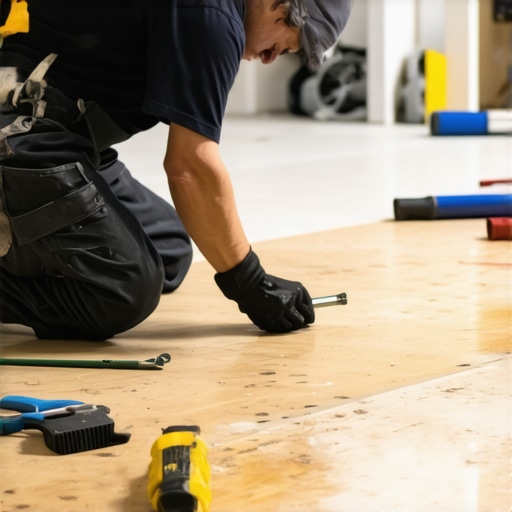
The physics of protecting plywood from tile failures
Most guys skip the leveling compound. They think the underlayment will hide the dip. It won’t. I spent three days grinding concrete on a job last month just so the floor wouldn’t click like a castanet. When it comes to plywood, the challenge is even steeper. I have seen countless homeowners slap tile directly onto OSB with cheap mastic. Three months later, the grout is powder and the tiles are loose teeth. You have to isolate the tile from the wood movement. Plywood is a cross-laminated timber product. Its strength comes from the alternating grain directions, but those very layers are susceptible to hygroscopic expansion. When moisture levels in the air or the slab beneath change, the wood fibers swell. If your waterproofing is not elastic enough to handle that micro-movement, the bond fails. My hands are stained with more adhesive than I can count, and I have learned that you cannot fight the physics of wood. You can only manage it through superior engineering and chemistry. The industry standards from the TCNA are not suggestions. They are the difference between a floor that lasts fifty years and one that fails before the first mortgage payment is due.
The 1/8 inch that ruins everything
Waterproofing a plywood subfloor requires a mechanical and chemical isolation layer between the wood and the tile. You must address the deflection of the wood, its moisture content, and the bond strength of the thin-set. Standard methods include liquid-applied membranes, sheet membranes, or uncoupling systems that allow the wood to move independently. If your subfloor has a dip greater than 1/8 inch over ten feet, your tile will crack. I do not care how expensive your grout is. I always carry a ten-foot straightedge on every job. I check the joints of the plywood sheets. If they are not blocked or if they show any signs of vertical movement, I fix the structure before I even open a bucket of membrane. You are building a system. The system starts with the floor joists and ends with the sealer. If any part of that chain is weak, the whole installation is a waste of time. When we talk about showers with a style, we are really talking about the invisible layers behind the pretty tile. That is where the real work happens.
“A floor is only as good as the subfloor beneath it; deflection is the enemy of every joint.” – Master Flooring Axiom
Why your subfloor is lying to you
Plywood subfloors often appear flat and stable to the naked eye while hiding significant structural deficiencies that lead to tile failure. Wood is a hygroscopic material that changes volume based on relative humidity. In humid regions like Florida or the Gulf Coast, plywood can expand significantly. In dry desert climates, it shrinks. This constant tugging at the tile bond is what causes grout to crack. I always use a pinless moisture meter to check the subfloor. If the plywood is above 12 percent moisture content, I wait. You cannot seal moisture into wood. It will eventually find a way out, usually by rot or by blowing the membrane off the surface. I have seen beautiful jobs ruined because the installer did not wait for the wood to acclimate to the home environment. You also have to look at the grade of the wood. CDX plywood is common, but it has voids in the internal layers. Those voids compress under weight. I prefer an Exposure 1 rated subfloor that is tongue and groove. It provides a more stable platform for the waterproofing layers to adhere to. If you are dealing with old grout issues, you might want to look at grout restoration secrets to understand how moisture ruins the bond over time.
The chemistry of liquid membranes
Liquid-applied waterproofing membranes provide a flexible and continuous barrier that prevents water from reaching the wood fibers. These products are typically elastomeric rubbers that you roll or brush on. The trick is the mil thickness. Most guys roll it on like paint. That is a mistake. You need a specific wet film thickness, often 20 to 30 mils, to ensure the membrane can bridge small cracks. I use a mil gauge to verify. If the membrane is too thin, it will snap when the plywood expands. If it is too thick, it might not cure properly in the center. I always apply two coats in a cross-hatch pattern. This ensures no pinholes are left behind. I also embed alkaline-resistant fabric into the corners and over the plywood seams. This reinforcement acts like rebar in concrete. It gives the membrane the tensile strength to resist the movement of the subfloor. Without that fabric, the liquid will eventually tear at the joints. This is especially vital in wet areas like showers that wow, where the water load is constant.
| Membrane Type | Vapor Barrier Rating | Elasticity Level | Best Application |
|---|---|---|---|
| Liquid Applied | High | Moderate | Large open floors |
| Sheet Membrane | Absolute | High | Steam showers |
| Uncoupling Mat | High | Very High | Plywood subfloors |
| Cement Board | Low | None | Wall applications |
The ghost in the expansion gap
Perimeter expansion gaps are the most overlooked aspect of plywood waterproofing and tile installation. Every floor needs room to breathe. I leave a 1/4 inch gap around the entire perimeter of the room. I do not fill this with thin-set. I do not fill it with grout. I leave it empty or fill it with a 100 percent silicone caulk. If you lock the tile against the wall, the force of the wood expanding will cause the center of the floor to tent. I have walked onto jobs where the floor literally popped up like a mountain ridge because the installer was too lazy to leave a gap. This is where baseboards makeover ideas come into play. The baseboard covers that gap, so there is no reason not to do it right. You should also check the chemistry of your thin-set. For plywood, you need a high-polymer modified mortar. The polymers create a flexible bond that can handle the sheer stresses of wood movement. Standard unmodified mortar is too brittle. It will fail on wood every single time.
“Tile itself is rarely the failure point; the wooden substrate determines the longevity of the installation.” – TCNA Field Observation
Uncoupling membranes as the ultimate insurance policy
An uncoupling membrane is a plastic mat with a fleece backing that allows the tile and the subfloor to move independently of each other. This is my preferred method for plywood. It solves two problems at once. First, the polyethylene material is naturally waterproof. Second, the geometry of the mat provides air channels that allow moisture to escape from the wood without affecting the tile bond. It is a mechanical bond rather than just a chemical one. You thin-set the mat to the plywood, then thin-set the tile to the mat. If the wood shrinks, the mat flexes, and the tile remains undisturbed. It is the gold standard for high-end installations. I tell my clients that it is like the suspension on a truck. It absorbs the bumps so the passengers do not feel them. When you are looking at chic baseboard designs, remember that the thickness of the uncoupling mat will raise your floor height. You need to account for this at the doorways and transitions. I have seen people install the floor and then realize they cannot close the bathroom door because they didn’t calculate the stack-up height.
Mandatory tools for subfloor preparation
- Moisture meter to verify wood saturation levels below 12 percent.
- Self-leveling compound for filling dips greater than 1/8 inch.
- Alkaline-resistant mesh tape for reinforcing plywood joints.
- High-quality notch trowel to ensure 100 percent mortar coverage.
- Ten-foot straightedge for floor flatness verification.
- 100 percent silicone sealant for perimeter expansion joints.
The chemical bond of modified thin-set
Modified thin-set mortars contain specialized polymers that bridge the gap between organic wood and inorganic ceramic materials. These mortars are rated under ANSI A118.11 standards. If your bag of thin-set does not mention that specific code, keep it away from plywood. The polymer chains within the mortar act like millions of tiny springs. When the wood moves due to seasonal changes, these springs stretch and compress. If you use a cheap, unmodified mortar, the bond is rigid. The first time the humidity hits 60 percent, the plywood will swell and shear the bond. I have spent days scraping up loose tiles that were installed with the wrong mud. It is a messy, expensive lesson that nobody should have to learn. You also need to pay attention to the open time of the mortar. Wood sucks moisture out of the thin-set very quickly. I often wipe the plywood with a damp sponge before applying the mortar to prevent it from skinning over. If the mortar skins over, the tile will not stick. You might as well be setting it in sand. For more on keeping things clean and durable, check out tile cleaning tips to see how a well-installed floor stays fresh.
Final technical verification
Before you lay a single tile, you must perform a final walk-through of the subfloor. Is it flat? Is it clean? Is it dry? I vacuum every inch of the surface. Dust is a bond breaker. I check every screw. If a screw head is sticking up, it will telegraph through the membrane and create a high spot. I make sure the waterproofing is continuous with no gaps or bubbles. If you are using a liquid membrane, look for a uniform color. Most brands change color as they dry to help you see thin spots. Take your time. The tiling part is the fun part, but the waterproofing is the part that keeps you from getting sued. If you follow these steps, you will have a floor that stands the test of time and handles whatever the environment throws at it. Do not cut corners on the materials and do not rush the drying times. A professional floor is built on patience and high-grade chemistry. Your subfloor is the foundation of your reputation. Treat it with the respect it deserves and your work will speak for itself for decades to come. If you have questions about the process or need expert advice, you can always visit our contact us page for more information.