
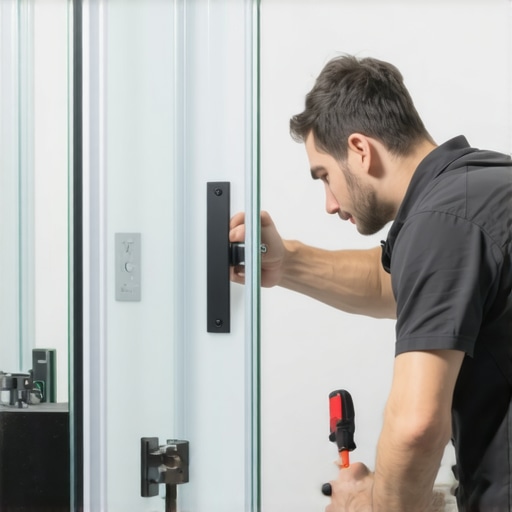
Most guys skip the leveling compound. They think the underlayment will hide the dip. It won’t. I spent three days grinding concrete on a job last month just so the floor wouldn’t click like a castanet. That same philosophy applies to your bathroom. When a shower door won’t stay closed, people look at the handle or the magnet. They are looking at the symptoms, not the disease. The disease is usually buried in the subfloor, the wall studs, or the chemistry of the grout. I have seen fifteen thousand dollar wide-plank walnut floors cup because of humidity, and I have seen three thousand dollar frameless glass doors shatter because a house settled by an eighth of an inch. A floor is a performance surface. A shower is a structural engineering challenge. If your door is drifting, gravity is winning a fight that your installer should have finished years ago.
The structural reality of a drifting door
A shower door that drifts open or refuses to latch is an indicator of a failed vertical plane. When I walk onto a job site, I smell the oak dust and the WD-40, and I immediately look for the plumb line. If the wall is out of plumb by even three millimeters, the weight of a heavy glass door creates a lever effect. This torque puts immense pressure on the hinges. Glass is heavy. A standard three-eighths inch tempered glass panel weighs roughly five pounds per square foot. If that weight is not perfectly balanced over the center of gravity, the door will hunt for its natural resting point. This is usually wide open or halfway shut. You are not just fixing a door. You are fighting the physics of the entire bathroom envelope. We have to look at the deflection of the floor joists and the rigidity of the wall studs before we even touch a screwdriver.
“A floor is only as good as the subfloor beneath it; deflection is the enemy of every joint.” – Master Flooring Axiom
Why the subfloor dictates the swing
The subfloor is the silent partner in every shower installation. If the floor joists have too much deflection, meaning they bounce or sag, the entire shower enclosure moves. This movement is microscopic at first. Over time, the constant vibration of footsteps near the bathroom causes the screws in the hinge plate to back out. You cannot see it. You feel it when the door starts to drag on the tile curb. I always check the L/360 rating of the floor. This is the standard for deflection. If your floor is too bouncy, no amount of hinge tightening will fix your door for more than a week. The movement will continue until the grout cracks or the glass binds. You might need to look at tile cleaning tips for a sparkling bathroom in 2025 to see if mineral buildup in those cracks is actually what is obstructing your door track.
Chemical interference in the magnetic latch
Magnetic strips in shower doors fail because of the chemistry of hard water. Calcium and magnesium ions in your water supply create a crystalline crust over the magnetic surface. This is not just a cleaning issue. It is a physical barrier that prevents the magnetic field from engaging. The magnets are often made of a flexible polymer infused with magnetic dust. Over time, the heat from the shower causes these polymers to off-gas and harden. Once they lose their flexibility, they can no longer create the airtight seal needed to hold the door shut. You are dealing with a loss of polarization and a physical obstruction. I have seen homeowners replace entire doors when all they needed was to dissolve the calcium carbonate with a mild acid and a stiff brush. If you are looking for long term results, you must understand the interaction between your cleaning agents and the door hardware.
| Component | Allowable Tolerance | Failure Result |
|---|---|---|
| Hinge Plumb | 1/16 inch | Door Drift |
| Glass Level | 1/32 inch | Scuffing on Curb |
| Magnetic Gap | 2.0 mm | Latch Failure |
| Screw Torque | 15-20 in-lbs | Hinge Sag |
The ghost in the expansion gap
Every floor needs room to breathe. When we install tile or hardwood, we leave an expansion gap at the perimeter. If your bathroom tile was installed tight against the wall without a gap, the expansion of the house will push against the shower pan. This pressure transfers directly into the glass enclosure. It is a slow-motion car crash. This pressure can warp the metal frame of the shower or tilt the glass just enough to prevent the latch from meeting the strike plate. This is why I am a stickler for baseboards makeover ideas to elevate your space because the baseboard is what hides that essential gap. Without it, the floor has nowhere to go but up or into your shower. If the door won’t stay closed, check if the tile is pinching the frame. You might need to relieve that pressure by cutting back a small section of grout.
Mechanical failure and hinge fatigue
Hinges are the most hardworking part of the bathroom. They are subjected to high humidity, varying temperatures, and constant mechanical stress. Most modern shower hinges use a spring-loaded mechanism or a cam-rise system. The internal springs can suffer from metal fatigue. If the spring loses its tension, the door will not return to the closed position. This is common in cheap, builder-grade hardware. I tell people to avoid the big box discount retailers for this very reason. You want heavy brass hardware with stainless steel internal components. If the hinge is squeaking or showing signs of powder, which is actually pulverized metal, it is time for a replacement. Do not wait for the door to fall. A sagging door can shatter if it hits the floor at the wrong angle.
- Inspect the hinge gaskets for signs of compression or slipping.
- Verify that the wall anchors are still biting into the structural wood.
- Clean the magnetic strips with a non-abrasive vinegar solution.
- Check the sweep at the bottom of the door for friction against the tile.
- Level the shower curb to ensure it is not sloped the wrong way.
When the grout becomes the enemy
Grout is porous. It absorbs water, skin oils, and soap scum. If the grout around your shower hinges is soft or crumbly, the structural integrity of the door is compromised. Water seeps behind the tile and rots the backing board. This is usually why a door won’t stay closed. The wall itself is becoming soft. I have seen guys try to caulk over this. That is a crime in my book. You need to address the moisture. You might need to look into grout restoration secrets for long lasting results to fix the foundation of the wall. If the wall moves, the door moves. It is that simple. A solid wall means a solid latch. If you ignore the grout, you are just waiting for the door to pull the tile right off the wall.
“Water is a patient thief; it will steal the stability of your floor one drop at a time.” – Master Flooring Axiom
The 1/8 inch that ruins everything
In my twenty five years of installing, I have learned that the difference between a perfect job and a callback is one eighth of an inch. That is the width of a standard grout line. It is also the amount of sag that will cause a magnetic latch to miss its mark. If your shower door is drifting, you should start by loosening the hinge screws slightly, repositioning the door, and then tightening them back down while a second person holds the glass perfectly level. This is a game of millimeters. We are not just hanging a door. We are calibrating a machine. For more complex setups, especially in small spaces, checking out showers that wow modern designs for 2025 can give you an idea of how minimalist hardware should be correctly aligned. If you can’t get it within that eighth of an inch, the door will never stay shut on its own.
The physics of the shower sweep
The plastic sweep at the bottom of the door is often the culprit. These sweeps are designed to deflect water back into the pan. However, they are made of vinyl or polycarbonate. These materials have a memory. If the door is left open for long periods, the sweep can warp. When you try to close the door, the warped plastic hits the tile and acts like a spring, pushing the door back open. Replacing a sweep is the easiest fix in the book, but people miss it because they are looking at the hinges. Check the friction. If the sweep is dragging too hard, it will overcome the force of the magnet. Trim the sweep or replace it with a fresh one to restore the balance of the door.