
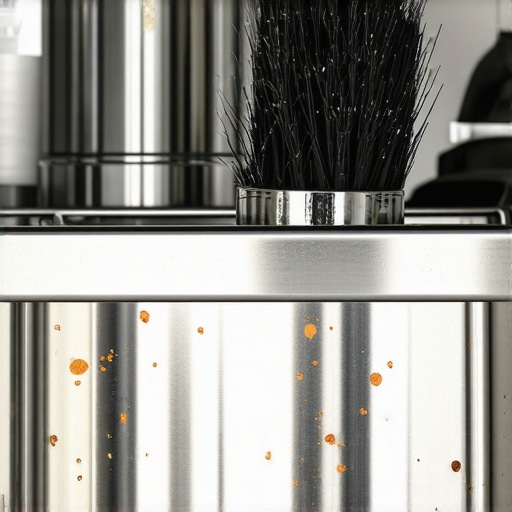
I spent thirty years staring at the microscopic failures of residential surfaces and I can tell you that a rusty shower caddy is never just a cosmetic annoyance. It is a chemical assault on your tile and grout. Most homeowners ignore the orange streaks until the iron oxide has migrated deep into the cementitious matrix of their shower floor. I spent three days grinding concrete on a job last month just so the floor wouldn’t click like a castanet, and that same level of structural obsession applies to your shower. When you see rust, you are seeing the slow death of your bathroom aesthetics. If that metal caddy is bleeding onto your grout, you are facing a molecular bonding issue that will eventually require a full restoration. Rust removal requires an understanding of acidity, pH balancing, and the physical porosity of your tile. Do not just scrub it with a plastic brush and hope for the best. You need a strategy that protects the integrity of the waterproofing membrane hidden beneath the surface.
The chemistry of iron oxide in wet environments
To remove rust from a metal shower caddy you must use a mild acid like white vinegar or a paste of lemon juice and salt to break the chemical bond of the iron oxide. For stubborn stains on the tile itself, a specialized phosphoric acid cleaner is required to lift the metal particles without etching the grout. This process relies on a neutralization reaction. Iron oxide is an inorganic stain that thrives in the high-humidity microclimate of your bathroom. When water sits on a low-grade chrome-plated steel caddy, the oxygen in the water reacts with the iron. This creates the flaky orange substance we call rust. On a molecular level, these particles are jagged and small enough to wedge themselves into the pores of your grout. This is why a simple wipe-down never works. You are fighting a battle against a substance that wants to become part of your floor. If you allow it to sit, the rust will eventually cause the metal to pit, creating even more surface area for bacteria and mold to thrive. You have to stop the oxidation at the source or throw the caddy in the trash before it ruins a five-thousand-dollar tile job.
Why your subfloor cares about shower moisture
Most people think a shower is a waterproof box. It is not. It is a managed water shed. If your shower caddy is rusting, it means your bathroom has a ventilation problem or a humidity dwell-time issue. High moisture levels that cause metal to oxidize are the same levels that cause baseboards to swell and grout to crack. When I look at a rusty caddy, I am immediately looking at the grout restoration secrets needed to fix the damage it left behind. If the moisture is high enough to eat through chrome plating, it is high enough to penetrate a poorly sealed grout joint. Once water gets behind that tile, it hits the thin-set. If you used a cheap, non-modified thin-set, the water will begin to break down the bond. I have seen entire walk-in showers fail because the homeowner ignored high humidity indicators like a rusting caddy. The wood framing behind the tile starts to wick that moisture. This leads to rot, mold, and a structural failure that no amount of vinegar can fix. You have to respect the physics of the assembly.
“A floor is only as good as the subfloor beneath it; deflection is the enemy of every joint.” – Master Flooring Axiom
The vinegar and salt mechanical approach
The most effective home remedy for a rusted caddy involves a saturation period of at least four hours. You cannot just spray and wipe. You need to create a poultice or a soak that allows the acetic acid in the vinegar to penetrate the layers of oxidation. Take the caddy out of the shower. Do not do this over your tile. If you drip concentrated vinegar onto a natural stone floor like marble or travertine, you will etch the surface instantly. This creates a permanent dull spot that requires professional diamond polishing to remove. Lay down a heavy drop cloth or do this in a plastic tub. Submerge the rusted areas in a mixture of white vinegar and a heavy dose of table salt. The salt acts as a mild abrasive and a catalyst. After the soak, use a stiff nylon brush. Avoid steel wool. Steel wool leaves behind microscopic bits of metal that will start their own rust cycle within a week. It is a self-defeating cycle that I see rookies make all the time. Scrub until the metal is bright again, then rinse with a baking soda and water solution to neutralize the acid. This stop-gap measure works for light surface rust, but if the plating is gone, the rust will return.
The heavy duty chemical intervention
When the rust has moved from the caddy to the floor, you need to bring in the professional grade chemicals. This is where we talk about phosphoric acid or oxalic acid. These are the big guns. They are designed to convert iron oxide into a water-soluble compound that can be rinsed away. However, these chemicals are aggressive. If you are working in showers that wow with modern porcelain, you have a bit more leeway because porcelain is nearly impervious. But if you have ceramic tile with a high absorption rate, you must proceed with caution. Always pre-wet the grout with clean water. This saturates the pores of the grout so the acid cleaner stays on the surface rather than soaking in deep. Apply the cleaner only to the stained area. Use a small detail brush. Watch the reaction. You will often see a slight fizzing. This is the acid eating the metal. Rinse it off within sixty seconds. Leaving acid on grout for too long will weaken the cement bond, leading to sandy, crumbling joints. This is why I always tell people to check their tile cleaning tips before they start pouring hardware store chemicals onto their expensive floors.
| Removal Method | Surface Safety | Effectiveness | Required Dwell Time |
|---|---|---|---|
| White Vinegar | Safe for Porcelain | Moderate | 4 to 6 Hours |
| Lemon Juice Paste | Safe for Most | Low | 2 Hours |
| Phosphoric Acid | Professional Use Only | High | 1 to 3 Minutes |
| Baking Soda Scrub | Safe for All | Low | 10 Minutes |
The 1/8 inch that ruins everything
In the world of flooring, the smallest measurements matter most. When you hang a heavy metal caddy over a shower head, you are often creating a point of tension. If that caddy vibrates against the tile every time the water runs, it creates micro-scratches. These scratches are the perfect home for rust and mineral deposits. I have seen beautiful subway tile ruined because a cheap caddy vibrated a hole right through the glaze. It seems like a small thing, but over five years of daily showers, that 1/8 inch of movement is like sandpaper. If you insist on using a metal caddy, you must use rubber bumpers. These provide a physical break between the metal and the tile. This prevents the transfer of rust and protects the surface from mechanical wear. It is the same reason we use expansion gaps in hardwood flooring. Materials need room to exist without destroying their neighbors. If you do not give the metal a buffer, the tile will lose every time. It is a structural reality that most people ignore until they see the first orange drip.
Preventing the return of the orange ghost
Prevention is the only real cure for rust in a high-moisture environment. Once a metal caddy starts to oxidize, the protective factory coating is compromised. You can clean it, but you have opened the door to future corrosion. The best move is to switch to a high-grade 304 stainless steel or a solid aluminum caddy. These materials form a self-passivating layer of chromium oxide that resists further deep oxidation. If you are stuck with a steel caddy, you can try coating it with a clear automotive wax or a specialized silicone spray. This creates a hydrophobic barrier that forces water to bead off rather than sitting on the metal. You should also look at your how to refresh grout options to ensure your floor is sealed against future spills. A well-sealed grout joint will resist rust penetration, making the cleanup a thirty-second wipe instead of a three-hour scrub. Do not be lazy with your sealant. It is the only thing standing between your subfloor and a watery grave.
“Water migration within a tile assembly is not a possibility; it is a mathematical certainty.” – Tile Installation Standard
The impact of rust on bathroom baseboards
High humidity does not just stay in the shower. It travels. If your shower is damp enough to rust a caddy, your bathroom is damp enough to destroy your trim. I often see people obsessing over a spot on their tile while their baseboards makeover ideas are being ruined by moisture-wicking. Standard MDF baseboards are essentially compressed paper. When they are exposed to the steam that causes rust, they swell like a sponge. This leads to paint peeling and eventually mold growth behind the trim. If you see rust on your caddy, check the corners of your room. Look for gaps where the baseboard meets the floor. If you see black spots or soft wood, you have a systemic moisture problem. You might need to upgrade to a PVC baseboard or a solid wood trim that has been back-primed to resist water. I always tell my clients that the shower caddy is the canary in the coal mine. It is the first thing to fail, but it is telling you a story about the air quality in your entire bathroom. Listen to it before you have to tear out the drywall.
- Inspect caddy welds for early signs of orange discoloration every month.
- Apply a thin layer of car wax to new metal caddies to seal the factory finish.
- Ensure the shower fan runs for at least twenty minutes after every use.
- Check grout lines directly under the caddy for any permanent staining.
- Replace any caddy that shows signs of deep pitting or structural flaking.
- Use clear silicone suction cups to keep the caddy from touching the tile surface.
The final word on metal maintenance
Maintaining a bathroom requires a mechanical mindset. You are managing a wet environment that wants to return to a state of nature. Metal wants to rust. Wood wants to rot. Grout wants to crumble. Your job is to intervene with the right chemistry and the right physical barriers. If you find yourself scrubbing rust every weekend, you are failing at the engineering level. Stop buying cheap chrome-plated accessories. Invest in quality materials that can handle the thermal expansion and the constant moisture of a modern shower. Check your chic baseboard designs to make sure they are compatible with the humidity levels you are maintaining. A clean, rust-free shower is a sign of a well-ventilated, well-built home. It shows that you understand the relationship between the surface and the structure. Take care of the small things like a shower caddy, and you will find that the big things like your subfloor and your tile assembly will last a lifetime. Keep your tools sharp and your grout sealed. That is the only way to win the war against moisture.