
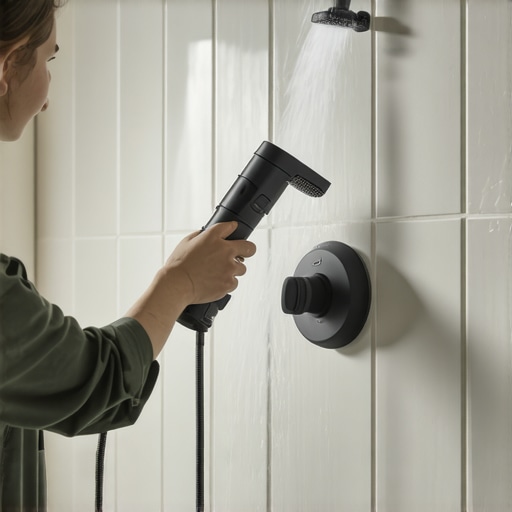
I once walked into a luxury master bath where the travertine looked like it had been coated in thick candle wax. The homeowner was frantic. They had spent three days scrubbing with acidic cleaners and stiff brushes. They were actually etching the surface of the natural stone while leaving the actual soap scum intact. The minerals in their hard water had bonded with fatty acids from expensive artisanal soaps to create a literal shell of calcium stearate. I told them to put the chemicals away. I spent the next six hours with a commercial-grade vapor system, slowly lifting that grey film without a single drop of bleach. It is about physics and thermal dynamics, not elbow grease. If you do not understand the porosity of your grout, you are just moving dirt around. I have spent twenty five years on my knees looking at tile joints, and I can tell you that most people fail because they treat a shower like a flat surface. It is a complex engineering environment of moisture, minerals, and chemical bonds.
The molecular reality of soap scum and steam
Soap scum is a chemical byproduct formed when fatty acids in soap react with calcium and magnesium minerals found in hard water. This reaction creates an insoluble substance known as lime soap or calcium stearate. This waxy film adheres to the microscopic valleys of your tile and the jagged pores of your cementitious grout. Steam works by using thermal energy to break the molecular bonds of this wax. When water reaches 212 degrees Fahrenheit, it transitions from a liquid to a gas. This gas expands and carries immense heat. When this vapor hits the soap scum, it re-emulsifies the fats. The heat lowers the viscosity of the waxes, making them fluid again so they can be wiped away. This is far more effective than scrubbing because the vapor particles are smaller than the pores of the grout, allowing for deep penetration that a brush cannot reach.
“A floor is only as good as the subfloor beneath it; deflection is the enemy of every joint.” – Master Flooring Axiom
The science of cleaning tile cleaning tips for a sparkling bathroom in 2025 involves understanding the ASTM standards for tile absorption. Ceramic tiles generally have an absorption rate of less than 0.5 percent, but your grout is a different story. Most residential grout is Portland cement-based and highly porous. When soap scum enters these pores, it acts like an anchor. Only the thermal agitation of steam can vibrate those particles loose. You are essentially using the kinetic energy of water molecules to blast the surface at a microscopic level. It is a precise thermal shock that releases the grip of the contaminant from the mineral structure of the tile.
Why your grout is a sponge for minerals
Grout is a cementitious product that naturally contains thousands of microscopic voids and channels throughout its structure. These voids are created during the curing process as the water in the mix evaporates. If the grout was not sealed with a high-quality penetrating sealer, it remains open to any liquid that hits it. This is why grout lines often look darker than the tile. They are literally filled with old soapy water, skin cells, and hard water minerals. Steam is the only medium that can enter these voids as a gas and exit as a liquid, carrying the dissolved solids with it. If you are struggling with discolored lines, you should look into how to refresh grout without replacing it to understand the restoration process beyond simple cleaning.
When you apply steam, you must maintain a consistent distance. If you hold the nozzle too far away, the vapor cools before it hits the target and you lose the cleaning power. If you hold it too close, you risk pushing moisture too deep into the wall cavity if there are cracks in the grout. The goal is a steady 45 degree angle. This creates a shearing force that lifts the scum up and away from the surface rather than pushing it deeper into the pores. I have seen guys ruin a perfectly good shower by using too much pressure on old, sandy grout. You have to listen to the surface. If the grout starts to pit, you are being too aggressive with the PSI.
The physics of thermal shock on tile surfaces
Thermal shock is the process of rapidly changing the temperature of a material to alter its physical state or bond strength. In the context of cleaning, we use steam to create a localized thermal expansion. The soap scum expands at a different rate than the ceramic or stone tile beneath it. This differential expansion causes the bond between the two materials to fail. However, you must be careful with natural stone like marble or slate. These materials are sensitive to heat and can crack if they have existing internal fissures. Always pre-heat the area by waving the steam wand over the entire wall before focusing on a single spot. This brings the stone up to a baseline temperature and reduces the risk of stress fractures.
| Steamer Grade | Pressure (PSI) | Temperature (F) | Primary Use Case |
|---|---|---|---|
| Consumer Handheld | 30 to 45 | 212 to 225 | Light surface dust and mirrors |
| Home Pro Cylinder | 50 to 65 | 250 to 275 | Residential grout and soap scum |
| Commercial Grade | 75 to 150 | 290 to 320 | Restoration and industrial grease |
As indicated in the table, the temperature at the boiler is not the temperature at the tip. Heat loss occurs rapidly as the steam travels through the hose. For heavy soap scum buildup in showers that wow modern designs for 2025, you need a machine that can maintain at least 50 PSI. Anything less and you are just making the room humid without actually cleaning the substrate. The pressure is what drives the heat into the textures of the tile. If you are working on a vertical surface, start from the top and work your way down. This allows the gravity to pull the liquified scum toward the drain where it can be easily wiped.
Steam cleaning baseboards without warping the wood
Baseboards are often overlooked in bathroom cleaning, yet they collect a significant amount of overspray from hair products and soaps. Cleaning baseboards makeover ideas to elevate your space involves a delicate balance of moisture control. Most modern baseboards are made of MDF or finger-jointed pine. Both of these materials are highly susceptible to moisture expansion. If you blast a baseboard with steam for more than a few seconds, the wood fibers will swell and the paint will peel. When using steam near baseboards, use a microfiber wrap over the brush attachment. This allows the steam to heat the cloth, which then melts the grime on the baseboard without saturating the wood itself. It is a contact-transfer method rather than a direct-injection method.
I always tell my apprentices that the baseboard is the frame of the floor. If the frame is water-damaged and swollen, the whole room looks like a mess. Use short bursts of steam and follow up immediately with a dry towel. You want to capture the moisture before it finds its way into the gap between the floor and the wall. This gap is necessary for expansion and contraction of the flooring material, but it is also a highway for water to reach your subfloor. If you are curious about styles, you can see chic baseboard designs that transform rooms in 2025 to see how to integrate better materials that handle moisture more effectively.
A step by step guide to the steam injection method
The steam injection method requires a systematic approach to ensure that the heat is maintained long enough to break chemical bonds. Do not rush the process. If you move the wand too fast, you are only cleaning the very top layer of dust. For real soap scum, the surface needs to reach a temperature of at least 150 degrees Fahrenheit. You can test this with an infrared thermometer if you want to be precise. I usually just look for the scum to turn from a hard white crust into a clear, runny liquid. That is the sign that the lipids have melted.
- Clear the area of all rugs and towels to prevent them from soaking up dirty runoff.
- Apply a light mist of water to the walls to prime the surface for the steam.
- Start at the highest point of the shower tile and work in two foot sections.
- Hold the steam nozzle one inch from the grout line and move at a rate of one inch per second.
- Wipe the melted residue immediately with a clean microfiber cloth before it cools and re-hardens.
- Focus on the corners and the transition where the wall meets the floor pan.
- Use a small nylon brush attachment for stubborn spots in the grout joints.
One contrarian data point that most people get wrong is the thickness of the cleaning cloth. While most people want a thick, fluffy towel, you actually want a thin, high-density microfiber. Thick towels insulate the steam too much and prevent the heat from reaching the tile. You want a cloth that allows the thermal energy to pass through while still having enough surface area to trap the liquified calcium stearate. If the cloth gets too wet, change it out. A saturated cloth will just smear the soap around rather than removing it.
The maintenance routine for long term protection
Maintaining a clean shower after a deep steam session is about preventing the re-deposition of minerals. Once the pores are clean, they are also wide open. This is the perfect time to apply a high-quality sealer. If you leave the grout unsealed, it will absorb the very next round of soap scum and you will be back to square one in a month. I recommend a solvent-based penetrating sealer for maximum longevity. These products go deeper into the grout matrix than water-based alternatives. For more advanced restoration, look into grout restoration secrets for long lasting results. It covers the long term chemistry of keeping these surfaces pristine.
“Cleaning without sealing is just a temporary state of decay; protect the pore and you protect the floor.” – Master Flooring Axiom
The humidity of your bathroom also plays a role. If you live in a high-humidity area, the moisture stays on the tile longer, giving the minerals more time to bond. Make sure your exhaust fan is rated for the square footage of the room. You want to move at least one cubic foot of air per minute for every square foot of the bathroom. If you see fog on the mirror after a shower, your ventilation is failing and your soap scum problem will return faster. Steam cleaning is a powerful tool, but it is part of a larger ecosystem of bathroom maintenance. Treat your tile like the structural investment it is, and it will last a lifetime without the need for harsh, lung-damaging chemicals. If you have questions about specific installations, you can always contact us for professional guidance on your particular substrate and tile type.