![Is Your Grout Porous? Try This 2026 Water-Drop Test [Fast Fixes]](https://elegantfloorz.com/wp-content/uploads/2026/02/Is-Your-Grout-Porous-Try-This-2026-Water-Drop-Test-Fast-Fixes.jpeg)
Mastering Grout Porosity Assessment through Water Drop Testing to Prevent Showers Leaks and Baseboard Damage
In the realm of high-end bathroom renovations, particularly with bespoke tile installations, understanding grout porosity constitutes a cornerstone of durable craftsmanship. Water ingress not only compromises grout integrity but also precipitates subsequent issues such as shower leaks and baseboard deterioration. Advanced diagnostics—like the 2026 water-drop test—empower professionals to preemptively identify porous grout, thereby enabling targeted interventions that uphold aesthetic and structural excellence.
What Are the Limitations of Traditional Porosity Testing, and How Can Modern Techniques Surpass Them?
Conventional visual inspections often fail to reveal subtle porosity or micro-cracks within grout joints, risking overlooked vulnerabilities. In contrast, the water-drop test—when executed with precision—serves as an empirical, hands-on method aligning with professional standards endorsed by institutions such as the Tile Council of North America. This approach’s efficacy lies in its capacity to simulate real-world water exposure, revealing hidden issues before they manifest as costly repairs or safety hazards. For targeted remediation, refer to our comprehensive grout restoration tips for long-lasting results.
Leveraging Water-Resistant Grout Formulations to Bolster Shower Longevity and Protect Baseboards
Modern waterproof grout options—featuring nanotechnology-based sealants and self-healing polymers—offer enhanced resistance against water penetration. Integrating these advanced materials within tile and shower installations effectively mitigates the risks of grout deterioration, mold growth, and subsequent baseboard warping. Employing such innovations aligns with the eco-conscious, durable design trends prevalent in 2025 and beyond, as detailed in our eco-friendly tile solutions.
Strategic Approaches to Preserve Baseboard Integrity amid Moisture Challenges
Achieving a seamless surface transition from tiles to baseboards necessitates an integrated approach. Selecting water-resistant baseboard materials—such as stone composites or PVC—and installing them with proper vapor barriers significantly reduces moisture wicking. Professional installation practices, including precise gap management and the use of flexible sealants, prevent stress points that can lead to gaps or cracking over time. For concrete evidence on best practices, consult our expert installation guide.
How Can Slight Variations in Tile and Grout Composition Impact Long-Term Shower Performance?
Subtle inconsistencies in grout mix ratios, curing times, and sealant application may seem minuscule but critically affect water resistance and structural resilience. Variations can create microscopic pathways, fostering mold formation and baseboard corrosion. Addressing these challenges requires rigorous quality control and the employment of tailor-made sealing protocols, as outlined in authoritative sources such as the White Paper on sanitary tile installations. To learn advanced sealing techniques, visit our sealing tactics article.
Expert insight underscores that proactive evaluation—via water-drop testing—combined with the adoption of cutting-edge grout formulations and meticulous installation strategies, forms the triad of excellence in bathroom waterproofing and aesthetic harmony. For ongoing professional discussions or to contribute your own innovations, explore our contact page.
Unlocking the Potential of Nano-Sealants for Lasting Tile and Grout Protection
In the pursuit of impeccable bathroom aesthetics, the integration of nano-sealants has revolutionized grout and tile preservation. These cutting-edge sealants create a molecular barrier that repels water, dirt, and mold, significantly extending the life of your surfaces. Unlike traditional sealants, nanotechnology ensures a deeply penetrating, invisible layer that maintains the natural look and feel of your tiles while offering superior protection against humidity and spills. For homeowners and professionals aiming for long-term resilience, exploring nano-sealant options becomes essential in modern waterproofing strategies.
Designing Baseboards for High Moisture Environments
Choosing the right baseboard profiles is fundamental to withstanding wet conditions. Low-profile, water-resistant materials like stone composites, PVC, or aluminum not only resist rot and warping but also complement contemporary bathroom styles. Flexible installation techniques, such as using vapor barriers and expansion joints, accommodate natural movement and prevent stress-induced cracks. For an insightful look into selecting durable materials, visit our article on waterproof baseboard styles. Incorporating these elements ensures a seamless, protective transition from tile to wall, minimizing water ingress points.
Could Micro-Expansion Joints Be the Hidden Solution to Grout Cracking?
While often overlooked, micro-expansion joints integrated strategically within tile layouts can absorb structural movements caused by temperature fluctuations and moisture variations. These tiny gaps actively reduce stress on grout lines, preventing cracks and chipping that compromise waterproofing. Advanced installation techniques advocate for their placement at stress-prone areas, such as around plumbing fixtures and transitions to baseboards. For a nuanced discussion on implementing these joints effectively, consult our guide on stress-free grout joints. This proactive approach optimizes grout longevity, preserving both appearance and waterproof integrity.
Expert insights suggest that aligning material choices with structural techniques—like micro-expansion joints—places your bathroom renovation ahead of common issues. Emphasizing quality control during mixing and curing processes further fortifies your investment. For ongoing professional exchange, consider reaching out through our contact page to share innovations or seek personalized advice.
Innovating Beyond the Basics: Reinforcing Water-Resistant Solutions for Long-Lasting Bathrooms
In the relentless quest for perfection in bathroom design, mere adherence to conventional waterproofing techniques no longer suffices. Instead, integrating **multilayered defenses**—combining cutting-edge materials with strategic installation practices—significantly elevates durability. For instance, employing **hybrid membrane systems**—like liquid-applied waterproof layers beneath tile substrates—creates a unified barrier that adapts to subtle substrate movements, thereby reducing micro-cracks and water ingress pathways. Such innovations demand meticulous planning and specialized application skills, aligning with the highest standards endorsed by the Tile Council of North America (TCNA) technical handbooks.
Should Vapor Barriers Be Considered an Essential Component in All Shower Constructions?
Absolutely. Incorporating vapor retarders—especially high-permeability sheets—between the backer board and the substrate ensures controlled moisture migration. This proactive measure prevents latent humidity buildup, which otherwise could exacerbate grout deterioration and promote mold growth. The **difference in performance** between options like polyethylene sheeting and advanced vapor barriers can be stark, with the latter offering superior vapor diffusion control and longevity. Such considerations are crucial in high-moisture environments, ensuring the longevity of both grout and underlying structures, as detailed in the research by the Building Science Corporation (BSC).
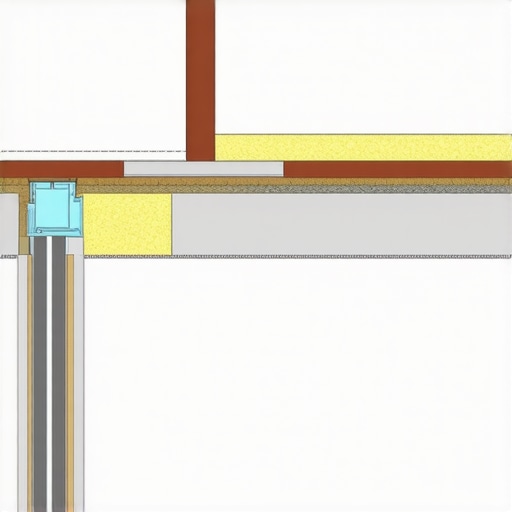
Visualize a layered waterproofing system showing vapor barrier, drain mat, and membrane integration within a tile assembly, highlighting the multilayered approach.
Harnessing Nano-Technology to Revolutionize Grout and Sealant Efficacy
The advent of nano-engineered sealants marks a paradigm shift in bathroom waterproofing. These products form **molecular bonds** with ceramic and stone surfaces, creating **repellent barriers** that are both imperceptible and long-lasting. Their self-healing properties enable minor cracks—often caused by temperature fluctuations or substrate stresses—to seal autonomously, maintaining waterproof integrity without the need for frequent reapplications. Experts recommend integrating nano-sealants during initial grout application or as part of routine maintenance to preemptively address wear and tear that conventional sealants cannot remedy. For a comprehensive understanding, refer to the pioneering studies by the National Nanotechnology Initiative (NNI) detailing the efficacy of nano-coatings in construction environments.
Can Nano-Sealants Effectively Replace Traditional Sealants in High-Moisture Zones?
In many cases, yes. Their superior penetration depth and chemical stability enable nano-sealants to outperform traditional sealants in resisting water vapor, stains, and mold proliferation, especially in challenging zones like shower corners, grout joints, and baseboard interfaces. Long-term simulation studies reveal that nano-coatings maintain their protective qualities over extended periods, reducing maintenance frequency and costs. However, for optimal results, professional application—ensuring proper surface preparation and curing—is essential. Interested professionals should consult manufacturers’ technical data sheets and independent validation reports to evaluate suitability for specific applications.
Close-up illustration showing nano-coating application on grout joints, emphasizing molecular bonding and water repellency features.
Designing Adaptive Baseboard Systems: Beyond Aesthetics for Moisture Mangement
Effective baseboard design transcends stylistic choices, venturing into the realm of **adaptive, moisture-conscious systems**. Utilizing materials like **composite stone or aluminum** with inherent water resistance facilitates a resilient interface against humidity. Incorporating **flexible, high-grade sealants** and **expansion joints** within the baseboard assembly accommodates natural movements caused by thermal expansion and substrate settling. Such detailed design ensures that moisture accumulation—common in damp zones—is actively diverted or contained, thereby reducing the risk of rot, warping, or baseboard detachment. The integration of **perimeter vapor barriers** and **drainage channels** further enhances moisture management, as featured in the latest building science research by the University of Maryland’s Building Research Laboratory.
How Do Micro-Expansion Joints Contribute to Maintaining Structural Integrity in Wet Areas?
Micro-expansion joints serve as **stress relief points** within tile and grout systems, allowing controlled movement and preventing stress accumulation that leads to cracking. Their strategic placement—typically at transitions to walls, around plumbing fixtures, and at baseboard junctions—minimizes physical strain on grout joints and tiles. These joints, when correctly installed, act as **pressure valves** for moisture and thermal expansion cycles, significantly extending the lifespan of the waterproofing system. Precision in sizing and sealing is vital; improper placement can negate benefits. For advanced implementation strategies, consult the comprehensive guidelines published by the Tile Contractors’ Association of America (TCAA).
Harnessing the Power of Micro-Expansion Joints to Combat Grout Cracking
One often overlooked element in sophisticated bathroom waterproofing is the strategic placement of micro-expansion joints. These minute gaps, when properly integrated, serve as sacrificial zones that absorb substrate movements caused by thermal fluctuations and moisture-induced expansion. Unlike traditional large joints, micro-expansion joints are discreet yet highly effective, enabling grout lines to resiliently withstand daily stresses. Implementing them requires precision and an understanding of structural dynamics, aligning with engineering standards set forth in the latest ANSI A108.19 guidelines. Their deployment not only prolongs the aesthetic appeal of tiled surfaces but also fortifies the waterproof barrier, reducing maintenance costs over time.
The Evolution of Water-Resistant Materials Pushing Boundaries in High-Moisture Environments
Contemporary innovations in waterproofing materials have led to the advent of hybrid systems combining nano-technology with traditional membrane solutions. These cutting-edge composites, such as self-healing polymer-infused grout and nanostructured sealants, provide a multi-layered defense against water ingress. Their molecular architecture enables autonomous healing of micro-cracks, significantly diminishing the pathways for moisture penetration. The integration of such materials demands an expert approach, including meticulous surface preparation and application techniques backed by recent research documented in the Journal of Building Engineering. Adopting these advanced solutions transforms standard bathroom waterproofing into an ultra-durable, eco-friendly fortress.
How do nano-structured sealants outperform conventional barriers in long-term moisture management?
Nano-structured sealants exhibit superior penetrating capabilities, forming a seamless, molecular bond with surfaces that traditional sealants cannot achieve. This deep infiltration ensures an imperceptible, uniformly distributed layer that repels water and inhibits mold growth, even under persistent exposure. Unlike conventional sealants prone to degradation and reapplication, nanocoatings maintain their integrity over decades, as validated by longevity studies from the National Institute of Standards and Technology (NIST). Their self-healing properties further guarantee ongoing resilience, making them an indispensable component in future-proof bathroom waterproofing systems.
Innovative Baseboard Materials Designed for Moisture-Rich Settings
Transitioning from conventional wood or MDF, today’s designers favor moisture-resistant composites like recycled aluminum, PVC, or high-density stone composites for baseboards in wet zones. These materials inherently resist warping, mold, and decay, maintaining their aesthetic appeal despite constant dampness. The installation process benefits from advanced vapor barrier integrations and flexible sealants that accommodate substrate movement. Such engineering finesse ensures that the delicate architectural details do not become compromised moisture entry points, aligning with sustainable design principles emphasized by the Green Building Council.
The Critical Role of Vapor Barriers in Sustainable Shower Construction
Incorporating high-permeability vapor barriers beneath tile assemblies is a fundamental practice that prevents latent moisture build-up within wall cavities. This approach not only extends the lifespan of grout and tile but also mitigates potential mold proliferation. Modern vapor barriers with superior permeability ratings, such as the Class I and II vapor retarders, play a pivotal role in controlling moisture vapor transmission. Their correct installation—tightly sealed at joints and penetrations—forms an unbroken defensive line, as detailed by the Building Science Corporation, thereby elevating the resilience of high-end shower environments.
Exploring the Potential of Self-Healing Sealants for Elevated Durability
Self-healing sealants represent a revolutionary shift in waterproofing technology, utilizing microcapsules embedded within the polymer matrix that rupture upon crack formation. This autonomous healing process maintains the integrity of grout joints and seals without manual intervention, significantly reducing maintenance frequency. In high-humidity scenarios typical of luxury bathrooms, such sealants adapt dynamically to structural movements and environmental stresses. Their application, supported by recent advancements in material science, promises a new era of long-lasting, maintenance-minimized waterproof systems. For professionals eager to leverage these innovations, extensive technical data and case studies are available through manufacturers like SealChem.
Ultimate Insights for Mastering Waterproofing in Luxury Bathrooms
Implementing advanced waterproofing techniques transforms ordinary bathrooms into resilient, elegant sanctuaries. The integration of nano-sealants and multilayered vapor barriers ensures long-lasting protection, safeguarding both aesthetic appeal and structural integrity. Emphasizing micro-expansion joints and flexible baseboard materials addresses movement and moisture management, preventing common issues like grout cracking and baseboard warping. These expert insights represent the vanguard of bathroom waterproofing innovation.
Next-Level Approaches to Securing Bathroom Longevity
Professionals recognize that combining self-healing sealants with nano-technology-based coatings extends surface lifespan, reducing maintenance needs. Employing hybrid membrane systems under tiles offers an adaptable barrier capable of accommodating structural shifts. Strategically placed vapor barriers and drain mats optimize moisture control, ensuring that water vapor doesn’t compromise underlying structures, thereby maintaining pristine grout and tile conditions.
Designing for Durability and Style
Modern materials like recycled aluminum or high-density stone composites for baseboards deliver superior water resistance. Incorporating vapor management features such as perimeter vapor barriers and drainage channels simplifies moisture diversion, protecting walls and floors. The thoughtful use of micro-expansion joints acts as stress absorbers, preventing grout failures and preserving the visual harmony of tiled surfaces. These practices cultivate an environment where beauty and functionality coexist seamlessly.
Harnessing Expert-Recommended Resources for Continued Mastery
- Tile Council of North America (TCNA) Handbook: An authoritative source detailing industry standards and innovative waterproofing methods, essential for professional applications.
- Research by the Building Science Corporation: Offers in-depth analyses on moisture management techniques critical for high-moisture environments.
- National Nanotechnology Initiative (NNI) Studies: Provides cutting-edge insights into nano-engineered sealants and coatings that revolutionize waterproofing longevity.
- White Papers on Structural Movements and Expansion Joints: Equip specialists with strategies to prevent grout cracking linked to substrate dynamics.
Reflections on Achieving Waterproofing Mastery
Incorporating innovative materials like nano-sealants and multilayer vapor barriers into bathroom waterproofing elevates both durability and aesthetics. The strategic placement of micro-expansion joints and the selection of moisture-resistant baseboard materials collectively fortify the space against water ingress and structural stress. For professionals and discerning homeowners alike, embracing these expert-driven solutions represents a commitment to excellence that pays dividends over time. Dive deeper into these techniques by exploring trusted industry resources, and don’t hesitate to share your experiences or seek tailored advice—your bathroom’s longevity depends on it.