
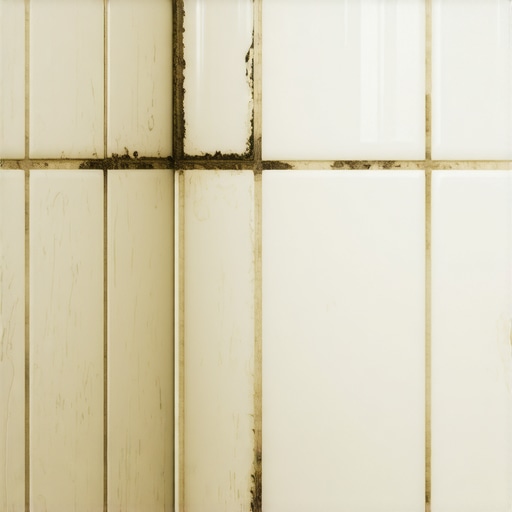
I spent four days last month jackhammering a custom tile shower in a home that was only three years old because the homeowner thought a $500 discount on labor was a good deal. It was not. The smell that hits you when you peel back tiles from a rotted subfloor is something you never forget. It is the scent of failure, dampness, and wasted money. Most guys skip the leveling compound or the proper waterproofing membrane because they think the grout will stop the water. It will not. I spent years fixing these mistakes, and the reality is that grout is not a waterproof barrier, it is a porous sieve that invites microscopic intruders if you do not treat it with chemical respect. In the flooring world, we see 2026 as a turning point where old cementitious methods are finally being exposed as the relics they are. If your shower is turning pink, black, or green, it is because the physics of your installation are fundamentally flawed.
The microscopic war inside your shower walls
Shower grout mildews in 2026 because traditional cement-based grout is a porous network of tiny capillaries that act as a straw for dirty water. These microscopic voids allow moisture to penetrate deep into the substrate where it becomes trapped between the tile and the waterproofing layer, creating a dark, stagnant environment for fungal growth. To understand why your shower is failing, we have to look at the chemistry of Portland cement. When you mix grout, you are initiating a chemical hydration process. If you use too much water in the mix, a common mistake for installers looking for an easy spread, that excess water eventually evaporates, leaving behind a Swiss cheese structure of air pockets. These pockets are the primary real estate for mildew. This is why even expensive showers that wow can become a maintenance nightmare within eighteen months. The moisture gets in, but because of modern airtight home construction, it never gets out.
“A floor is only as good as the subfloor beneath it; deflection is the enemy of every joint.” – Master Flooring Axiom
The failure of the topical sealer
Most homeowners believe that a quick spray of a topical sealer from a big box store will protect their grout. This is a myth that keeps the cleaning industry in business. Topical sealers are often acrylic or silicone based films that sit on the surface. They wear off within months of daily scrubbing. Once that film is breached, the grout underneath is unprotected. In 2026, we are moving toward penetrating sealers that use fluoropolymers to line the interior of those grout capillaries, but even those have limits. If the subfloor has any deflection, the grout develops micro-cracks that are invisible to the naked eye but wide enough for a water molecule to pass through easily. This is why I always check the joist spacing before I even think about laying a single tile. If your floor bounces, your grout will fail. It is that simple.
Why your shower pan is a ticking time bomb
The primary reason for persistent grout mildew in 2026 is the lack of a proper pre-slope beneath the waterproofing membrane in the shower pan. When water permeates the grout, it must be directed toward the weep holes of the drain, but if the subfloor is flat, the water pools and becomes a breeding ground for bacteria. This is where structural engineering meets bathroom aesthetics. I have seen hundreds of beautiful tiles ruined because the installer did not understand the physics of gravity. They put the waterproofing on a flat subfloor and then built the slope on top of it. This creates a reservoir of standing water that never dries. It wicks back up through the grout, keeping it permanently damp and inviting mildew to move in and stay. This is particularly problematic in humid regions like the Gulf Coast where the ambient air never helps the drying process. You need to ensure your installer follows TCNA B415 or B422 standards for shower receptors. If they do not know those numbers, find a new installer.
| Grout Type | Porosity Level | Mildew Resistance | Installation Difficulty |
|---|---|---|---|
| Standard Cementitious | High (15 to 20 percent) | Low | Easy |
| High-Performance Polymer | Medium (5 to 8 percent) | Moderate | Moderate |
| Epoxy Grout | Zero (Waterproof) | Extreme | Very High |
| Urethane Grout | Low (1 to 3 percent) | High | High |
The chemistry of the 1/8 inch gap
We talk a lot about expansion gaps in hardwood, but tile needs them too. Every change of plane in a shower, where the wall meets the floor or where two walls meet, should be a movement joint filled with 100 percent silicone caulk, not grout. Grout is rigid. Houses move. When a house settles, that rigid grout cracks. Those cracks are the highways for water. If you see mildew concentrated in the corners, it is almost certainly because there is grout where there should be silicone. This moisture also travels behind the walls, affecting your chic baseboard designs in the adjacent room. I have seen baseboards rotting in a hallway because the shower three feet away was leaking through a cracked corner joint. You must think of the entire bathroom as a single hydraulic system.
Three fixes that actually stick
To fix shower grout mildew permanently, you must switch to epoxy grout, ensure mechanical ventilation is oversized for the room, and use professional-grade antimicrobial treatments. These three solutions address the chemistry, the environment, and the biology of the problem simultaneously to ensure a clean surface. The first fix is the most impactful. Stop using cement grout. Epoxy grout is made of two parts, a resin and a hardener. When they react, they form a plastic-like bond that is completely non-porous. It does not need sealing because there are no holes for the water to enter. It is difficult to work with. It is sticky. It requires a specific technique to clean during installation. But once it is in, it is there for a lifetime. It is the only way to guarantee a mildew-free existence in 2026. For existing showers, you might look into how to refresh grout without replacing it by using a high-quality colorant that also acts as a sealer.
- Switch to Epoxy: Use a high-solids epoxy grout like Laticrete SpectraLOCK or Mapei Kerapoxy.
- Mechanical Ventilation: Install a fan rated for 1.5 times the square footage of the room and run it for 30 minutes post-shower.
- Substrate Integrity: Ensure all changes of plane use 100 percent silicone, not cementitious grout.
- Regular Maintenance: Follow tile cleaning tips for a sparkling bathroom to prevent soap scum buildup which feeds mildew.
- Steam Control: In 2026, many homeowners are adding steam units, which require even higher-grade waterproofing like vapor barriers.
The contrarian truth about underlayment
While many people want the thickest, most cushioned underlayment for their floors, in the world of tile, any cushion is a disaster. Too much movement in the substrate leads to the locking mechanisms of the system failing or the grout lines crumbling. For a shower, you need a rigid, stable base. I prefer using a bonded waterproof membrane like Schluter-Kerdi. This system moves the waterproofing from under the mud bed to directly under the tile. This means only the tile and the grout get wet, rather than the entire 2-inch thick mortar bed. This reduces the total volume of water held in the shower system, which directly reduces the chance of mildew. If you are struggling with an old shower, you should check out grout restoration secrets for long-lasting results to see if you can salvage the installation without a total tear-out.
Why your baseboards are rotting from the floor up
Baseboards rot because moisture from the shower migrates through the wall cavity via capillary action or because the floor-to-wall transition was not properly sealed with a waterproof barrier. If you notice your baseboards are swelling or the paint is peeling near the bathroom door, you have a moisture migration problem. This is often ignored during the aesthetic phase of a remodel. Homeowners spend thousands on baseboards makeover ideas but forget that the back of the wood or MDF is often raw and unprotected. In a bathroom, every piece of trim should be back-primed. The joint between the tile floor and the baseboard should never be grouted. It must be caulked. If you grout that joint, the expansion and contraction of the house will break the seal, and every time you mop the floor, water will be pushed under the baseboard. Over time, this leads to mold growth that you cannot see until it is too late. For those interested in sustainability, consider eco-friendly tile solutions that often include more mold-resistant natural materials.
“Water is a patient thief; it will find the one millimeter you didn’t seal and steal the structural integrity of your home.” – Master Flooring Axiom
The Final Inspection
Building a shower in 2026 requires more than just a good eye for color. It requires an understanding of fluid dynamics and chemical bonds. If you are starting a project, do not let your contractor talk you into a standard cement grout just because it is easier to install. Demand epoxy or a high-performance urethane. Ensure the waterproofing is on top of the mud bed, not under it. And for the love of your home, make sure those corners are silicone. If you follow these rules, you will not need to call me in three years to jackhammer your floor. You can spend that money on something better, like a high-end rain head for your showers with a style project. If you have questions about specific products, feel free to contact us for a professional consultation. Protecting your investment starts with the chemistry under your feet.

![Loose Shower Tiles? Use This 2-Step Grout Reset Method [2026]](https://elegantfloorz.com/wp-content/uploads/2026/02/Loose-Shower-Tiles-Use-This-2-Step-Grout-Reset-Method-2026-420x300.jpeg)