
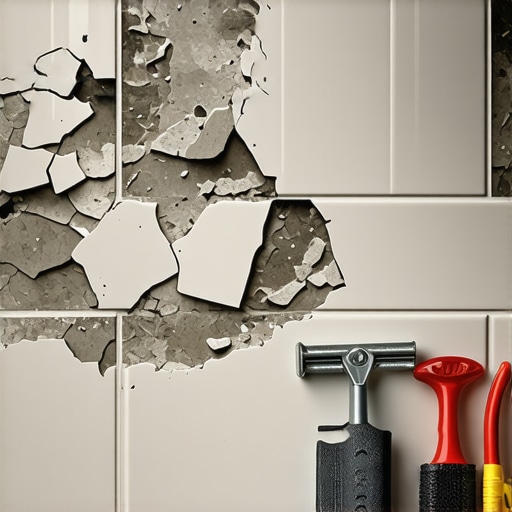
I spent three days grinding concrete on a job last month just so the floor wouldn’t click like a castanet. Most guys skip the leveling compound. They think the underlayment will hide the dip. It won’t. I have seen countless showers where the grout looks like it was applied by a toddler after only six months of use. This is not just a cosmetic failure. It is a structural warning. When I smell that damp, earthy odor in a bathroom, I know the subfloor is dancing. I have spent 25 years with my knees on the ground and a moisture meter in my pocket. I have seen the way water moves through a poorly prepared substrate. It is a slow motion disaster. People buy beautiful tile and then skimp on the one thing that actually holds the house together. You cannot build a fortress on a swamp. If your grout is crumbling, your shower is telling you that the layers beneath are failing. It is a chemistry problem and a physics problem combined into one messy situation.
The ghost in the expansion gap
Grout failure in 2026 showers is primarily caused by excessive deflection in the subfloor, improper water to powder ratios during mixing, and the absence of perimeter expansion joints. When the tile assembly lacks room to move, the rigid grout lines become the sacrificial point of failure under thermal and structural stress. This leads to micro-fissures that allow moisture to penetrate the thin-set bed. Most installers ignore the movement joints required by the Tile Council of North America. They fill the corners with hard grout instead of 100 percent silicone sealant. That is a mistake. The house moves. The wood shrinks. The grout snaps. You need to understand that grout is the weakest link in the chain. It is designed to be a filler, not a structural adhesive. When the subfloor bounces even a fraction of an inch, the grout cannot stretch. It is brittle. It shatters. This is why a perfectly level and rigid subfloor is the only way to ensure a shower lasts for decades.
“A floor is only as good as the subfloor beneath it; deflection is the enemy of every joint.” – Master Flooring Axiom
The physics of a shower floor are brutal. Every time you step on a tile, you are applying hundreds of pounds of pressure per square inch. If the mortar bed or the plywood beneath has any give, the grout joint is the first thing to yield. We measure this in deflection ratings like L/360. For natural stone, you need L/720. Most builders do the bare minimum. They use 5/8 inch subflooring and call it a day. I always recommend adding a second layer of exterior grade plywood or a dedicated cement backer board that is properly thin-setted to the base. This creates a monolithic slab that resists the vertical movement that kills grout. In regions with high humidity like the swampy areas of Houston, wood subfloors swell and contract with the seasons. If you do not account for this movement, your shower will be a pile of sand by next year. You can find more about high-end finishes in showers that wow modern designs for 2025 to see what a properly supported floor looks like. The chemistry of the water you use matters too. If you have hard water with high mineral content, it can interfere with the polymer chains in modern grout. This prevents the grout from reaching its full tensile strength. You end up with a powdery mess that washes away with every shower.
The structural lie of the rigid subfloor
Subfloors are dynamic environments that react to moisture, temperature, and weight, meaning no floor is truly rigid without engineered intervention. Installers must use decoupling membranes or reinforced mortar beds to isolate the tile from the inevitable shifting of the building frame. Failure to manage this movement results in immediate grout cracking and eventual tile delamination. I once walked into a house where the homeowner thought they could save money by skipping the membrane. They used a cheap plastic liner and some staple-down mesh. Within three months, the grout was popping out in chunks. I had to rip the whole thing out. It was a $10,000 mistake. You have to respect the materials. Portland cement based grout needs water to hydrate, but too much water makes it weak. The evaporation of excess water leaves behind microscopic voids. These voids are like little tunnels for moisture. When soap scum and body oils get into those tunnels, they break down the cement binder. This is why tile cleaning tips for a sparkling bathroom in 2025 emphasize gentle pH-neutral cleaners. Harsh chemicals will eat the very heart out of your grout lines.
| Grout Type | Flexibility Rating | Moisture Resistance | Typical Lifespan |
|---|---|---|---|
| Standard Sanded | Low | Moderate | 5-10 Years |
| High-Performance Cement | Moderate | High | 15-20 Years |
| Epoxy Grout | High | Very High | 30+ Years |
| Premixed Urethane | High | High | 20+ Years |
The table above shows the reality of the market. Most guys use the cheap bag of sanded grout because it is easy to spread. It is also the first thing to fail. If you want a floor that lasts, you move to epoxy or high-performance polymers. These materials create a chemical bond that is nearly impervious to water. They do not rely on the same hydration process as standard cement. Instead, they cure through a chemical reaction that creates a dense, plastic-like matrix. It is harder to work with. It is sticky. It requires a fast hand and a clean bucket. But it stays put. In dry climates like Phoenix, the air will suck the moisture out of cement grout before it can properly hydrate. You end up with a soft, chalky joint. In those areas, I always use a grout additive instead of plain water. These additives include acrylic or latex polymers that hold the moisture in and strengthen the final crystalline structure. It is the difference between a floor that lasts five years and one that lasts fifty.
Why your subfloor is lying to you
A subfloor might look flat to the naked eye but contains microscopic undulations and moisture pockets that sabotage grout adhesion. Professional installers use 10-foot straightedges and moisture probes to verify that the substrate is within the 1/8 inch tolerance required for large format tile. Without this precision, the grout acts as a bridge over a gap, leading to collapse. I have seen guys try to use extra thin-set to level a floor. That is a crime. Thin-set is meant for bonding, not for build-up. When thin-set is too thick, it shrinks as it cures. This shrinkage pulls on the tile and puts tension on the grout. The grout cannot handle tension. It only likes compression. If you see cracks running down the center of your grout lines, that is a shrinkage crack. It means the installer used too much mud. I always tell my apprentices that the prep work is 90 percent of the job. The actual tiling is just the victory lap. If you are struggling with old grout, check out how to refresh grout without replacing it before you decide to tear it all out. Sometimes you can save it, but usually, if it is crumbling, the rot has already set in.
- Check subfloor deflection with a calculated load test.
- Verify moisture content is below 12 percent for wood and 3 lbs for concrete.
- Use a premium polymer-modified thin-set with high shear strength.
- Install a movement joint at every change of plane.
- Mix grout with a low-speed drill to avoid air entrainment.
- Apply a high-quality penetrating sealer 72 hours after installation.
The checklist above is my bible. If you skip a step, you are gambling with the homeowner’s money. I don’t gamble. I build. I have seen the way baseboards can hide a multitude of sins at the floor line, but in a shower, there is nowhere to hide. You can see some baseboards makeover ideas to elevate your space for the rest of the house, but the shower floor is the ultimate test of a craftsman. The water doesn’t lie. It finds the path of least resistance. If there is a pinhole in your grout, the water will find it. It will sit there. It will grow mold. It will rot the studs. It will eventually cause the grout to turn into a soft paste. You need a dense, non-porous finish. This is why I advocate for grout restoration secrets for long-lasting results because maintenance is part of the engineering. A floor is a living thing. It breathes. It moves. You have to treat it with respect.
The 1/8 inch that ruins everything
A single 1/8 inch deviation in subfloor height or an improperly sized expansion gap will cause the entire tile field to buckle or crack within the first year of use. Precision in the substrate is the only defense against the thermal expansion and contraction cycles that occur in every residential bathroom. I have seen it a thousand times. The installer thinks they can eye-ball the level. They can’t. You need a laser. You need a plan. You need to understand that tile is a rigid skin over a flexible skeleton. If the skeleton moves too much, the skin rips. That rip is your crumbling grout. To prevent this, I use liquid-applied waterproofing membranes. These provide a secondary layer of protection and a small amount of crack isolation. It is an insurance policy. I also insist on using the right tools. A dirty bucket or a rusted mixing paddle can introduce contaminants that weaken the grout’s chemical bond. I have even seen guys mix grout with pool water because it was convenient. The chlorine destroyed the pigments and the binders. It was a disaster. Professionalism starts with the basics. It starts with a clean workspace and a deep understanding of the chemistry in the bag. If you want a shower that lasts until 2050, you have to do the work in 2026. Stop looking for shortcuts. There are no shortcuts in flooring. There is only the right way and the way that fails. If you need help picking materials, you can always contact us for expert advice on your next project. We don’t just sell floors; we build systems that stand the test of time. Every joint, every tile, and every bag of mud is chosen for its performance under pressure. That is the architect’s way. That is the only way I know how to work. Don’t let your grout turn to dust because you were too lazy to check the subfloor. Do it right the first time. Your house deserves it. Your wallet deserves it. And my knees would appreciate not having to come back to fix it in two years. [{“@context”: “https://schema.org”, “@type”: “Article”, “headline”: “Why 2026 Shower Grout Crumbles: 4 Pro Fixes That Stick”, “author”: {“@type”: “Person”, “name”: “Master Flooring Architect”}, “description”: “Expert analysis on shower grout failure, focusing on subfloor deflection, moisture management, and chemical bonding for 2026 standards.”, “publisher”: {“@type”: “Organization”, “name”: “Elegant Floorz”}}]



![Loose Shower Tiles? Use This 2-Step Grout Reset Method [2026]](https://elegantfloorz.com/wp-content/uploads/2026/02/Loose-Shower-Tiles-Use-This-2-Step-Grout-Reset-Method-2026-420x300.jpeg)