The structural lies of a level subfloor
A waterproof shower in 2026 requires a subfloor with zero deflection and a precision slope of one quarter inch per linear foot toward the drain. Most installers fail because they assume a subfloor is ready for tile just because it looks flat. It is never flat. I spent three days grinding concrete on a job last month just so the floor wouldn’t click like a castanet, and that same level of obsession is mandatory for showers. If your subfloor has even a three millimeter dip, water will find it. Gravity is an absolute law. If the substrate deflects under the weight of a human body, the grout lines will micro-crack. Once those cracks appear, capillary action pulls moisture into the plywood or the concrete slab below. It starts as a damp smell. It ends with a five figure mold remediation bill. You cannot hide a bad subfloor with extra thin-set. Thin-set is an adhesive, not a filler. When it is applied too thick, it shrinks during the curing process. This shrinkage creates internal tension that can actually snap the bond of your waterproof membrane before you even lay the first tile.
“A floor is only as good as the subfloor beneath it; deflection is the enemy of every joint.” – Master Flooring Axiom
Most guys skip the leveling compound. They think the underlayment will hide the dip. It won’t. I have seen 15,000 dollar wide plank walnut floors cup like potato chips because of subfloor moisture, and showers are even more volatile. We are talking about hydrostatic pressure. In a shower environment, water is constantly trying to move from a high pressure area to a low pressure area. If your waterproofing layer is not a continuous, monolithic envelope, you are essentially building a very expensive sieve. The bond between the drain flange and the membrane is the most common point of failure. If you use a standard PVC drain with a topical liquid membrane without the proper transition collar, the different expansion coefficients of the materials will eventually cause a separation. [image_placeholder] This is where the microscopic reality of the installation becomes a nightmare. You need to understand the chemistry of the modified thin-set you are using. The polymers in the mortar must be compatible with the membrane. If you use a non-modified mortar over a non-porous membrane, the water in the mix has nowhere to go. The mortar will stay wet for weeks, never reaching its full structural integrity.
The chemical failure of cheap thin set
Using the wrong mortar chemistry creates a bond failure that allows water to migrate behind the tile assembly and rot the wall studs. You must match your adhesive to your substrate and your tile type. Large format tiles, which are trending for 2026, require a medium bed mortar that can support the weight without sagging while providing 95 percent coverage. In a wet area, anything less than 95 percent coverage is a recipe for disaster. Air pockets behind the tile act as reservoirs for stagnant water. This water becomes a breeding ground for bacteria and mold. It will eventually break down the bond of the grout from the inside out. If you are looking for grout restoration secrets for long-lasting results, the first secret is never letting water get behind the tile in the first place. High performance mortars in 2026 use advanced ethylene vinyl acetate polymers to ensure a flexible yet ironclad grip. This flexibility is what allows the shower to survive the natural expansion and contraction of your home. Houses breathe. They move with the seasons. A rigid, brittle mortar will crack when the house settles, but a polymer-modified bed will move with it.
| Material Type | Permeability Rating | Application Thickness | Drying Time |
|---|---|---|---|
| Liquid Membrane | 0.5 Perms | 30 Mils | 12-24 Hours |
| Sheet Membrane | 0.1 Perms | 20 Mils | Immediate |
| Cement Board | 12.0 Perms | 0.5 Inches | N/A |
| Modified Thin-set | Variable | 3/16 to 1/2 Inch | 24-48 Hours |
Why your grout is a highway for moisture
Cementitious grout is naturally porous and acts like a hard sponge that sucks water into the wall cavity if a secondary barrier is missing. Many homeowners believe that grout is waterproof. This is a dangerous lie. Grout is purely aesthetic and structural, designed to keep tiles from rubbing together. It does nothing to stop water. Even epoxy grouts, which are much more resistant to moisture, can develop pinholes during installation if the mix is too stiff. In the humid environments of the south or the coastal regions, this moisture retention leads to rapid degradation. For those looking at showers that wow modern designs for 2025, remember that the beauty of the tile is secondary to the integrity of the vapor barrier. You need a membrane that carries a perm rating of less than 0.5 for steam showers. If you are building a standard shower, you still want to aim for the lowest permeability possible. The science of 2026 waterproofing focuses on the topical application. The old method of putting a liner under a thick mortar bed is dying. It creates a ‘mold sandwich’ where water stays trapped in the mud bed forever. The new standard is to keep the entire assembly dry by stopping water right under the tile.
- Verify subfloor stiffness to L/360 standards for ceramic and L/720 for stone.
- Apply two heavy coats of liquid membrane with a wet film gauge.
- Use a pre-sloped foam tray to guarantee perfect drainage.
- Seal all pipe penetrations with silicone and waterproof collars.
- Perform a 24 hour flood test before any tile is installed.
Baseboards and the hidden rot
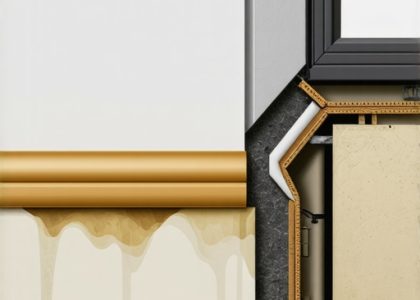
Baseboards that touch the bathroom floor act as wicks that pull moisture from the tile surface into the drywall and framing. This is the most overlooked detail in bathroom construction. When you mop the floor or step out of the shower, water pools at the edges. If your baseboard is sitting directly on the tile, it absorbs that water. Over time, the bottom of the baseboard swells and the paint peels. Worse, the water travels up the back of the wood and into the wall. You must leave a small gap between the bottom of the baseboard and the floor. This gap should be filled with a 100 percent silicone caulk that matches your grout color. If you are researching chic baseboard designs that transform rooms in 2025, ensure your installer knows the physics of the wicking effect. The same applies to door casings. They should be undercut so the tile can slide underneath, but they should never be wedged tight against a wet floor. It is about moisture management. You are creating a barrier that the water cannot bypass. In regional climates with high humidity, like the swampy summers of the East Coast, this detail is the difference between a floor that lasts 30 years and one that fails in five.
“Waterproofing is not a product; it is a system of redundant failures managed by geometry.” – TCNA Engineering Guide
The chemistry of the bond is where the real work happens. When we talk about 2026 standards, we are talking about hybrid polymers that can bridge cracks up to 1/8 inch. If your house shifts and a small crack develops in the concrete slab, a standard waterproofing layer will snap. A high performance hybrid membrane will stretch. It acts like a rubberized skin for your shower. This is why I am a stickler for the NWFA and TCNA standards. They aren’t suggestions. They are the result of thousands of failed showers being analyzed by people who have spent more time in crawlspaces than in showrooms. I hate ‘builder-grade’ shortcuts. I see guys using greenboard in showers still. Greenboard is just water resistant paper on a gypsum core. It has no place in a modern shower. You need a cement backer unit or a coated foam board that is chemically inert and won’t rot when it gets wet. If your contractor shows up with a bucket of joint compound and a sheet of greenboard for your shower walls, fire them immediately. They are building a ticking time bomb. Use high quality materials and follow the physics. The water does not care about your budget or your timeline. It only cares about the path of least resistance. Close that path and you save your home. If you need professional guidance, you can always contact us for a structural consultation.