Stop 2026 Baseboard Steam Damage Without Using Messy Caulk
I once walked into a luxury master suite where a five thousand dollar custom walnut baseboard was rotting from the inside out because the installer thought a thin bead of silicone was enough to stop steam from a walk-in shower. It was not. I spent three days grinding down the subfloor and replacing the bottom two inches of drywall because that steam had turned the wall cavity into a petri dish. That is the reality of water vapor. It does not behave like liquid water. It is a gas that finds every microscopic gap in your defense. If you think messy caulk is the solution to protecting your trim in a high-moisture environment, you are wrong. Caulk eventually shrinks, cracks, and pulls away from the substrate, leaving a highway for moisture to travel straight into your framing. To truly stop damage in 2026, we have to look at the structural physics of the room.
The physics of vapor drive in wet rooms
Vapor drive is the movement of water vapor from an area of high pressure to an area of low pressure, often through porous building materials. In a bathroom, the steam from your shower creates high pressure that forces moisture into grout lines and behind baseboards where it eventually condenses into destructive liquid water. This process is relentless. When you run a hot shower, the air expands and carries moisture into the smallest voids. If your baseboards are made of MDF or finger-jointed pine, they act like a sponge. They pull that moisture up through capillary action. Within months, the paint begins to bubble. Within a year, the wood begins to soften. You can see chic baseboard designs that transform rooms in 2025, but if they are not installed with a vapor-first mindset, they will fail. The key is to stop the vapor from ever reaching the organic material. This involves understanding the permeability of your wall assembly. A standard piece of drywall has a high perm rating, meaning it allows vapor to pass through easily. You need a transition that breaks this cycle without relying on a temporary chemical bond like caulk.
Why your silicone bead is failing
Silicone failure occurs because of bond-breaker contamination and the natural expansion and contraction cycles of different materials. Wood and tile expand at different rates when exposed to heat and humidity, which places immense mechanical stress on the narrow caulk joint until the adhesive bond snaps. Most guys just wipe a finger across a bead of caulk and call it a day. They do not realize that the soap they used to slick their finger actually contaminated the bond. Over time, the steam works its way behind that loose edge. Once the seal is broken, gravity and surface tension pull water behind the baseboard. This is why you see black mold at the floor line even in clean houses. We need to move toward mechanical solutions. Use a solid PVC trim or a high-density polymer that cannot absorb water. These materials are chemically inert. They do not provide a food source for mold. Even if steam gets behind them, the material itself remains structurally sound. When you are looking at showers that wow modern designs for 2025, notice how the best installers are moving away from traditional wood trim in the splash zone.
“A floor is only as good as the subfloor beneath it; deflection is the enemy of every joint.” – Master Flooring Axiom
The structural gap that saves your drywall
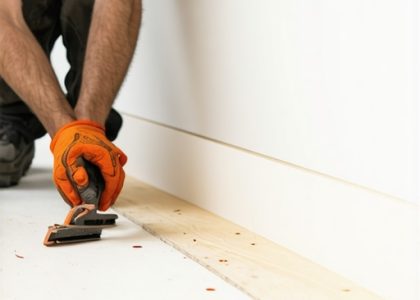
The structural gap is a deliberate 1/8 inch space maintained between the bottom of the baseboard and the top of the tile floor to prevent the wicking of liquid water. This air space allows for ventilation and ensures that any moisture on the floor does not stay in direct contact with the trim. Most homeowners think a tight fit is a sign of quality. It is actually a recipe for rot. By hovering the baseboard slightly above the floor, you create a break in the capillary path. You can hide this gap with a small shoe molding made of waterproof material or leave it as a modern shadow line. This gap also accounts for the floor’s natural movement. If you pin your baseboards tight to the tile, and the house settles or the subfloor flexes, the pressure will crack your grout restoration secrets for long-lasting results and damage the trim. I always use plastic shims during installation to keep that 1/8 inch consistent across the entire room. It looks cleaner and performs better over a ten-year horizon.
High performance PVC and composite alternatives
High performance PVC trim is a cellular extrusion that provides the look of painted wood with a zero percent absorption rate. Unlike traditional wood, it does not swell when exposed to steam, making it the ideal choice for bathrooms and laundry rooms where humidity levels fluctuate wildly. I have seen guys try to use ‘moisture-resistant’ MDF. There is no such thing in a steam room. It is just cardboard with better marketing. Eventually, the steam finds the edge where the factory primer ends and the swelling begins. PVC can be cut, nailed, and painted just like wood, but it will never rot. When you are planning baseboards makeover ideas to elevate your space, prioritize the material science over the initial cost. The labor to replace rotted wood trim is three times the cost of the material upgrade to PVC. Furthermore, use stainless steel finish nails. Regular steel nails will rust from the steam, creating ugly bleeding spots on your white trim.
| Material Type | Moisture Resistance | Typical Lifespan in Steam | Recommended Use |
|---|---|---|---|
| MDF | Low | 1-3 Years | Dry Bedrooms Only |
| Finger-Jointed Pine | Medium | 3-7 Years | Hallways |
| Solid Oak | Medium-High | 10+ Years | Living Areas |
| Cellular PVC | Extreme | Lifetime | Bathrooms and Showers |
Maintaining the integrity of your grout lines
Grout integrity is the first line of defense against vapor entering the subfloor assembly where it can rot the bottom plate of your walls. Using high-performance epoxy grouts or penetrating sealers creates a hydrophobic barrier that repels steam molecules before they can reach the wall cavity. Many people forget that grout is essentially a hard sponge. It is porous. If you do not seal it, steam will pass right through it. This is why tile cleaning tips for a sparkling bathroom in 2025 always emphasize sealing. I prefer using a pre-mixed urethane grout for bathroom floors. It stays flexible and is naturally waterproof. It costs more, but it eliminates the need for messy topical sealers that wear off after a few months of scrubbing. If your grout is already failing, look into how to refresh grout without replacing it to stabilize the area before you install new baseboards. You cannot build a waterproof wall on top of a leaking floor.
- Use 100 percent cellular PVC for all trim within six feet of a shower.
- Maintain a 1/8 inch expansion gap between the trim and the tile.
- Back-prime any wood trim with an oil-based primer if PVC is not an option.
- Install a topical waterproofing membrane like Kerdi behind the baseboard area.
- Fasten trim with stainless steel fasteners to prevent rust bleeding.
Advanced flashing techniques for modern bathrooms
Flashing the baseboard area involves overlapping a waterproof membrane from the floor up onto the wall behind the trim to create a continuous drainage plane. This ensures that any moisture that penetrates the baseboard is directed back onto the tile floor rather than into the wall studs. This is the secret that most ‘handymen’ miss. They stop the waterproofing at the floor. I take the floor membrane and wrap it two inches up the wall. Then I install the baseboard over that membrane. Even if steam gets past the trim, it hits the membrane and stays out of the wood framing. It is a commercial-grade technique that saves residential bathrooms. You might think this is overkill, but after you have seen a floor joist rot from shower steam, you will never skip this step again. It is about building for the worst-case scenario. This is especially important when exploring showers with a style trendy ideas for small bathrooms where the steam is concentrated in a smaller volume of air. The density of the vapor in a small space accelerates the damage significantly.
“Effective moisture management requires an understanding of both liquid water and water vapor movement.” – TCNA Handbook reference
Managing the climate and humidity levels
Climate management is the final piece of the puzzle because even the best materials will fail if the ambient humidity remains above sixty percent for extended periods. Installing a high-CFM exhaust fan with a humidity sensor ensures that steam is removed before it can condense on your baseboards. I tell my clients to look for fans rated for at least one CFM per square foot of bathroom space. If you have a deep soaking tub or a steam shower, you need more. The fan should stay on for at least twenty minutes after the shower ends. Many modern fans have built-in timers and sensors that do this automatically. This reduces the total time your baseboards are under attack from vapor drive. While you can use eco-friendly tile solutions for sustainable homes in 2025, the most eco-friendly thing you can do is build a room that does not need to be ripped out and thrown in a landfill every five years. Proper ventilation is the partner to proper material selection. If you have questions about specific room layouts, you can always contact us for a consultation on subfloor preparation and moisture mitigation. Don’t let steam ruin your investment because of a five dollar tube of caulk. Build it right from the subfloor up.