
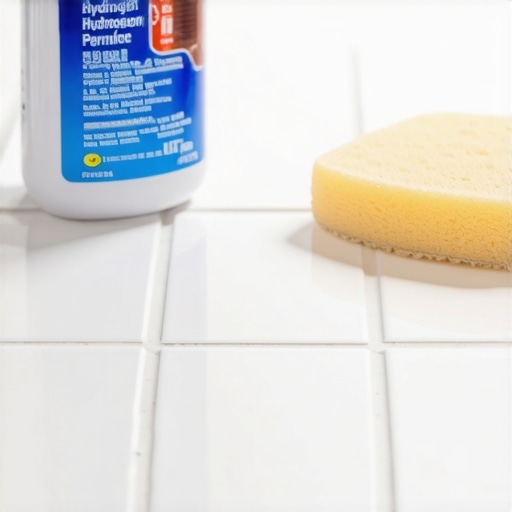
The molecular trap inside your shower floor
Cleaning grout with hydrogen peroxide requires understanding that cementitious grout is a porous, microscopic sponge that traps organic matter at a cellular level. Most homeowners treat grout as a solid surface, but it is actually a network of capillaries waiting to suck up dirty mop water. When you use hydrogen peroxide, you are not just washing the surface. You are initiating an exothermic reaction that off-gasses oxygen to physically lift debris out of those microscopic voids. This is the only way to handle showers and tile installations without destroying the structural integrity of the bond. I have spent twenty five years on my knees with a scrub brush and a moisture meter. I have seen what happens when people use the wrong chemicals. Last month, I spent three days grinding concrete on a job because the previous installer ignored subfloor moisture, but I have also seen grout turned to sand because someone used high-strength acid every week. You do not need acid. You need chemistry.
“A floor is only as good as the subfloor beneath it; deflection is the enemy of every joint.” – Master Flooring Axiom
The chemistry of the oxygen war
Hydrogen peroxide acts as a stable oxidizing agent that breaks the chemical bonds of mold and mildew without dissolving the calcium carbonate in the grout. Unlike chlorine bleach, which just masks stains and can actually weaken the cement matrix over time, peroxide breaks down into water and oxygen. This is a clean break. When you apply a three percent solution to a grout line, the bubbling you see is the mechanical energy of oxygen molecules expanding. This expansion happens inside the pores. It pushes the dirt to the surface where it can be wiped away. This is vital for grout restoration secrets for long-lasting results because it preserves the pH balance of the floor. If you drop the pH too low with vinegar, you are essentially eating your floor. If you go too high with heavy bases, you leave a residue that attracts more dirt. Peroxide is the neutral path to a clean floor.
The ghost in the expansion gap
Every tile installation lives and dies by the movement joints and the perimeter gaps where the tile meets the baseboards. If you saturate these areas with water during cleaning, you are inviting rot into your wall studs. I once walked into a job where the baseboards were literally furring with black mold because the homeowner was flooding the floor with a bucket and mop. You have to be surgical. When cleaning grout near the perimeter, use a paste, not a flood. This protects your chic baseboard designs from moisture wicking. Capillary action will pull water up into the MDF or wood of a baseboard faster than you can wipe it. Once that wood swells, your floor is no longer floating or expanding correctly. It is locked. And a locked floor is a floor that will eventually tent or crack.
| Cleaning Agent | pH Level | Effect on Grout | Safety Rating |
|---|---|---|---|
| Vinegar | 2.4 | Dissolves Cement | Low |
| Hydrogen Peroxide | 4.5 | Oxidizes Organics | High |
| Baking Soda | 8.3 | Mild Abrasive | High |
| Chlorine Bleach | 11.0 | Weakens Bonds | Medium |
The structural reality of 1/8 inch joints
Narrow grout joints are harder to clean because the surface tension of water often prevents the cleaning solution from actually entering the joint. You might think your showers are clean, but if the peroxide does not penetrate at least two millimeters deep, the mold will grow back from the bottom up. This is why you should mix your peroxide with a bit of dish soap or baking soda. The soap acts as a surfactant. It breaks the surface tension of the liquid, allowing the oxygen to reach the depth of the tile. This is the difference between a cosmetic fix and an architectural cleaning. For those looking for tile cleaning tips for a sparkling bathroom, remember that the thickness of your grout matters. Sanded grout has larger pores and requires more dwell time for the chemical to work. Unsanded grout is denser and needs a more liquid application to seep in.
Why your subfloor hates your mop
Excessive moisture during cleaning is the primary cause of subfloor failure in modern homes. Whether you have a plywood subfloor or a concrete slab, water that seeps through cracked grout or unsealed joints will congregate at the lowest point. In a shower, this is usually the transition to the drain. If your grout is failing, cleaning it with peroxide is only step one. You must eventually reseal it. I have seen $30,000 bathrooms where the subfloor rotted out because the owner thought “waterproof” meant the floor was an aquarium. It is not. Grout is water-resistant, not waterproof. If you are interested in how to refresh grout without replacing it, focus on the mechanical bond. Clean it, dry it for forty eight hours, and then hit it with a high-quality penetrative sealer.
- Vacuum the floor first to remove dry particulate matter that turns into mud.
- Apply the peroxide and baking soda paste to a small five square foot section.
- Let the oxygen reaction dwell for at least ten minutes before scrubbing.
- Use a nylon brush, never steel, to avoid scratching the tile glaze.
- Rinse with a damp, not dripping, microfiber cloth.
“A floor is a performance surface; treat the chemistry of its maintenance with the same respect as its engineering.” – Tile Council Standards
The final walk through
The right way to clean involves patience and the understanding that chemistry takes time to work. Do not rush the process. If you follow this method, your grout will remain structurally sound for decades. If you are planning a renovation, look at showers that wow to see how modern installations handle moisture. Always check your baseboards for signs of swelling after any deep clean. If you see the paint cracking or the wood expanding, you are using too much water. Keep it dry, keep it clean, and keep the chemistry in balance. For more specific advice on your unique flooring situation, you can always contact us to speak with a specialist who knows the difference between a surface stain and a structural failure.