
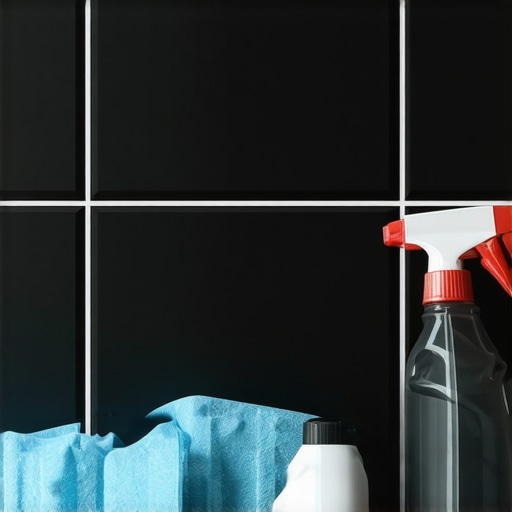
The tragedy of the bleached shower
Cleaning soap scum from dark grout requires pH-neutral cleaners and non-abrasive agitation to prevent pigment leaching or efflorescence. Avoiding acidic solutions like vinegar and harsh alkaline bleaches is vital for maintaining the deep color of the cementitious matrix while dissolving fatty acid deposits from soaps and body oils.
Most guys skip the leveling compound. They think the underlayment will hide the dip. It won’t. I spent three days grinding concrete on a job last month just so the floor wouldn’t click like a castanet. I saw that same lack of respect for physics in the shower I inspected yesterday. The previous installer used a harsh phosphoric acid to clean dark charcoal grout and turned the whole thing a dusty gray. He told the client it was natural wear. It was not. It was chemical murder. My hands still smell like oak dust and WD-40 from the morning job, but I can tell you exactly why that grout failed. Grout is not a solid block of plastic. It is a porous, cement-based structure filled with pigments like carbon black or iron oxide. When you hit it with the wrong chemicals, you aren’t just cleaning. You are dissolving the very bonds that hold the color in place.
The chemistry of dark pigment failure
Dark grout fails when its internal structure is compromised by acidic erosion or the introduction of minerals from hard water. This process, known as efflorescence, occurs when moisture pulls calcium hydroxide to the surface where it reacts with carbon dioxide to form white calcium carbonate crystals that mask the original pigment.
When we talk about dark grout, we are talking about a delicate balance of Portland cement and specific dye loads. If you use a cleaner with a low pH, you are triggering a chemical reaction that eats the lime in the cement. This is why tile cleaning tips often warn against vinegar. Vinegar is an acetic acid. It might melt soap scum, but it also melts the surface of your grout joints. Once that surface is etched, it becomes even more porous, like a microscopic sponge. This sponge then sucks up the soap scum deeper into the joint, making it impossible to remove without specialized grout restoration secrets. You end up with a hazy, white mess that looks like ghosts are rising from your shower floor.
“Grout is a porous cementitious product that requires specific pH maintenance to preserve structural integrity and color fastness.” – TCNA Handbook Guidelines
The molecular bond of soap scum
Soap scum is a complex chemical compound called calcium stearate, formed when the fatty acids in soap react with the minerals in hard water. It creates a waxy, water-repellent film that bonds aggressively to the microscopic peaks and valleys of your tile and grout surfaces.
To break this bond without killing your color, you need to understand surfactants. A surfactant is a molecule that has one end attracted to water and the other end attracted to oil. In showers with a style that features dark grout, the soap scum acts as a glue. If you use a brush that is too stiff, you will scratch the pigment right out of the joint. You need a chemical that can get under the stearate layer and lift it without disturbing the cement. Most people think more power is better. They use high-pressure steam or stiff wire brushes. That is a mistake. High pressure can blow the grout right out of the joint, especially if the installation was done with too much water in the original mix. You want a soft-bristled nylon brush and a lot of patience.
Why your subfloor is lying to you
Subfloor instability leads to microscopic cracks in grout joints where soap scum and moisture can penetrate deeper than the surface level. If your floor has even a 1/8 inch dip, the resulting deflection will compromise the grout’s seal and make cleaning a repetitive and failing battle.
I have seen showers that wow on the surface but are rotting underneath. If your tile was installed over a flexy subfloor, those grout lines are going to crack. Once they crack, the soap scum isn’t just on the surface. It is inside the wall. No amount of cleaning will fix a structural failure. This is why I always check the deflection ratings before I even look at the tile. If you are cleaning dark grout and notice the color is fading in specific straight lines, you likely have a structural movement issue. The white you see might not be soap scum. It might be the mortar bed itself breaking down and bleeding through the cracks.
Equipment that actually works
| Cleaner Type | pH Level | Effect on Dark Grout | Use Case |
|---|---|---|---|
| Distilled Water | 7.0 | Neutral | Rinsing |
| pH Neutral Soap | 7.0 | Safe | Daily maintenance |
| White Vinegar | 2.5 | Bleaches pigment | Never use on grout |
| Alkaline Degreaser | 10.0+ | Potential hazing | Heavy grease only |
The proper way to scrub a vertical surface
Scrubbing dark grout requires a bottom-up approach to prevent dirty water from streaking and staining the lower sections of the wall. Using a circular motion with a soft nylon brush ensures that the surfactant penetrates the pores of the grout without damaging the cementitious surface.
You start by saturating the area with warm, distilled water. Hard water from your tap contains minerals that contribute to the very soap scum you are trying to remove. By pre-wetting the grout, you ensure the cleaner stays on the surface rather than soaking into the core of the joint. I always tell my apprentices that the most vital tool is the clock. You have to let the pH-neutral cleaner sit for at least ten minutes. This is dwell time. Dwell time allows the chemistry to do the heavy lifting so your arm doesn’t have to. If you start scrubbing immediately, you are just moving the dirt around. If the color still looks off, you might need to look into how to refresh grout without a full replacement.
The efflorescence problem that turns your grout white
Efflorescence is the migration of salt to the surface of a porous material, where it forms a white coating. In showers, this is often mistaken for soap scum, but it is actually a byproduct of the cement hydration process accelerated by excessive moisture or improper drainage.
If you live in a high-humidity area like Houston, your shower never truly dries out. This constant state of dampness is a catalyst for efflorescence. The moisture travels through the grout, picks up soluble salts, and deposits them on the surface as it evaporates. If you scrub this with an acid, you create more salts and the cycle continues. The only way to stop it is to ensure your shower has proper ventilation and that the grout is sealed with a high-quality, breathable penetrative sealer. Do not use a topical sealer on dark grout. Topical sealers create a plastic film that can peel and turn cloudy, making your beautiful dark joints look like they are covered in old scotch tape.
- Use distilled water for the final rinse to prevent mineral spotting.
- Always test a small, inconspicuous area near the baseboards first.
- Avoid magic erasers as they are micro-abrasives that can sand down pigments.
- Dry the grout lines with a microfiber cloth immediately after cleaning.
- Re-seal the grout every twelve months to maintain the moisture barrier.
The 1/8 inch that ruins everything
A grout joint that is too narrow or too wide for the specific product used will fail to hold its color and structural integrity. Standard sanded grout requires a minimum 1/8 inch joint to ensure the aggregate can properly bridge the gap and lock the pigments in place.
If your joints are too tight, the grout is just a thin smear on the surface. When you clean it, that smear simply wipes away, revealing the lighter mortar underneath. This is another reason why people think their grout is turning white. It is not turning white. It is disappearing. When I install chic baseboard designs or tile, I am obsessive about the spacers. If the gap is not consistent, the pigment will dry at different rates, leading to shading issues known as mottling. Mottled grout looks dirty even when it is sterile.
“A floor is only as good as the subfloor beneath it; deflection is the enemy of every joint.” – Master Flooring Axiom
Final inspection
Maintaining dark grout is about chemistry, not elbow grease. If you treat your shower like a structural engineering project, you will have a surface that looks new for decades. Stop using the supermarket cleaners that promise to melt everything. If it is strong enough to melt soap scum in seconds, it is strong enough to kill your grout. Use a neutral cleaner, respect the dwell time, and keep your moisture levels under control. If you have done all this and the grout still looks terrible, it might be time to check your baseboards for water damage. You can find some baseboards makeover ideas to help hide old water lines, but always fix the leak first. Your floor is a performance surface. Treat it like one.