
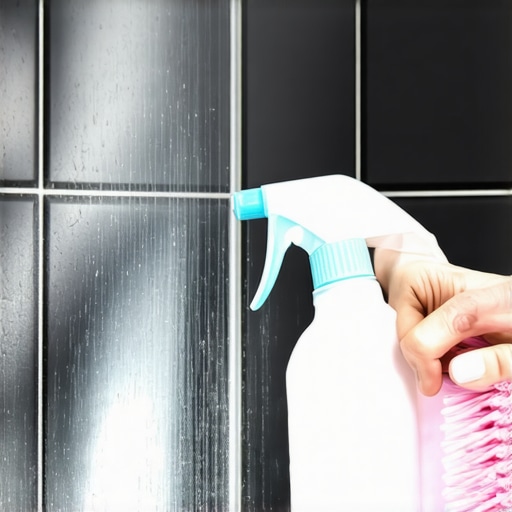
Master the Art of Cleaning Soap Scum Off Black Slate Shower Tiles
I once walked into a luxury bathroom where a homeowners beautiful five thousand dollar black slate shower looked like a dusty chalkboard. They had been scrubbing it with white vinegar and a stiff plastic brush for six months. The stone was etched, the grout was crumbling, and the soap scum had turned into a calcified shell that no amount of grocery store cleaner could touch. This is the reality of natural stone. It is a living, breathing structural material that demands respect. Most people treat slate like it is plastic, but as a guy who has spent twenty five years on his knees with a trowel, I can tell you that slate has a memory. If you use the wrong chemicals, the stone will remember it by losing its deep charcoal luster and turning a sickly grey. We are going to fix that today by looking at the chemistry of your shower. We are not just cleaning; we are performing stone restoration. If you want a bathroom that stays pristine, you need to understand the physics of the minerals and the fatty acids that are currently winning the war on your walls.
The white haze that eats your stone
Cleaning soap scum off black slate requires a pH-neutral stone cleaner, a soft-bristle brush, and distilled water to prevent mineral buildup. Avoid acidic cleaners like vinegar or lemon juice, which cause chemical etching on the calcium-based minerals within the slate, leading to permanent surface damage and color loss. I have seen guys ruin entire installations because they thought they could just spray and pray. Slate is a metamorphic rock. It formed over millions of years from layers of silt and clay. Those layers, or foliations, are exactly where the soap scum likes to hide. Soap scum is not just dirt; it is a chemical compound formed when the fatty acids in your soap react with the calcium and magnesium in your water. This creates a waxy, insoluble substance called calcium stearate. It sticks to the porous surface of the slate and hardens as it dries. If you live in a region with hard water, you are essentially coating your shower in a thin layer of limestone every time you wash. To get this off, you need to break the ionic bond of the scum without dissolving the stone itself. It is a delicate balance. You can see more on tile cleaning tips for a sparkling bathroom in 2025 to get a sense of the broader maintenance required for high end finishes.
Chemistry of the bathroom film
Soap scum formation involves a chemical reaction between alkali metals and saturated fats found in traditional bar soaps. When these fatty acids meet hard water minerals, they precipitate as a solid film that adheres to porous slate tiles and cementitious grout, creating a hydrophobic barrier that traps bacteria and skin cells. This film is remarkably stubborn. It does not just sit on the surface; it anchors itself into the microscopic texture of the stone. Imagine the surface of your slate as a mountain range at a microscopic level. The peaks and valleys are where the soap scum nests. If you use a heavy, wax-based soap, you are essentially pouring hot grease into those valleys. When it cools and reacts with the minerals in your water, it turns into a plastic-like coating. This is why your black slate starts to look grey or white. It is not the stone changing color; it is a translucent layer of filth that is refracting light differently. To remove it, you have to use a surfactant that can get under the film and lift it away. Using a standard bathroom cleaner is like trying to put out a fire with gasoline. Most of those cleaners are acidic. While acid dissolves calcium, slate contains various minerals that react poorly to low pH levels. You might get the scum off, but you will take the finish of the stone with it.
“Natural stone tile requires pH-neutral cleaners to prevent etching and preserve the integrity of the surface.” – TCNA Maintenance Guidelines
Why most cleaners are liquid sandpaper
Commercial bathroom cleaners often contain sulfamic acid or phosphoric acid, which are highly corrosive to natural stone like slate. These acidic agents dissolve the mineral binders that hold the metamorphic layers of the stone together, resulting in pitting, spalling, and a chalky residue that cannot be wiped away or repaired easily. You have to be smarter than the marketing on the bottle. Just because a bottle shows a shiny bathroom does not mean it is safe for your slate. Slate is made of quartz, mica, and chlorite. These minerals are held together by pressure and time. When you introduce an acid, you are effectively reversing the geological process. The acid eats the softer minerals, leaving the harder ones exposed and jagged. This makes the stone even more porous, which in turn makes it even easier for soap scum to stick next time. It is a vicious cycle. I always tell people to check the SDS or Safety Data Sheet of any product they buy. If the pH is below 7, keep it away from your stone. You want something that sits right at 7.0, which is neutral. This allows you to break down the organic fats in the soap scum without hurting the inorganic minerals in the stone. If you are worried about the state of your joints after using the wrong cleaner, look into grout restoration secrets for long lasting results to see how to save a failing installation.
Tools for the stone mechanic
Professional stone maintenance requires non-abrasive tools such as nylon scrub brushes, microfiber cloths, and steam cleaners. High PSI steam can liquefy soap scum without the need for harsh chemicals, making it the safest method for deep cleaning black slate and sterilizing grout lines without damaging the stone sealer. Here is a breakdown of what you should be using versus what you should avoid like the plague.
| Tool or Agent | pH Level / Type | Effect on Black Slate |
|---|---|---|
| White Vinegar | pH 2.4 (Acidic) | Causes etching and white spots |
| Bleach | pH 11.0 (Alkaline) | Can discolor grout and degrade stone |
| Stone Soap | pH 7.0 (Neutral) | Safely emulsifies oils and dirt |
| Steel Wool | Abrasive | Scratches the surface and leaves rust |
| Nylon Brush | Soft/Medium | Agitates dirt without scratching stone |
The scrubbing protocol that saves the surface
Effective slate cleaning follows a multi-stage process: dry dusting, pre-soaking with a surfactant, gentle agitation, and thorough rinsing. This systematic approach ensures that suspended particles are completely removed from the foliated surface of the stone, preventing streaking and re-deposition of mineral contaminants during the drying phase. Here is your checklist for a successful job.
- Remove all shampoo bottles and mats to expose the full surface area.
- Rinse the walls with warm water to soften the outer layer of soap scum.
- Apply a pH-neutral stone cleaner and let it sit for five minutes; do not let it dry.
- Scrub in circular motions using a medium-stiffness nylon brush.
- Pay special attention to the horizontal clefts in the slate where water sits.
- Rinse with distilled water if you live in a hard water area to prevent spotting.
- Dry the stone immediately with a clean microfiber towel to prevent streaks.
Grout lines and the invisible enemy
Grout maintenance is essential because cement-based grout is highly porous and acts as a wick for dirty water and soap residue. When soap scum settles in grout joints, it promotes mold growth and structural degradation of the adhesive bond, which can eventually lead to tile delamination in high-moisture showers. Most people think the tile is the problem, but it is usually the grout that fails first. Grout is basically a sponge. It absorbs everything. If you are cleaning your slate but ignoring the grout, you are only doing half the job. Over time, the soap scum will penetrate the grout and get behind the tile. Once moisture gets behind a slate tile, it can cause the stone to flake or even pop off the wall. This is especially true in showers that wow modern designs for 2025 where large format slate tiles are popular. Those large tiles have a lot of weight, and if the grout and thin-set are compromised by soap scum and moisture, they become a safety hazard. You need to ensure your grout is sealed just as well as your stone. If your grout is already stained or crumbling, you might want to look at how to refresh grout without replacing it before you commit to a full tear out.
“A floor is only as good as the subfloor beneath it; deflection is the enemy of every joint.” – Master Flooring Axiom
Sealing the deal for a decade
Applying a stone sealer creates an impregnating barrier that fills the pores of the slate, preventing soap scum and oils from penetrating the surface. A high-quality solvent-based sealer will enhance the natural dark tones of the slate while providing superior moisture resistance and making daily maintenance significantly easier for the homeowner. Sealing is not optional. If you have black slate, you need a sealer. I prefer penetrating sealers over topical ones. A topical sealer sits on top like a piece of plastic. It can peel and cloud. A penetrating sealer goes into the stone and stays there. It does not change the look of the stone unless you buy an “enhancer” which I highly recommend for black slate. An enhancer will bring out those deep blacks and charcoal greys, making the stone look wet even when it is dry. This also masks any minor etching that might have happened in the past. When you seal, you are effectively closing the doors to the microscopic valleys I mentioned earlier. The soap scum has nowhere to anchor, so it just slides off with a bit of water. For a truly high end look, make sure your transitions are clean, and consider your baseboards makeover ideas to elevate your space if the shower is part of a larger bathroom renovation.
The daily routine of a pro
Daily shower maintenance should include the use of a squeegee after every use to remove standing water and residual soap before they can evaporate and calcify. This preventative habit reduces the need for deep cleaning and extends the life of the sealer, ensuring that the black slate maintains its original aesthetic without the buildup of minerals. It takes thirty seconds. If you squeegee your slate after every shower, you will only have to deep clean once every six months instead of once a week. It is about moisture management. If the water is not there, the minerals cannot stay behind. I also suggest switching from bar soap to liquid body wash. Bar soap is held together with paraffin wax and tallow. That is exactly what makes up the bulk of soap scum. Liquid soaps are usually synthetic detergents that rinse away much cleaner. If you are building a new space, check out showers with a style trendy ideas for small bathrooms to see how to integrate slate in a way that is easy to manage. Keep your stone dry, keep it sealed, and stop using those grocery store acids. Your slate will thank you by looking like a million bucks for the next thirty years. [{“@context”:”https://schema.org”,”@type”:”HowTo”,”name”:”How to Clean Soap Scum Off Black Slate Shower Tiles”,”step”:[{“@type”:”HowToStep”,”text”:”Rinse tiles with warm water to soften the soap scum.”},{“@type”:”HowToStep”,”text”:”Apply a pH-neutral stone cleaner to the slate surface.”},{“@type”:”HowToStep”,”text”:”Scrub the stone gently with a nylon brush in circular motions.”},{“@type”:”HowToStep”,”text”:”Rinse thoroughly with clean water, preferably distilled.”},{“@type”:”HowToStep”,”text”:”Dry the surface completely with a microfiber cloth to prevent water spots.”}],”totalTime”:”PT30M”}]