
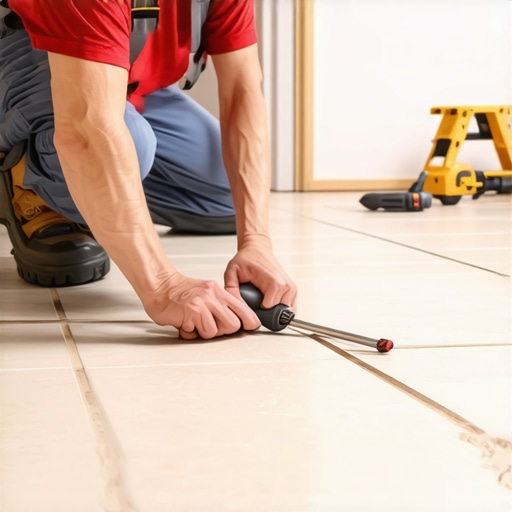
I have spent twenty-five years on my knees with a moisture meter in one hand and a level in the other. My hands smell like WD-40 and oak dust, and my joints ache from decades of chasing the perfect installation. Most guys skip the leveling compound. They think the underlayment will hide the dip. It won’t. I spent three days grinding concrete on a job last month just so the floor wouldn’t click like a castanet. When a client calls me because their expensive porcelain is chirping like a field of crickets, they expect a demolition bill. They think the only way to kill a squeak is to rip everything out. They are wrong. A squeak is just friction. It is the sound of two things rubbing together that should be bonded for eternity. If you understand the physics of deflection and the chemistry of subfloor adhesives, you can silence a floor from the basement or the crawlspace without ever touching a chisel to your grout lines. This is not about cosmetic fixes. This is about structural engineering and reclaiming the silence of a high-end installation.
The structural physics of a silent floor
To fix a squeaky floor without removing tiles, you must stabilize the subfloor from below using joist-to-subfloor adhesives or mechanical fasteners like the Squeeeeek No More system. These methods eliminate the vertical movement, known as deflection, which causes the subfloor to rub against the nails or the tile substrate. Squeaks in tiled areas are particularly dangerous because tile is a rigid material. While a hardwood floor might just groan, a squeak under tile often signals a movement that will eventually lead to cracked grout or fractured ceramic. The National Wood Flooring Association and the Tile Council of North America both agree that the subfloor must be rock solid. When a joist loses its grip on the plywood above it, a gap of even one-sixty-fourth of an inch creates a drum effect. Every time you step, the plywood deflects, slides down the shank of a nail, and produces that high-pitched protest. We solve this by filling that gap or pulling the layers back together through mechanical force.
The ghost in the expansion gap
Movement is the enemy of every rigid floor system. Many homeowners assume the squeak is the tile itself, but ceramic does not squeak. The noise is almost always the wood subfloor rubbing against a floor joist or a neighboring sheet of plywood. In some cases, the noise comes from the friction between the subfloor and the wall plates. If the original framers did not leave a proper expansion gap at the perimeter, the house settling causes the wood to bind. This tension is released as a sharp crack or a persistent squeal when you walk near the baseboards. I have seen cases where simply adjusting the chic baseboard designs that transform rooms in 2025 allowed the floor to breathe again, though usually, the problem is deeper. You have to investigate the static load capacity of your joists. If they are undersized for the weight of a tile floor, no amount of glue will help. You would need to sister the joists to increase their moment of inertia.
“A floor is only as good as the subfloor beneath it; deflection is the enemy of every joint.” – Master Flooring Axiom
Why your subfloor is lying to you
Plywood and OSB are not static materials. They are hydroscopic, meaning they absorb and release moisture based on the environment. When a contractor installs a floor in a house that has not been properly climate-controlled, the subfloor is at its maximum swell. Once the HVAC system kicks in and dries the air, the wood shrinks. This shrinkage creates micro-gaps between the floor joist and the subfloor. Now, you have a floor that is basically a trampoline. Every step forces the subfloor down, and it rubs against the shank of the nails used during framing. The friction generates heat and sound. To stop this, you need to re-establish the bond. If you have access from below, you can use a high-quality subfloor adhesive. You do not just smear it on the side. You use a shim to slightly open the gap, inject the polyurethane adhesive into the void, and then remove the shim so the subfloor settles into the glue. This creates a custom-molded gasket that stops the movement permanently.
Subfloor Material Comparison and Deflection Limits
| Subfloor Material | Typical Thickness | Standard Spacing | Deflection Limit (L/360) | Squeak Risk |
|---|---|---|---|---|
| Plywood (CDX) | 3/4 inch | 16 inches OC | High Rigidity | Moderate |
| OSB (Advantech) | 23/32 inch | 16 inches OC | Superior Bond | Low |
| Plank Subflooring | 1×6 Pine | 12-16 inches | High Flex | Critical |
| Double Layer Plywood | 1 1/4 inch | Up to 24 inches | Maximum Rigidity | Very Low |
The 1/8 inch that ruins everything
Precision is not a suggestion in flooring. It is a requirement. If your subfloor has a dip of more than one-eighth of an inch over a ten-foot span, the tile will eventually fail. The squeak is the early warning system. When you walk over a low spot, the tile bridge flexes. Since thin-set mortar is brittle, it cannot handle the tension. The bond breaks. Now you have a tile that is floating on a bed of dust. To fix this without a total tear-out, you can use specialized injection resins. These are low-viscosity epoxies that you can pump through a tiny hole drilled into the grout line. The resin spreads into the void, hardens, and provides a structural pillar for the tile. After the resin cures, you simply perform a minor repair on the grout. If you are unsure how to handle the finish, you should look into how to refresh grout without replacing it to ensure the patch matches the rest of the floor. This is a surgical strike instead of a carpet-bombing approach to renovation.
Injecting stability through the joists
If you have a basement or a crawlspace, you are in luck. You can fix the squeak with zero impact on the living space. The most effective method is the use of joist cleats. You take a scrap piece of two-by-four, apply a thick bead of construction adhesive, and screw it tightly into the joist so that it presses firmly against the underside of the subfloor. This creates a wider bearing surface and locks the plywood in place. If the squeak is caused by the subfloor rubbing against the side of a nail, you can use a short wood screw from underneath. You must be extremely careful with the length. If you are going through a three-quarter-inch subfloor and a half-inch of backer board, you need a screw that is exactly one inch long. Any longer, and you will punch through the tile. Any shorter, and you won’t grab the substrate. It is a game of millimeters. I always carry a digital caliper for this reason. One mistake and you are replacing a tile anyway.
A checklist for silent floor success
- Identify the exact location of the squeak using a second person to walk while you observe from below.
- Check the moisture levels in the joists to ensure they are within 2-4 percent of the subfloor.
- Mark the locations of all plumbing and electrical lines before driving screws from underneath.
- Apply polyurethane adhesive to any visible gaps between the joists and subfloor.
- Use a Squeeeeek No More kit for repairs that must be done from the top through carpet or wood.
- Seal any grout cracks immediately to prevent moisture from weakening the subfloor bond.
Adhesive chemistry and the ghost in the gap
Not all glues are created equal. If you use a cheap PVA glue to stop a squeak, you are wasting your time. PVA glue dries brittle. Wood moves. Within six months, the bond will shatter, and the squeak will return with a vengeance. You need a moisture-cure polyurethane. This stuff is incredible. It expands slightly as it cures, meaning it actually seeks out the voids and fills them. It remains slightly flexible, allowing the wood to expand and contract with the seasons without breaking the seal. This is the same chemistry used in high-end grout restoration secrets for long lasting results. When you understand how polymers interact with cellulose fibers, you stop being a handyman and start being a floor doctor. The goal is to create a monolithic structure where the joist, the subfloor, the backer board, and the tile move as one single unit. When there is no independent movement, there is no noise.
“Deflection under a ceramic tile floor shall not exceed L/360 of the span when subjected to a 300-pound concentrated load.” – TCNA Handbook
The role of grout and baseboards in sound dampening
Sometimes the noise is not the subfloor at all. It is the tile rubbing against the baseboard or the grout rubbing against a metal transition strip. If the tile was installed flush against the wall without a gap, the expansion of the house will compress the tile row. This pressure can cause the floor to pop or squeak. The solution here is to remove the baseboard and check for an expansion gap. If there is none, you may need to use a oscillating multi-tool to undercut the drywall or the bottom of the studs to give the floor room to move. While you have the baseboards off, it is a great time to consider baseboards makeover ideas to elevate your space. A thicker, more robust baseboard can often hide the larger expansion gaps required for a stable floor. Furthermore, if your grout is crumbling, it allows the tiles to shift laterally. Keeping your grout in peak condition is a structural necessity, not just a cleaning chore. If you notice signs of wear, you should consult tile cleaning tips for a sparkling bathroom in 2025 to prevent further degradation of the bonding agents.
Total structural reconciliation
Fixing a floor is about patience. You cannot rush the cure time of a structural epoxy or the setting of a joist cleat. If you try to walk on the floor while the adhesive is still tacky, you will create new air pockets and the squeak will return. Give it twenty-four hours. Shut the door. Keep the kids and the dog off it. When you finally walk across that room and hear nothing but the solid thud of a well-built floor, you will realize why I am so obsessed with the details. It is the difference between a house that feels like a temporary shelter and a home that feels like a fortress. You don’t need a sledgehammer to fix a squeak. You just need a little bit of science and the willingness to get some sawdust under your nails. It will buckle if you don’t respect the physics. It will stay silent if you do. Your subfloor is the foundation of your daily life. Treat it with the respect it deserves, and it will stop screaming at you every time you go to the kitchen for a glass of water at night. This is the mastery of the floor architect. It is a quiet profession, exactly as it should be.