
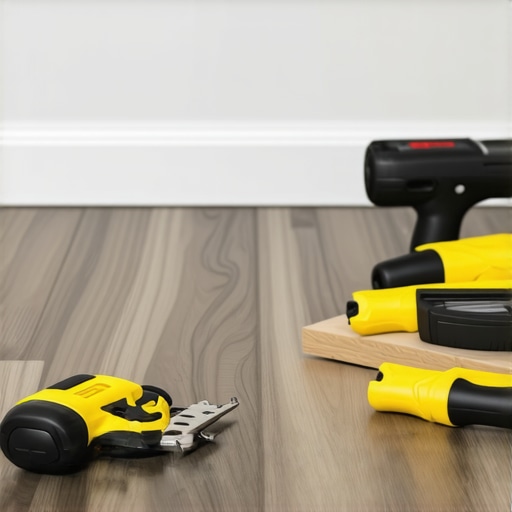
Master Guide to Installing Baseboards Over Uneven LVP in Bathrooms
Homeowners always ask why their waterproof vinyl is buckling. Usually, it is because they locked it under a heavy kitchen island or tried to pin it down with rigid baseboards on an uneven floor, killing the floor’s ability to breathe. I once spent four days in a master suite where the installer had nailed the baseboards so tight into the dips of a wavy subfloor that the Luxury Vinyl Plank (LVP) had nowhere to go when the house settled. The result was a floor that sounded like a bag of potato chips every time someone walked across it. This is the reality of modern flooring. It is a floating system, not a structural anchor. When you are dealing with a bathroom, where moisture is a constant and the footprint is small, the physics of that floating floor become even more volatile. You are fighting against humidity, uneven concrete or plywood, and the rigid nature of the trim you want to install.
The LVP lockdown tragedy
Installing baseboards over uneven Luxury Vinyl Plank in a bathroom requires flexible molding materials, precise scribing techniques, and strategic caulking. You cannot simply nail the board down to follow a dip in the floor. Doing so creates tension that snaps the LVP locking mechanisms or pulls the baseboard from the wall. I have seen countless DIY jobs where the homeowner thought they could force the wood to meet the floor. They ended up with a baseboard that looked like a roller coaster and a floor that was permanently damaged because it could no longer expand or contract with the seasonal shifts in humidity. In a bathroom, those shifts happen every time someone takes a hot shower. You need to understand the molecular reality of the materials you are handling. LVP is often made of a Stone Plastic Composite (SPC) or Wood Plastic Composite (WPC) core. These cores are dense. They do not bend easily. If your subfloor has a 3/16 inch dip over ten feet, the LVP will bridge that gap until weight is applied. If you nail your baseboard into that gap, you are essentially creating a clamp that prevents the floor from moving. This is the fastest way to void your warranty and ruin a $3,000 installation.
“A floor is only as good as the subfloor beneath it; deflection is the enemy of every joint.” – Master Flooring Axiom
Why your subfloor is lying to you
Subfloors are rarely level and the small confines of a bathroom often hide dramatic slopes toward the drain or toilet flange. Most people assume a new build has a flat floor, but I have seen slabs in high-end condos that look like the surface of the moon. When you lay LVP over these undulations, the planks will follow the general contour but will naturally bridge the smaller depressions. This creates a visible gap between the bottom of the baseboard and the top of the flooring. If you are looking for chic baseboard designs that transform rooms in 2025, you have to start with the realization that the floor is the foundation of that aesthetic. You cannot have a clean line on a crooked base. The first step in any bathroom trim job is to use a six-foot level to identify the high and low points of the perimeter. If the floor is out of level by more than 1/8 inch over six feet, you are going to have a hard time getting a standard MDF or wood baseboard to sit flush without a fight. This is where the chemistry of the material matters. MDF is more flexible than solid oak, but it absorbs moisture like a sponge. In a bathroom, using MDF near showers with a style trendy ideas for small bathrooms is a recipe for swelling and rot within two years. You want PVC or primed finger-jointed pine at the very least.
The physics of the expansion gap
The expansion gap is a non-negotiable requirement for LVP installations to prevent buckling and joint failure during thermal expansion. Most manufacturers require a 1/4 inch to 3/8 inch gap at every vertical surface. The baseboard’s primary job is to hide this gap while allowing the floor to slide underneath it. When the floor is uneven, the gap becomes inconsistent. Some installers try to solve this by using shoe molding or quarter round. While this is the easiest fix, it is often hated by those who want a modern, minimalist look. If you are going for a high-end finish, you have to scribe the baseboard. Scribing is the process of tracing the floor’s contour onto the board and cutting it to match perfectly. This is a skill that separates the mechanics from the hackers. You need a compass or a specialized scribing tool. You set the tool to the width of the largest gap, then drag it along the floor while the baseboard is held level against the wall. This transfers the floor’s profile to the wood. You then use a jigsaw or a power plane to remove the excess material. It is tedious. It is dusty. It is the only way to get a perfect fit on a bad floor.
| Material Type | Flexibility Rating | Moisture Resistance | Best Use Case |
|---|---|---|---|
| Solid Hardwood | Low | Low | Living areas only |
| MDF (Fiberboard) | Medium | Very Low | Dry bedrooms |
| Primed Pine | Medium | Medium | General residential |
| PVC (Vinyl) | High | High | Bathrooms and wet areas |
| Polystyrene | Very High | High | Highly curved walls |
Dealing with the bathroom dip
Addressing a dip in a bathroom floor requires a choice between leveling the subfloor before installation or customizing the trim to hide the flaw. If the LVP is already down, you are stuck with the latter. You must ensure that your baseboard is not pinned too tightly. In bathrooms, you are often dealing with tile cleaning tips for a sparkling bathroom in 2025 and general maintenance that involves water. If you leave a gap that is too large, water will find its way under the LVP and sit on the subfloor. This leads to mold. The goal is to get the baseboard close enough that a thin bead of 100 percent silicone caulk can bridge the remaining space. Silicone is flexible. It allows the floor to move while providing a watertight seal. Do not use acrylic caulk in a bathroom. It will crack within six months as the floor shifts. I always recommend using a backer rod if the gap is larger than 1/4 inch. This saves on caulk and provides a better structural bond for the sealant. People worry about grout restoration secrets for long lasting results when they have tile, but with LVP, the perimeter seal is just as vital for the longevity of the home’s subfloor structure.
Scribing your way to a flush finish
Scribing involves marking the highest point of the floor on the baseboard and removing material from the bottom to accommodate high spots. It is an inverted way of thinking. You aren’t filling the holes, you are removing the wood where the floor pushes up. This ensures the top of your baseboard remains perfectly level. If you don’t do this, the top edge of your baseboard will follow the floor and every miter joint in the corner will be a nightmare to close. When the baseboard is tilted or angled because it is riding a hump in the floor, the 45-degree cuts won’t line up. You will end up using a pound of wood filler to hide the gaps in the corners. I have spent many nights frustrated because a floor was so bad I had to plane down nearly half an inch of a six-inch baseboard just to get the corners to seat. For those looking for baseboards makeover ideas to elevate your space, remember that the most beautiful molding looks like junk if the joinery is sloppy. Spend the time on the scribe. Your future self will thank you when you are not staring at a 1/2 inch gap in the corner every time you sit on the toilet.
- Identify the highest point of the floor along the wall using a level.
- Tack the baseboard into place so it is perfectly level, even if it hangs over the floor.
- Set your scribe tool to the largest gap between the board and the floor.
- Trace the floor line across the length of the baseboard.
- Cut along the line with a jigsaw, angling the blade slightly backward for a back-cut.
- Check the fit and use a hand plane for fine adjustments.
- Seal the bottom edge with a primer before final installation to prevent moisture wicking.
Caulking is not a structural repair
Caulk should only be used to aestheticize a tight fit, not to bridge massive structural gaps caused by poor installation. I see guys try to use caulk to fill a 1/2 inch gap. It looks terrible. Over time, that much caulk will shrink and pull away from the wall or the floor. It becomes a magnet for hair, dust, and grime. If you are struggling with a bathroom that has complex tile work, you might want to look at eco-friendly tile solutions for sustainable homes in 2025 as an alternative, but if you are committed to LVP, the trim must be handled with precision. A thin, clean bead of silicone is all you need if your scribe is correct. If you find yourself reaching for the caulk gun to hide a major mistake, stop and rethink the cut. In a bathroom, moisture is the enemy. Water will settle in the dips. If your caulk job is the only thing stopping that water from reaching the subfloor, you are in trouble. This is why I prefer PVC baseboards in bathrooms. They are waterproof, flexible enough to handle slight curves, and they take paint well. They don’t have the soul of real wood, but they won’t rot when the kids splash water out of the tub.
“Modern floating floors require a level of precision in trim work that traditional nail-down floors never did; you are building a puzzle, not just nailing boards.” – Installation Manual Chapter 4
The moisture trap in the corners
Corners are the most vulnerable points in a bathroom flooring installation where moisture can penetrate the subfloor through gaps in the trim. When the floor is uneven, the corners are rarely a perfect 90 degrees. You have to cope your inside corners rather than mitering them. Coping is where you cut the profile of one board into the end of another. This allows the boards to overlap. If the floor settles or the walls move, a coped joint will stay tight while a mitered joint will open up like a fish’s mouth. This is especially important near showers that wow modern designs for 2025 because the high humidity causes rapid expansion and contraction. I always tell my apprentices that a miter in a bathroom is a temporary solution for a permanent problem. If you want to know how to refresh grout without replacing it, you likely care about maintenance. The same logic applies to your baseboards. A well-installed, coped, and scribed baseboard will last for thirty years. A slapped-on mitered board will need repair in five. Take the extra twenty minutes to cope the corners. Use a coping saw or a flapper wheel on a grinder. It makes a world of difference in the final look and the structural integrity of the room.
The 1/8 inch that ruins everything
Small variances in subfloor height can cause the locking tabs on LVP to fail if the baseboard is nailed through the flooring. This is the most common mistake I see. An installer thinks they are being smart by nailing the baseboard through the LVP into the wall plate to hold it down. You have just turned your floating floor into a fixed floor. When the temperature changes, the LVP will try to expand. Since it is pinned at the edges, it will hump up in the middle of the room. I have seen floors rise three inches off the subfloor because of a single nail. You must always nail into the wall studs, never into the floor. If the floor is so uneven that the gap is unbearable, you must either scribe the board or use a flexible shoe molding that is nailed only into the baseboard, not the floor. This allows the baseboard and shoe to move as one unit with the wall while the floor slides freely underneath. If you are unsure about the layout, you can always contact us for a professional consultation. Dealing with uneven subfloors is a technical challenge that requires the right tools and a deep understanding of structural movement. Don’t let a small dip in the plywood ruin a beautiful bathroom renovation. Understand the physics, respect the expansion gap, and always scribe for the best results. Check our privacy policy for more information on how we handle your data when you reach out for flooring advice.