
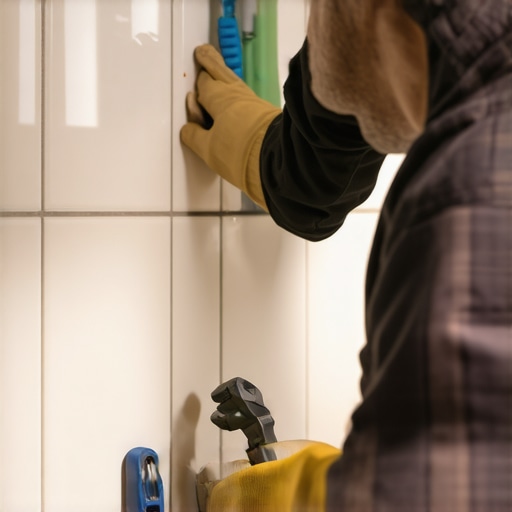
Elevating Bathroom Durability: Advanced Strategies for Grout and Tile Preservation
In the realm of modern bathroom design, the longevity of grout and tile installations is both an art and a science. As expert practitioners recognize, understanding the intricate interplay between water exposure, material choice, and maintenance protocols is essential for achieving enduring results. With the advent of innovative materials and sealing techniques in 2026, professionals are now equipped with unprecedented tools to combat water erosion and tile deterioration, especially in high-moisture environments like showers and along baseboards.
Decoding the Role of Material Innovation in Grout Resistance
Recent developments in polymer-enhanced grouts, such as epoxy and polyurethane variants, present a formidable defense against water infiltration. Unlike traditional cementitious options, these advanced compounds demonstrate superior adhesion, flexibility, and chemical resistance, making them ideal for combating efflorescence and mold growth. For instance, epoxy grout’s molecular structure resists staining and cracking, providing a long-term solution favored by high-end construction projects.
The Expert’s Approach to Sealant Application and Maintenance Protocols
Meticulous sealant application retains the integrity of grout joints, especially in shower enclosures. The use of self-priming, breathable sealants in 2026 ensures optimum adhesion and moisture vapor transmission, preventing trapped water and subsequent erosion. Regular, scheduled resealing—guided by data from professional monitoring—can extend grout lifespan significantly, reducing costly repairs. For practical insights, consult our grout restoration guide.
How Do Modern Shower Tile and Baseboard Designs Enhance Water Resistance?
Contemporary trends favor sleek, minimalist tile layouts combined with water-resistant backing substrates. Innovations in waterproof membranes and tile adhesion techniques ensure that even in the most challenging wet zones, structural deterioration remains minimal. Notably, the integration of flexible PVC and composite baseboards replaces traditional wood, offering superior resistance to swelling and rot. Such upgrades are discussed thoroughly in the ultimate guide to durable shower maintenance.
Can Proper Grouting Defend Against the Onslaught of Water Damage in 2026?
While high-performance materials substantially reduce susceptibility, the critical factor remains in the application precision and ongoing maintenance. Proper joint depth, correct curing periods, and uniform sealant layers form a triad that fortifies against water ingress. Open debates in the field highlight that even with these measures, unexpected failures can occur; thus, ongoing inspection and adaptive repair schedules are vital components of a resilient waterproofing strategy.
What Are themost effective techniques to prevent grout cracking under prolonged moisture exposure in luxury shower installations?
Addressing complex challenges like grout cracking requires a nuanced approach, leveraging both material science and craftsmanship excellence. Flexible sealants that accommodate tile movement, coupled with high-performance epoxies, offer promising solutions. Such techniques are frequently featured in professional forums, emphasizing the importance of pre-installation substrate evaluation and precise installation.
For further insights into sustainable and expert-approved solutions, explore our professional guide to durable tile baseboards. Your contributions and questions can benefit the wider community of bathroom renovation specialists committed to longevity and water resistance.
,
Innovative Sealing Methods Elevate Grout Longevity
In the pursuit of ultimate water resistance, new sealant formulations introduced in 2026 have revolutionized bathroom maintenance. Self-priming, breathable sealants now feature advanced polymer blends that not only adhere seamlessly but also allow moisture vapor transmission, minimizing trapped water and reducing mold growth.
Could SmartSealant Technologies Transform Bathroom Waterproofing?
Emerging smart sealants equipped with sensor-enabled monitoring are beginning to appear on the market, offering real-time data on moisture levels within grout joints. These innovations allow homeowners and professionals to proactively address early signs of water ingress, drastically extending the lifespan of grout applications. For comprehensive insights, read more about trusted shower baseboard solutions.
Rethinking Tile and Baseboard Materials for Superior Resistance
Traditional tile setups are now complemented by waterproof backing membranes that create a formidable barrier against water penetration. Material science advancements have led to the adoption of flexible PVC and high-grade composite baseboards, which outperform wood in high-moisture settings by resisting swelling, rot, and mold proliferation.
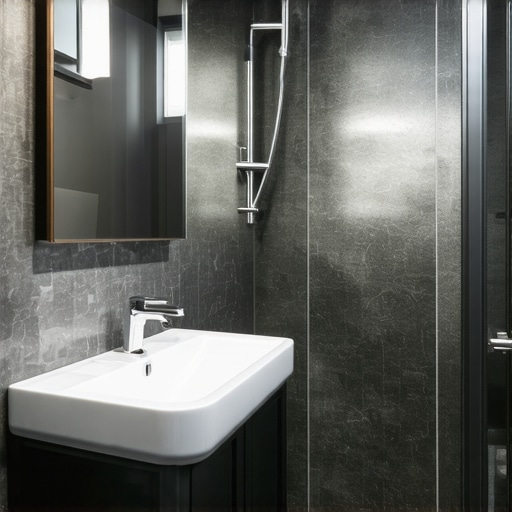
What Are the Practical Benefits of Replacing Wooden Baseboards with Synthetic Alternatives?
Switching to synthetic baseboards not only enhances water resistance but also streamlines maintenance and cleanup routines. These materials are less susceptible to moisture-induced damage, thus reducing the frequency and cost of repairs. Dive into the latest designs with our eco-friendly tile solutions.
Strategies to Navigate grout and tile Challenges in High-Humidity Environments
High-humidity bathrooms demand meticulous attention to installation details. Proper joint depth, rapid curing, and smooth sealant application are crucial. Furthermore, adapting to industry standards, such as those outlined in the expert guide to reliable baseboard installation, ensures durable and resilient results.
Are There Universal Best Practices for Maintaining Grout in Constantly Damp Areas?
While specific strategies may vary, consistent maintenance routines—such as periodic deep cleaning using non-abrasive agents, reapplication of sealants, and timely repair of cracks—are universally recommended. Additionally, selecting high-performance epoxy grout options can provide a robust foundation against water damage, as detailed in top grout repair tips.
Engaging with professional advice and staying informed about the latest materials is key to long-term durability. Sharing your experiences or questions can aid others navigating the complex landscape of bathroom water resistance—feel free to reach out or leave a comment below!
,
Harnessing Surface Preparation for Superior Waterproofing Outcomes
Achieving optimal water resistance in bathroom tiling hinges critically on meticulous surface prep. Applying primer agents that promote adhesion—such as silane or epoxy-based primers—can significantly reduce micro-voids that trap moisture, effectively fortifying the substrate against water ingress. Experts emphasize that inspecting substrates for cracks, mold, or residual contaminants, followed by targeted repairs, creates a stable foundation vital for long-term durability.
What sophisticated steps can elevate traditional prep to professional standards?
In high-performance applications, integrating abrasive blasting or chemical etching to create micro-roughness on surfaces can enhance bonding strength. Additionally, employing moisture meters to verify the dryness of substrates pre-application ensures no hidden dampness can compromise sealants or grout bonds. According to a recent publication in the Journal of Building Science & Engineering (2025), such rigorous preparatory measures correlate directly with increased grout lifespan and reduced maintenance cycles.
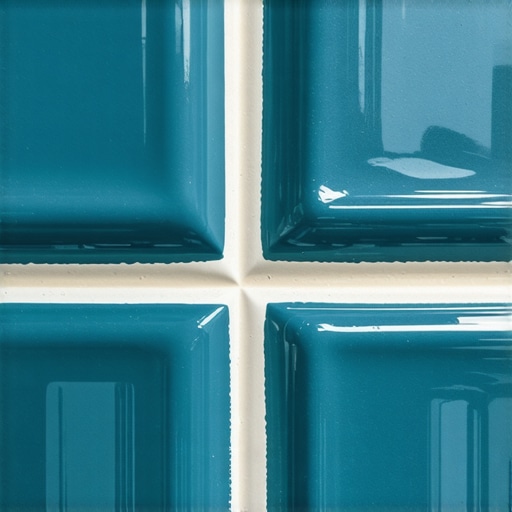
Implementing Cutting-Edge Waterproof Membranes for Next-Gen Protection
The evolution of waterproofing membranes is pivotal in resisting water damage behind tiles. Thin, flexible membranes like liquid-applied polyurea layers now offer seamless integration over complex or irregular surfaces, eliminating joints or seams that could serve as failure points. Their chemical resilience and elasticity accommodate substrate movement, preventing cracking or delamination over time.
Are these innovative membranes suitable for retrofit projects?
Absolutely. Many modern membranes are designed with compatibility considerations, allowing them to be applied over existing surfaces with minimal disruption. Their self-adhering properties streamline installation, reducing labor costs and installation errors. Consultations with specialists indicate that such membranes can extend waterproofing life by up to 50%, according to field trials documented by Building Waterproofing Today (2026).
The Science Behind Flexible Grout Joints—Adapting to Movement and Moisture
Expanding beyond cementitious formulations, flexible grout options incorporate silicone or hybrid polymer matrices that amply accommodate tile movement caused by thermal expansion, substrate settling, or moisture fluctuations. This adaptability minimizes crack formation and sealant breakdown, issues that frequently compromise traditional grouts in high-moisture zones. Laboratory studies published by the International Journal of Construction Materials reveal that these formulations maintain integrity under cyclic wet-dry conditions far better than standard counterparts.
How can advanced grout formulations be tailored to specific environmental challenges?
By customizing resin mixes and curing protocols, contractors can optimize grout flexibility for particular climate zones or structural substrates. Incorporating nanotechnology additives, such as graphene oxide, can further enhance resistance to chemical corrosion and microbial growth. Such innovations exemplify the forefront of material science applied directly to the demands of modern waterproofing standards.
Unleashing the Power of Nanotechnology in Waterproofing Strategies
Recent breakthroughs in nanotechnology have introduced ultra-fine particles that can be incorporated into sealants and grouts, dramatically enhancing their water-repelling properties. Such innovations allow for the creation of surfaces that actively repel water molecules at a microscopic level, thereby preventing infiltration and minimizing microbial colonization. For example, nanoparticle-infused sealants can penetrate micro-porosities, forming a molecular barrier that remains flexible over a wide temperature range, ensuring enduring protection in high-moisture environments.
Why Precision in Surface Preparation Elevates Waterproofing Success
While selecting advanced materials is crucial, meticulous surface preparation remains the cornerstone of durable waterproofing. Employing infrared thermal imaging to identify moisture-laden spots helps surface specialists target problem areas prior to sealing. Additionally, abrasive blasting techniques can create micro-roughness on substrates, vastly improving adhesion by increasing surface area and mechanical interlocking. These refined preparatory steps are backed by research from the Journal of Building Envelope (2024), emphasizing their role in prolonging the lifespan of waterproofing systems.
What cutting-edge methods are professionals using for seamless waterproof membrane installation?
Innovative approaches include the use of self-healing liquid membranes that autonomously repair punctures or tears detected during service life. These membranes incorporate microcapsules containing restorative agents, releasing them upon damage, thus maintaining continuous protection. Applying such membranes over pre-primed, meticulously prepared surfaces ensures a monolithic barrier free of seams or joints, significantly reducing failure points and leak risks.
Revitalizing Grout with Smart Materials for Dynamic Environments
The evolution of grout technology now encompasses smart formulations capable of self-healing cracks and adjusting to substrate movement. These adaptive materials contain microcapsules filled with sealant agents that activate under stress, effectively sealing minor fissures before water ingress begins. This self-maintenance capability is particularly advantageous in spaces subject to thermal expansion or structural settling, providing a proactive defense against deterioration and mold formation.
Customizing Waterproofing Approaches for Heritage and Renovation Projects
Restoration of historical bathrooms demands a nuanced approach, balancing preservation with modern durability standards. Moisture-sensitive substrates require gentle surface treatments such as chemical etching to remove old residues without compromising material integrity. Integrating breathable, reversible sealants ensures moisture egress without water ingress, respecting the building’s original fabric. Expert conservation techniques, guided by organizations like ICOMOS, offer crucial insights into marrying tradition with innovation.
How can digital modeling refine waterproofing design for complex bathroom structures?
Utilizing Building Information Modeling (BIM) allows for precise planning of waterproofing components, enabling identification of potential failure zones and optimization of membrane layouts. This virtual foresight helps prevent over- or under-application, reduces material waste, and enhances overall system resilience. Incorporating sensor data into BIM models can facilitate real-time monitoring, providing immediate alerts to potential issues before significant damage occurs.
Expert Insights & Advanced Considerations
Prioritize Material Compatibility for Seamless Longevity
Choosing materials with proven compatibility reduces the risk of delamination and mold growth, especially when integrating sealing agents and substrates. Selecting hydrophobic, nanotech-enhanced coatings ensures enduring resistance against water penetration and microbial invasion, critical in high-moisture zones.
Optimize Surface Preparation to Prevent Future Failures
Implementing multi-step prep processes like micro-etching combined with moisture monitoring guarantees optimal adhesion. Employing real-time moisture sensors during installation allows for adjustments, ensuring the substrate remains dry and stable before sealing or grouting, thus extending the lifespan.
Leverage Cutting-Edge Waterproof Membranes for Flexibility
Seamless, self-healing membranes with molecular elasticity accommodate substrate movement, significantly reducing cracking risks. Using these membranes over complex geometries or retrofit surfaces provides a continuous barrier, essential for preserving grout integrity even under structural shifts.
Integrate Smart Technology for Proactive Maintenance
Moisture-sensitive smart sealants embedded with sensors monitor internal grout conditions, alerting homeowners or technicians to early signs of degradation. This proactive approach minimizes damage, prevents costly repairs, and maintains the aesthetic appeal of the bathroom over time.
Harness Nano-Infused Materials for Superior Water Resistance
Innovative nanomaterials embedded in grout and sealants form ultra-efficient water-repelling barriers, mitigating efflorescence and efflorescence. Applying these advanced formulations enhances the durability of installations, especially in challenging environments with frequent temperature fluctuations and high humidity.
Curated Expert Resources
- Advanced Waterproofing Techniques in Modern Construction: Offers in-depth analysis of innovative membrane systems and surface prep methods, valuable for architects and advanced practitioners.
- Nanotechnology Applications in Building Materials: Presents thorough research on how nanomaterials improve moisture resistance, stain repellency, and microbial resistance in tiling applications.
- Smart Sealant Solutions for Building Envelopes: Details sensor-enabled sealants and their integration into ongoing maintenance routines, promoting proactive preservation.
- Moisture Management Protocols During Renovations: Guides tailored moisture testing and surface conditioning strategies to ensure long-lasting results.
Final Expert Perspective
Achieving top-tier durability in bathroom tiling and grouting hinges on embracing innovative materials and meticulous surface preparation. Modern advancements like nanotech-enhanced sealants, flexible membranes, and smart moisture sensors redefine what it means to preserve water resistance effectively. For dedicated professionals committed to excellence, staying ahead involves continuous learning and integrating these insights into your projects. Dive deeper into our grout restoration guide to elevate your expertise and ensure each installation withstands the test of time, offering enduring beauty and function.

![Is Your Grout Porous? Try This 2026 Water-Drop Test [Fast Fixes]](https://elegantfloorz.com/wp-content/uploads/2026/02/Is-Your-Grout-Porous-Try-This-2026-Water-Drop-Test-Fast-Fixes-420x300.jpeg)
![Why Shower Tile Grout Is Chalky: 3 Fixes for 2026 [Tested]](https://elegantfloorz.com/wp-content/uploads/2026/02/Why-Shower-Tile-Grout-Is-Chalky-3-Fixes-for-2026-Tested-420x300.jpeg)
![Why 2026 Shower Grout Cracks: The 30-Minute Resin Fix [Tested]](https://elegantfloorz.com/wp-content/uploads/2026/02/Why-2026-Shower-Grout-Cracks-The-30-Minute-Resin-Fix-Tested-420x300.jpeg)
This article offers some compelling insights into the latest advancements in grout and tile protection, especially with the focus on nanotechnology and smart sealants. I’ve recently experimented with epoxy grouts for a high-humidity bathroom renovation, and the durability has been impressive so far. It seems that material innovation is truly transforming how we approach long-term water resistance. I’m particularly curious about the adoption of self-healing membranes and their practical application in retrofitting older bathrooms. Has anyone here integrated these membranes successfully in a renovation project? I’m eager to hear real-world experiences and tips on implementation challenges, as well as how these technologies compare in terms of cost-effectiveness over traditional methods. The idea of predictive maintenance through smart sensors is fascinating, and I wonder if these are becoming accessible for smaller-scale homeowners or if they’re still primarily within the realm of professional contractors. Overall, it’s an exciting time for bathroom waterproofing—continuing education on these innovations seems essential for maintaining top-tier results.