
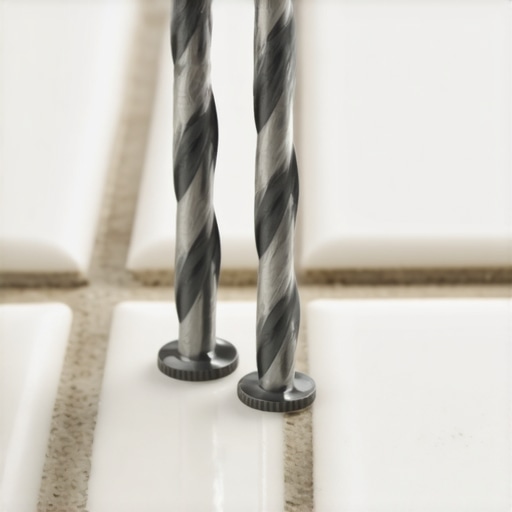
The brutal reality of porcelain density
Porcelain tiles are engineered through a process of dust-pressing and kiln-firing at temperatures exceeding 1,200 degrees Celsius. This results in a vitrified material with a water absorption rate of less than 0.5 percent, making it one of the hardest surfaces to penetrate in modern construction. I spent three days grinding concrete on a job last month just so the floor wouldn’t click like a castanet, and that taught me one thing. You cannot cheat physics. When you approach a shower wall covered in Grade 5 porcelain, you aren’t just drilling a hole. You are performing a high-stakes surgical extraction on a material that is technically harder than most steels. Most homeowners and even some green contractors walk into the local big-box store and grab a masonry bit thinking it will do the trick. It won’t. I have seen guys burn through five bits in ten minutes without making a 1/8 inch indentation. They end up leaning into the drill with all their weight, the bit gets red hot, and then suddenly the tile snaps. Now you have a shattered $60 rectified tile and a mess of shards on your shower floor. This is a structural engineering challenge. You need to understand the molecular bond of the clay and the thermal limits of the tool you are holding.
Why your standard masonry bit will fail
A standard masonry bit relies on percussion and a carbide spade tip to fracture soft materials like brick or cinder block. Because porcelain is a Grade 5 hardness material on the PEI scale, these bits generate excessive heat that dulls the cutting edge instantly without making a dent in the surface. If you try to use a hammer drill on a porcelain shower wall, the vibration alone is enough to crack the bond between the tile and the thin-set. I remember a job where a DIYer tried to install a grab bar using a hammer drill. He didn’t just ruin the tile. He vibrated the grout loose for three feet in every direction. If you need to fix a mess like that, you should look at grout restoration secrets for long lasting results. The chemistry of a masonry bit is designed for impact, not abrasion. Porcelain requires a bit that works like a grinding wheel. You need something that can shave off microscopic layers of the vitrified clay one rotation at a time. The heat-affected zone on a standard bit reaches critical mass within seconds. Once that carbide tip loses its temper, it is softer than the tile it is trying to cut. You are essentially trying to drill through a diamond with a piece of wood at that point. It is a waste of time and a risk to the structural integrity of your waterproof membrane.
“A floor is only as good as the subfloor beneath it; deflection is the enemy of every joint.” – Master Flooring Axiom
The physics of diamond grit and vacuum brazing
Diamond core bits utilize industrial-grade diamond particles that are bonded to a steel shank through a process called vacuum brazing. This creates a high-strength molecular bond that allows the diamonds to remain attached even under the extreme thermal stress of drilling through dense porcelain or granite. These bits don’t have a sharp point. They have a hollow core or a flat face covered in grit. When you spin that bit at 2,000 RPM, the diamonds act as tiny teeth. They are harder than the porcelain. They don’t cut the tile so much as they grind it into a fine powder. This is where the structural zooming becomes important. The size of the diamond grit matters. Too coarse and you will chip the glaze on the tile. Too fine and the bit will gum up with porcelain dust and stop cutting. I prefer a bit with a medium grit that is electroplated. It gives you a clean entry point without walking across the tile. If you are designing showers that wow modern designs for 2025, you likely have expensive, large-format porcelain slabs. One wrong move with a cheap bit and you are looking at a very expensive replacement. The friction generated is immense. You can smell it. It smells like burnt ozone and dry earth. That smell is the sound of a bit failing if you aren’t careful.
The thermal management of wet drilling
Wet drilling involves the constant application of coolant, usually water, to the drill bit interface to dissipate frictional heat. This prevents the diamond matrix from melting and keeps the tile glaze from experiencing thermal shock, which can lead to spontaneous cracking or shattering. I always keep a spray bottle or a wet sponge next to the hole. If you see smoke, you have already failed. The water does more than just cool. It carries away the slurry of ground-up porcelain. Without water, that dust turns into a thick paste that clogs the diamond grit. This causes the bit to slide rather than grind. I have seen guys try to drill dry and the bit gets so hot it actually welds itself to the steel shank or the drill chuck. It is a mess. You should also consider how this moisture interacts with your sub-surfaces. If you are drilling through tile to reach a stud, you are puncturing your waterproofing. Make sure you fill that hole with 100 percent silicone before you drive your screw. Protecting the wall behind the tile is just as important as the tile itself. If you want a clean look, you might be upgrading your trim too, so check out chic baseboard designs that transform rooms in 2025 for a complete finish. The cooling process must be continuous. Do not just dip the bit in water and start. Keep the water flowing.
Selecting the right RPM for Grade 5 tiles
The rotational speed or RPM of your drill must be matched to the diameter of the bit and the hardness of the porcelain to ensure efficient cutting. For a 1/4 inch diamond bit, a speed between 1,500 and 2,500 RPM is ideal, while larger core bits require slower speeds to prevent centrifugal heat buildup at the perimeter. This is a common mistake. People think faster is better. If you spin a large bit too fast, the outer edge moves at a much higher velocity than the center. This creates uneven heat distribution. The tile expands at different rates and pop. It cracks. I use a variable speed drill and I never pull the trigger all the way. You need a steady hand and a light touch. Don’t push. Let the diamonds do the work. If you find yourself leaning on the drill, stop. You are either using the wrong bit or your diamonds are spent. I have a shelf in my shop full of bits that look fine but are smooth to the touch. They are useless. They are just expensive paperweights. When you are working on showers with a style trendy ideas for small bathrooms, space is tight. You don’t have room for a drill to jump and scar the adjacent wall. Use a template. A piece of scrap plywood with a hole in it can be taped to the wall to keep the bit from wandering. It saves your tile and your sanity.
| Bit Type | Material Compatibility | Expected Lifespan (Holes) | Recommended Cooling |
|---|---|---|---|
| Carbide Spear Head | Ceramic, Soft Stone | 1-3 | Dry/Damp |
| Electroplated Diamond | Porcelain, Glass | 5-10 | Constant Water |
| Vacuum Brazed Diamond | Porcelain, Granite, Quartz | 15-30 | Dry or Wet |
| Standard Masonry | Brick, Block, Concrete | 0 (on Porcelain) | N/A |
The structural integrity of the shower wall
A shower wall system consists of a moisture barrier, a backer board, thin-set mortar, and the porcelain tile itself. When you drill a hole, you are creating a pathway for moisture to penetrate the substrate, which can lead to mold growth or structural rot if the hole is not properly sealed during the hardware installation. This is the part people forget. They get the hole drilled and they are so happy they didn’t crack the tile that they just screw the fixture in and walk away. That is a ticking time bomb. The water will find its way behind that plate. It will soak into the backer board. Over five years, that board will soften. Eventually, the tile will start to pull away from the wall. I have seen entire shower walls fail because of four poorly sealed screw holes. If you are doing a full renovation, you might want to learn how to refresh grout without replacing it to keep the rest of the installation looking as good as your new fixtures. Always use a high-quality sealant. It is the cheapest insurance policy you can buy. The drill bit gets you through the hard part, but the sealant keeps the house standing. Porcelain is a shield. Once you pierce that shield, you are responsible for the hole you made.
“Porcelain tile density requires a grinding action rather than a cutting action to prevent catastrophic fracture during penetration.” – Tile Council of North America Guidelines
The 1/8 inch that ruins everything
Precision depth control is the final hurdle because once the bit passes through the dense porcelain, it will hit the softer backer board and accelerate rapidly. If the drill chuck hits the tile surface, it can cause impact fractures or leave unsightly scuffs that cannot be polished out of the factory glaze. I have seen it happen a hundred times. The bit finally breaks through the hard shell and the drill lurches forward. Bang. The metal chuck hits the tile. You have to be ready for that change in resistance. It is a feel you develop after thousands of holes. You can hear the pitch of the drill change. It goes from a high-pitched scream to a low growl. That is your signal to back off. If you are installing something like baseboards makeover ideas to elevate your space near a tiled area, you know that the transition is where the beauty lives. A scuff on a tile near a fixture is all anyone will ever see. They won’t see the perfect layout or the expensive grout. They will see the one spot where you got sloppy with the drill. Take your time. Use a depth stop if you have to. Better yet, just pay attention to the feedback the tool is giving you. Your hands know when the job is almost done.
- Select a vacuum-brazed diamond bit for Grade 5 porcelain.
- Create a drilling template using scrap wood to prevent bit wander.
- Keep a constant flow of water on the bit to dissipate heat.
- Use a variable speed drill and avoid the hammer setting.
- Apply steady, moderate pressure without leaning your full weight.
- Clean the bit frequently to remove porcelain slurry.
- Seal the hole with 100 percent silicone before installing hardware.
The final word on porcelain penetration is about patience and the right metallurgy. You are fighting a material that was born in fire and pressed with thousands of pounds of force. You won’t win with brute strength. You win with a bit that is harder than the wall and a technique that respects the physics of heat. If you treat the tile like a structural component, you will end up with a clean, professional finish. If you treat it like a piece of wood, you will be back at the store buying replacement tiles and more grout. I prefer to do the job once. Use the right bit. Keep it cool. Watch your speed. That is how you drill porcelain like a pro. If you need help with the rest of your project, you can always contact us for expert advice. Don’t forget that even the best tile job needs maintenance, so read up on tile cleaning tips for a sparkling bathroom in 2025 to keep that porcelain shining for decades. The right tool makes all the difference in the world.