
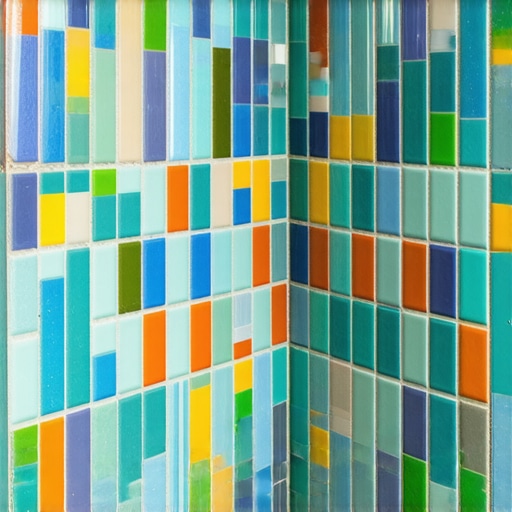
The Best Grout for Mosaic Tiles in a Shower
Most guys skip the leveling compound. They think the underlayment will hide the dip. It won’t. I spent three days grinding concrete on a job last month just so the floor wouldn’t click like a castanet. I have spent twenty five years on my knees with a moisture meter and a level, and I can tell you that a shower is not a place for aesthetic experiments. It is a wet laboratory where physics and chemistry are constantly trying to destroy your hard work. When you are looking at a sheet of mosaic tile, you are looking at hundreds of feet of potential failure points. Each grout line is a tiny canal that can either move water safely to the drain or soak it up like a sponge and rot your subfloor. This is not about what looks pretty on Pinterest. This is about structural engineering at the millimeter level. I smell like floor wax and sawdust most days, and I have seen enough moldy backer board to know that grout selection is the difference between a thirty year shower and a three year insurance claim.
The chemistry of failure in wet environments
Grout selection for mosaics relies on understanding porosity, hydrostatic pressure, and polymer cross-linking. In a shower, the best grout must resist water absorption and maintain compressive strength under constant saturation. You should prioritize epoxy grout or high performance cement to ensure a waterproof bond on mosaic substrates. I have seen guys use standard sanded grout on tiny mosaic joints, and within six months, the sand particles start popping out because they are too big for the gap. You have to understand the hydration process. When water hits Portland cement, it starts a chemical reaction that forms calcium silicate hydrate. If you use too much water in your mix, that water eventually evaporates and leaves behind microscopic voids. Those voids are tunnels for bacteria. If you want to avoid a mess, you need to look into grout restoration secrets for long lasting results before you even mix your first bucket. The molecular density of the grout determines how much water it will wick. In a shower, wicking is the enemy. You want a material that sits on the surface and blocks penetration at the chemical level.
Epoxy resins and the impenetrable bond
Epoxy grout is a different beast entirely. It does not use water to cure. Instead, it uses a chemical reaction between a resin and a hardener. This creates a plastic like surface that is almost entirely non porous. For mosaic tiles, which have a massive amount of surface area relative to the tile size, epoxy is the gold standard. It is a nightmare to install because it is sticky and has a short pot life, but once it is in, it is not moving. The chemical resistance is off the charts. It will not stain from shampoo or soaps. It will not support mold growth because there is no organic material for the mold to eat. It is dense. It is heavy. It is the only thing I trust in a high use steam shower where the vapor drive is intense. I have walked into jobs where the owner complained about a smell, and the reason was always the same. They used a cheap cement grout that absorbed body oils and skin cells into the pores of the grout. Epoxy stops that dead.
High performance cementitious blends
If you are not ready for the struggle of epoxy, you go with a high performance cement grout. These are not your grandpa’s grout bags. These are calcium aluminate based or polymer modified blends. They cure faster and are much denser than standard stuff. They also do not require sealing as often, though I still tell people to seal them. You have to watch the water to powder ratio like a hawk. One extra ounce of water can ruin the color consistency and the strength of the joint. I keep a digital scale on my truck for this reason. People think I am crazy until they see a perfectly uniform grout line that does not crack when the house settles. You are looking for a material that meets the ANSI A118.7 standard. That is the benchmark for high performance cement grout.
Why mosaic geometry demands high performance grout
Mosaic tiles create a dense grid of interconnected joints that demand high tensile strength and flexibility. The best grout for mosaic must handle thermal expansion and structural deflection across hundreds of small tiles. Use unsanded grout for joints smaller than 1/8 inch to ensure full penetration and color uniformity. Mosaic tiles are often thinner than large format tiles. This means the grout joint is shallow. A shallow joint is a weak joint. If you use a weak grout, it will flake out. You need the polymer additives to act like glue, holding those tiny pieces together. When you walk on a mosaic floor, the pressure is distributed across many small edges. Each edge needs to be supported by a grout that has high compressive strength. If the grout is soft, the tile edges will chip. I have replaced entire floors because the installer used a cheap, soft grout on a glass mosaic. The glass is harder than the grout, and the grout just disintegrated under foot traffic. For ideas on how these grids look in practice, check out showers with a style trendy ideas for small bathrooms to see how the geometry plays out. It is a structural grid, not just a pattern.
“A floor is only as good as the subfloor beneath it; deflection is the enemy of every joint.” – Master Flooring Axiom
The subfloor secrets behind shower longevity
Subfloor preparation is the primary factor in preventing grout cracks and tile delamination in wet areas. You must ensure the joist spacing meets TCNA requirements for L/360 deflection before laying mosaic tiles. Proper waterproofing membranes and pre-sloped pans are mandatory for a leak proof installation. If your subfloor bounces, your grout will crack. It is a simple law of physics. Mosaic tiles are actually more forgiving of slight curves in a floor, but they are less forgiving of movement. Because there are so many grout lines, there are more places for a crack to appear. I always use a high quality uncoupling membrane under mosaics. This allows the subfloor to move slightly without telegraphing that movement into the tile and grout. I also look at the plumbing. If the drain is not rock solid, the grout around the drain will be the first thing to fail. I spend more time on the prep than I do on the actual tiling. That is how you stay in business for twenty five years. You fix the problems before they are covered up. If you need to fix an old job, you might want to learn how to refresh grout without replacing it before you tear everything out.
Technical specifications for shower installation
Technical standards like ANSI A118.3 for epoxy and ANSI A118.7 for cement define the durability of your shower floor. You must verify Janka hardness if using wood accents or PEI ratings for ceramic mosaics. Proper curing times and temperature controls are essential for a long lasting grout bond. The temperature of the room matters. If it is too hot, the water in the grout evaporates before the chemical hydration is complete. This results in a dusty, weak grout. If it is too cold, the grout might not set up at all. I keep a thermometer in the room. I want it between sixty and eighty degrees. Anything else is a risk I am not willing to take. You also have to think about the environment. Is this a beach house with sand? Is it a mountain cabin with hard water? These factors change which grout I pick. For those looking for modern finishes, chic baseboard designs that transform rooms in 2025 can provide a clean finish to your tile work. Below is a comparison of grout types for mosaics.
| Grout Feature | Standard Cement | High Performance Cement | Epoxy Grout |
|---|---|---|---|
| Water Resistance | Low | Medium-High | Very High |
| Stain Resistance | Poor | Moderate | Excellent |
| Ease of Install | Easy | Moderate | Difficult |
| Joint Size Limit | 1/8 to 1/2 inch | 1/16 to 1/2 inch | 1/16 to 3/8 inch |
| Color Consistency | Variable | Good | Excellent |
The 1/8 inch that ruins everything
Expansion gaps at the perimeter of the shower prevent tented tiles and cracked grout lines. You must leave a 1/8 inch gap filled with 100 percent silicone sealant rather than hard grout. This movement joint absorbs the expansion and contraction of the tile assembly. This is where most rookies fail. They grout the corner where the floor meets the wall. That corner is a change of plane. The wall and the floor move at different rates. If you put hard grout in that corner, it will crack. It will look like a spider web within a month. You have to use a color matched caulk, specifically a high grade silicone. Silicone is flexible. It acts as a gasket. I have seen entire mosaic floors buckle because the installer shoved grout tight against the wall. There was no room for the floor to breathe. This is especially true if you have a window in the shower. The sun hits those tiles, they heat up, they expand, and if they have nowhere to go, they pop. It is simple thermodynamics. For those interested in the environmental impact of these choices, see eco-friendly tile solutions for sustainable homes in 2025. Proper engineering is the best way to be sustainable because you only build it once.
“Grout is not a structural adhesive; it is a filler that must accommodate the inevitable movement of a building.” – TCNA Handbook for Ceramic, Glass, and Stone Tile Installation
Grout restoration and maintenance facts
Maintaining mosaic grout requires pH neutral cleaners and periodic resealing to prevent mildew accumulation. You should avoid acidic cleaners that etch cement grout and degrade the polymer bonds. Regular scrubbing with soft brushes ensures the textured surface of the mosaic grid remains hygienic. I tell my clients to stay away from the harsh bleach sprays. They eat the grout. Over time, the grout becomes more porous because you are literally dissolving the cement binder. Then it gets dirty even faster. It is a death spiral for your floor. Use a cleaner designed for tile. And if you have a mosaic with natural stone, you have to be even more careful. Some stones react to the chemicals in the grout itself. I always test a small area first. If the stone darkens or pits, I change my plan. Keeping the area clean is vital, and you can find more information at tile cleaning tips for a sparkling bathroom in 2025. Also, think about how the tile meets the wall. A good transition can be seen in baseboards makeover ideas to elevate your space, even in bathrooms.
- Verify the subfloor is rigid and meets L/360 deflection limits.
- Choose epoxy grout for the highest water and stain resistance.
- Ensure the grout is rated for the specific joint width of your mosaic.
- Use 100 percent silicone in all change of plane corners.
- Clean tiles thoroughly before grouting to ensure a clean bond.
- Maintain a consistent water to powder ratio for cementitious grouts.
- Allow the grout to cure fully before the first shower use.
Regional climate impacts on drying times
Local humidity and ambient temperature significantly alter the evaporation rate and curing schedule of shower grout. In high humidity regions, you must extend the drying time before sealing or using the shower. Conversely, dry climates may require damp curing to prevent the grout from cracking. If I am working in a swampy basement in the middle of a humid summer, I know that grout is going to stay wet for a long time. I tell the homeowner to stay out of there for at least seventy two hours. If it is a dry, desert environment, I might even mist the grout with a little water to slow down the drying. If it dries too fast, it loses its strength. It becomes brittle. You want a slow, steady cure. This is the part of the job that no one sees, but it is why my floors are still there twenty years later. For more inspiration on modern shower builds, look at showers that wow modern designs for 2025. A final word of advice. Do not buy your grout from a bargain bin. Go to a tile supply house. Get the professional grade material. Your knees and your wallet will thank you in the long run. There is no shortcut to a quality installation. It is just math, chemistry, and a lot of hard work.