
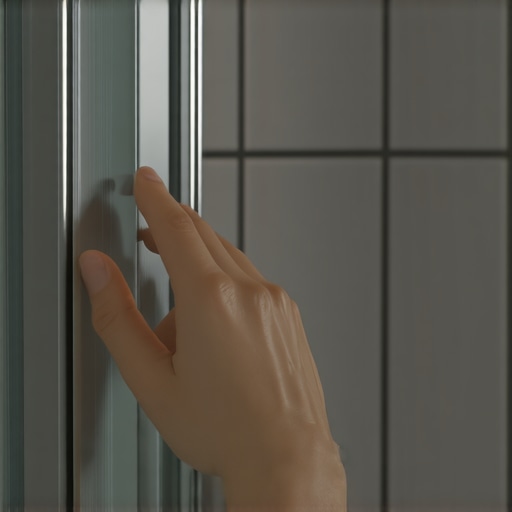
The finger test that saves ten thousand dollars
Shower seals must be inspected using a firm finger to identify grout failure, silicone degradation, and moisture intrusion points. By applying pressure to the caulk joints and tile transitions, you can detect spongy substrates or efflorescence that signals a breach in the waterproof membrane before structural rot occurs.
I spent three days grinding concrete on a job last month just so the floor wouldn’t click like a castanet. That experience reminded me that the surface is a lie. If the skeleton is soft, the body fails. Homeowners focus on the gloss of the ceramic, but I focus on the integrity of the bond. A shower is a high pressure environment where water is constantly searching for a path to gravity. If your seal is compromised, that path leads into your floor joists. Most guys skip the leveling and the proper sealing compound because they think the tile is the shield. It is not. The tile is the skin, but the seal is the immune system. When I walk into a bathroom and see a tiny crack in the corner, I don’t see a cosmetic issue. I see a five figure mold remediation bill waiting to happen. You have to be proactive. You have to get on your knees and touch the floor. You need to feel for the slight movement that indicates the adhesive has detached from the backer board. This is about physics, not aesthetics. If your finger can indent the sealant, the water has already won the first round of the fight.
The physics of water migration in saturated environments
Water moves through capillary action, which is the ability of a liquid to flow in narrow spaces without the assistance of, or even in opposition to, external forces like gravity. In a shower setting, this means that a microscopic gap in your grout is an open highway for moisture. When you use the finger test, you are looking for the tactile evidence of this migration. If the grout feels cold and damp hours after the shower was last used, it is holding water. This is a sign of high porosity or a failed sealer. According to technical standards, the absorption rate of your tile and its surrounding joints determines the longevity of the installation. If the moisture reaches the subfloor, it will cause the wood to expand at a different rate than the tile, leading to shear stress that snaps the bond. This is why 1/8 inch of movement is enough to ruin a professional installation. We are dealing with hydrostatic pressure that pushes against every corner of the stall. If the silicone has pulled away from the baseboards or the wall tile, the barrier is broken. You can learn more about how chic baseboard designs that transform rooms in 2025 can also serve as the first line of defense against peripheral water damage.
“A floor is only as good as the subfloor beneath it; deflection is the enemy of every joint.” – Master Flooring Axiom
Chemical breakdown of modern sealants and adhesives
Not all sealants are created equal. You have 100 percent silicone, siliconized acrylic, and various polyurethanes. The finger test helps you identify when these materials have reached their chemical end of life. Over time, exposure to soap scums, acidic cleaners, and constant temperature fluctuations causes the polymers to cross link and harden or, conversely, to undergo hydrolysis and turn into a mushy paste. If you press your nail into the caulk and it doesn’t bounce back, the elasticity is gone. Without elasticity, the seal cannot handle the natural expansion and contraction of your home. This is especially true in regions with high humidity where the house breathes more deeply. When the seal fails, you need to know how to refresh grout without replacing it to maintain the structural integrity. The chemical bond between the sealant and the tile edge is the most frequent point of failure. If you can slide your fingernail behind the bead of silicone, the bond is mechanical but not chemical. It will leak. We use specialized testing tools in the industry, but the human hand is surprisingly sensitive to the texture changes that precede a total sealant blowout.
Comparative analysis of sealant performance
Choosing the right material for your shower corners and transitions is a matter of engineering. The following table breaks down the performance metrics of common materials found in modern bathrooms.
| Material Type | Elasticity Rating | Moisture Resistance | Average Lifespan |
|---|---|---|---|
| 100% Silicone | High | Excellent | 5-10 Years |
| Siliconized Acrylic | Medium | Moderate | 2-4 Years |
| Epoxy Grout | Low | Superior | 15+ Years |
| Standard Sanded Grout | None | Porous | Dependent on Sealer |
As the data suggests, 100 percent silicone remains the gold standard for expansion joints, while epoxy grout offers a nearly impenetrable barrier for the main field. If you are noticing failures, it might be time to look at grout restoration secrets for long lasting results. A common mistake is using hard grout in the vertical corners where walls meet. These corners must be treated as expansion joints. If you find hard grout there and it is cracked, your finger test has just saved you from a major leak. The house moves, and the shower must move with it.
The definitive shower integrity checklist
Before you commit to a full remodel, run through this technical checklist to evaluate the current state of your installation.
- Check the wall-to-floor transition for any separation of the sealant bead.
- Inspect grout lines for pinholes which indicate air pockets or improper mixing.
- Apply firm pressure to the lowest row of tiles to check for substrate deflection.
- Look for dark staining behind the sealant which suggests mold growth under the surface.
- Examine the area where the tile meets the baseboards for signs of swelling or discoloration.
- Test the drain flange for any movement when stepped on or pressed.
If you find more than two of these issues, the system is failing. You can explore showers with a style trendy ideas for small bathrooms to see how modern waterproofing systems like Schluter or Wedi eliminate these common failure points. These systems move the waterproof layer directly beneath the tile, reducing the amount of water that can sit in the mortar bed.
Why baseboards are the early warning system
Most installers think the shower ends at the glass door. They are wrong. Moisture travels. If your shower seal is failing, the baseboards outside the stall will be the first to tell the story. Look for peeling paint or a slight gap between the wood and the floor tile. This is often caused by the subfloor wicking moisture from the shower pan and expanding, which pushes the baseboard away. I have seen beautiful baseboards makeover ideas to elevate your space ruined because a simple five minute finger test in the shower was ignored for six months. Wood is a hygroscopic material. It wants to reach equilibrium with its environment. If the environment is a wet subfloor, the wood will swell and rot. This is a structural engineering challenge. You cannot simply caulk over the gap and hope it goes away. You have to fix the source of the water at the shower seal.
“Water is the most patient architect in the world; it will find the one hole you forgot to plug.” – Tile Council of North America Principle
The contrarian truth about thick sealants
While most people believe that a thicker bead of caulk provides more protection, the opposite is often true. A massive, thick bead of silicone often fails to cure properly in the center, leading to a skin that looks solid but a core that is still liquid. This creates a pocket where bacteria can thrive and the bond can fail from the inside out. A thin, well compressed bead that is forced into the joint provides a much stronger chemical bond to the tile edges. We call this the three point bond failure. You only want the sealant to stick to the two sides of the joint, not the back. If it sticks to the back, it can’t stretch. When it can’t stretch, it tears. This is the technical reality of shower maintenance that most big box stores won’t tell you. They just want to sell you more tubes of goop. Professional results require an understanding of the chemical properties of the materials you are handling.
Maintaining the aesthetic and structural balance
You want a bathroom that looks great, but you need a bathroom that works. If you are looking for showers that wow modern designs for 2025, you must ensure that those designs incorporate modern waterproofing standards. This includes the use of eco-friendly tile solutions for sustainable homes in 2025 which often feature lower absorption rates and better resistance to chemical cleaners. Keeping your tile clean is also part of the seal maintenance. Soap scum can actually act as a bridge for mold to bypass your silicone seals. Regular maintenance using tile cleaning tips for a sparkling bathroom in 2025 will keep the surfaces free of the organic material that degrades your seals over time. A clean shower is a dry shower, and a dry shower is a shower that lasts for decades. Stop looking at your floor as a decoration and start looking at it as a piece of machinery that needs regular inspection and tuning. Your finger is the best tool in your kit for that job. Don’t be afraid to use it.