
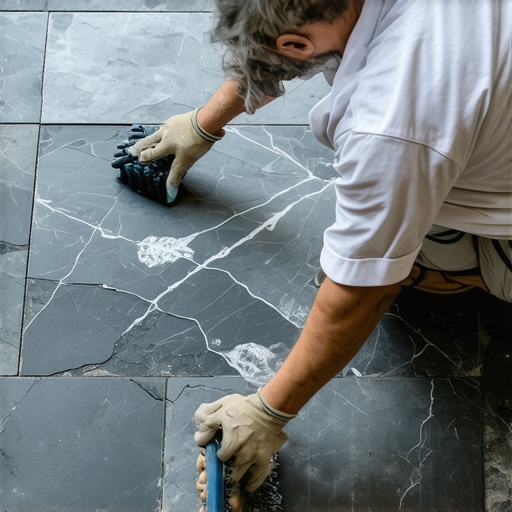
I have spent twenty-five years on my knees with a moisture meter and a level. I have seen every mistake a homeowner can make. I smell like WD-40 and oak dust most days. Slate is not just a rock. It is a structural engineering challenge. People treat it like ceramic. That is how they ruin it. Most guys skip the leveling compound. They think the underlayment will hide the dip. It will not. I spent three days grinding concrete on a job last month just so the floor would not click like a castanet. When you ignore the subfloor, you ignore the life of the stone. Slate is a metamorphic rock formed from volcanic ash and clay. It has layers. If you use the wrong chemistry, you are not just cleaning. You are dissolving the history of the earth in your foyer. I hate seeing a five thousand dollar floor destroyed by a three dollar bottle of acidic spray. This is about the physics of the stone.
The myth of the indestructible stone surface
Cleaning slate tiles requires pH neutral cleaners to protect the metamorphic layers of the stone from chemical erosion. Natural slate is composed of minerals like quartz and chlorite which react poorly to acidic substances. You must use soft microfiber tools and avoid abrasive scrubbing pads that can cause spalling or delamination of the stone clefts.
Slate is tough but brittle. It has a laminar structure. This means it is made of thin sheets pressed together over millions of years. When you look at the cleft surface, you see the natural texture. That texture is a trap for dirt. Most people want to scrub it with a stiff brush. Do not. You will snap the edges of the stone layers. This is called spalling. Once the stone starts flaking, it does not stop. You are looking at a microscopic landscape of peaks and valleys. Dirt settles in the valleys. You need a surfactant that lowers the surface tension of water so it can penetrate those valleys without mechanical force. I have seen floors where people used vinegar. Vinegar is acetic acid. It eats the calcium carbonate that holds some slate varieties together. It turns the stone dull. It makes the surface chalky. You cannot fix that with a mop. You have to grind it down, and slate does not grind like marble. It just breaks.
“A floor is only as good as the subfloor beneath it; deflection is the enemy of every joint.” – Master Flooring Axiom
The chemical reality of stone maintenance
The chemical bond between slate minerals and cleaning agents must remain neutral to prevent oxidation of iron deposits within the stone. Slate contains varying amounts of iron which can rust if exposed to high moisture and oxygen through micro-cracks. Use distilled water and specialized stone soaps to maintain the integrity of the sealant barrier.
Chemistry matters more than elbow grease. I tell people this every day. Most household cleaners are either too acidic or too alkaline. A pH of 7.0 is your target. Anything else is a gamble. If you have a rust-colored slate, you have iron. If you use a bleach-based cleaner, you are accelerating the oxidation of that iron. You will see orange streaks bleeding out of the stone. That is the rock literally rusting. You need to understand tile cleaning tips for a sparkling bathroom in 2025 to avoid these chemical traps. The water you use matters too. Hard water contains minerals that will build up in the clefts. Over time, this creates a white film called efflorescence. It is a salt deposit. It is a nightmare to remove without damaging the stone. I always recommend using a damp mop, not a wet one. Water is a solvent. If it sits in the cracks, it will find its way to the subfloor. If your subfloor is plywood, it will swell. If it is concrete, it will wick the moisture back up through the grout restoration secrets for long-lasting results and pop the tiles loose.
| Material Property | Slate Value | Impact on Cleaning |
|---|---|---|
| Porosity | 0.5% to 5.0% | High absorption of liquid stains |
| Janka Hardness | Varies by origin | Susceptible to scratches from sand |
| Chemical Sensitivity | High (Acids) | Requires pH 7.0 neutral solutions |
| Surface Texture | Cleft or Honed | Cleft surfaces trap more debris |
The ghost in the expansion gap
Expansion gaps at the perimeter of a slate floor allow the natural stone and subfloor to move during seasonal humidity shifts without cracking the tiles. Slate expands and contracts based on the moisture content of the air. Maintaining these gaps behind baseboards is essential for preventing tile tenting or grout failure in high-traffic areas.
I have walked into houses where the slate was buckled three inches off the ground. Why. Because the installer pushed the tile tight against the wall. A floor needs to breathe. It moves. In the summer, when the humidity hits eighty percent, that stone and the thin-set beneath it are going to expand. If there is no room at the edges, the floor will fight itself. The weakest point is the bond to the subfloor. The tile will lose. This is why baseboards makeover ideas to elevate your space are not just for looks. They hide the structural gap required for the floor to survive. I never install slate without at least a quarter inch of space at the perimeter. People complain about the gap. I tell them to look at the baseboard. It is there to protect the engineering. If you are cleaning near the edges, do not flood the gap. Water sitting under the baseboard will rot the bottom of the drywall and create a mold farm. Use a microfiber cloth to get into the corners. Do not use a dripping mop. It will ruin the chic baseboard designs that transform rooms in 2025 and compromise the subfloor seal.
The microscopic valley of the cleft surface
Cleft slate surfaces feature natural ridges and depressions that require specialized vacuuming with a soft brush attachment before any liquid cleaning. Dry debris acts as an abrasive underfoot which can wear down the natural finish and the protective sealant layer over time. Regular dust mopping prevents the accumulation of silica dust.
- Vacuum with a soft brush attachment twice weekly to remove grit.
- Dust mop with an untreated microfiber pad daily.
- Blot spills immediately with a clean white cloth.
- Use walk-off mats at every entrance to catch sand.
- Deep clean with a pH neutral stone soap once a month.
- Check the integrity of the sealer every six months using the water drop test.
Sand is the enemy of stone. Sand is mostly silica. Silica is harder than many minerals in slate. When you walk on a sandy slate floor, you are essentially using sandpaper on it. You are grinding away the sealer. You are grinding away the color. I tell my clients to leave their shoes at the door. If you have a dog, their claws will do the same thing. You need a dense sealer. Not a cheap big-box store sealer. You need a penetrating impregnator. It goes into the pores. It does not just sit on top. A topical sealer will peel like a bad sunburn. An impregnator becomes part of the stone. When you clean showers with a style trendy ideas for small bathrooms, the sealer is the only thing standing between your stone and a soap scum disaster. In a shower, the slate is bombarded by body oils and hard water. If the sealer fails, the stone will soak up those oils. They will turn the stone black. You cannot wash that out. It is inside the rock now.
“Natural stone is a living surface; treat it with the respect its geological age demands.” – Stone Care Institute
Why your subfloor is lying to you
Subfloor levelness is the primary factor in the longevity of slate tile installations because uneven surfaces cause stress points in the stone layers. A dip of more than one eighth of an inch over ten feet can lead to cracked tiles and failed grout lines. Proper cleaning and maintenance cannot compensate for a failing structural foundation.
Most people think the tile is the floor. It is not. The subfloor is the floor. The tile is just the wear layer. If the subfloor flexes, the slate will crack. Slate has very low tensile strength. It cannot bend. It just snaps. If you hear a hollow sound when you walk, that is a delamination of the thin-set. It means the stone is bouncing. Cleaning a bouncing floor will only force water into the void. That water will stay there. It will grow bacteria. It will smell like a swamp. If you are cleaning showers that wow modern designs for 2025, you have to be extra careful. The waterproofing membrane under the tile is the only thing protecting your house from rot. If you use harsh chemicals, you might degrade the grout enough that water starts getting through. Once water gets behind the stone, it is over. You will be calling me to tear it all out. Use a soft brush on the grout. Never use a metal brush. It will leave metal traces on the stone that will eventually rust. It will also scratch the how to refresh grout without replacing it efforts you have made.
The 1/8 inch that ruins everything
Grout joints in slate installations must be maintained with high-quality sealers to prevent water infiltration and staining of the tile edges. Because slate is porous, the edges of the tile will absorb pigments from dirty mop water if the grout is not properly sealed. This leads to a permanent dark frame effect around each tile.
I see it all the time. People mop with dirty water. The water is grey. They push that grey water into the grout lines. The porous edges of the slate act like a sponge. They suck up that grey water. Now the edges of your beautiful green or blue slate are permanently stained grey. You have to change your water every hundred square feet. If the water in the bucket is not clear, you are just moving dirt from one hole to another. Use a two-bucket system. One bucket for the cleaning solution and one for the rinse water. It is more work. It saves the floor. If you want eco-friendly tile solutions for sustainable homes in 2025, look at steam cleaning. But be careful. Too much heat can shock the stone. It can cause the layers to separate. Use a low-pressure steam setting. It is great for getting the gunk out of the clefts without using chemicals. Just do not hold it in one spot for too long. The physics of thermal expansion will win every time.
{“@context”:”https://schema.org”,”@type”:”Article”,”headline”:”The Best Way to Clean Slate Tiles Without Damaging the Natural Stone”,”author”:{“@type”:”Person”,”name”:”Master Floor Installer”},”description”:”An expert guide on cleaning slate tiles using pH neutral solutions and proper subfloor maintenance techniques to prevent stone damage.”,”articleSection”:”Flooring Maintenance”,”keywords”:”grout,baseboards,tile,showers”}