
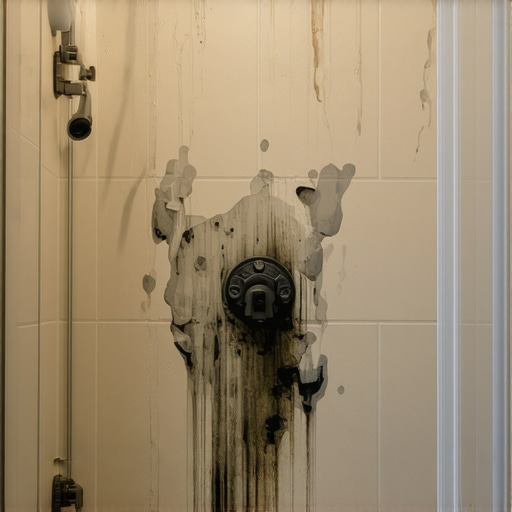
Most guys skip the leveling compound. They think the underlayment will hide the dip. It won’t. I spent three days grinding concrete on a job last month just so the floor wouldn’t click like a castanet. I have seen the same laziness destroy thousands of dollars in high-end tile work. In the flooring world, the surface you see is a lie. The real work is the structural engineering happening an inch below your feet. When we talk about showers, that engineering involves the chemistry of liquid membranes and the physics of moisture migration. If you treat waterproofing like a coat of paint, you are not an installer, you are a liability. A shower is a pressurized environment. Every time someone turns on that handle, they are introducing gallons of water that want to find a way into your floor joists. Your job is to stop them. Most fails happen because of a fundamental misunderstanding of how liquid-applied membranes actually cure. They are not magic. They are precise chemical barriers that require a specific mil thickness to function. If the substrate is too porous or the humidity is too high, that membrane will never form the monolithic bond required to keep your subfloor dry.
The hidden trap of wet concrete substrates
Curing concrete must reach a specific internal relative humidity before any waterproofing membrane can be applied to the surface. If you apply a liquid barrier to green concrete, the hydrostatic pressure from the escaping moisture will cause the membrane to blister and delaminate from the floor. This is not a suggestion. It is a physical law of thermodynamics. You need to use a calcium chloride test or an in-situ probe to verify that the slab is ready. Most residential installers just wait two days and start rolling. That is how you end up with tile that sounds hollow when you walk on it. The water trapped under the membrane has nowhere to go but up, breaking the bond of the thin-set. When you are building showers, you are building a vessel. That vessel must be stable. If the concrete is still shrinking or off-gassing, your tile job is already doomed. I have seen entire bathrooms ripped out because the installer didn’t want to wait an extra week for the slab to stabilize. It is a costly mistake that no amount of fancy grout can fix. You can find more about high-end finishes in showers that wow modern designs for 2025 which showcases how proper prep leads to better aesthetics.
“A floor is only as good as the subfloor beneath it; deflection is the enemy of every joint.” – Master Flooring Axiom
The molecular failure of thin membranes
Liquid waterproofing membranes fail when the wet film thickness is not measured with a professional gauge during the application process. You cannot eyeball thirty mils of thickness. If the coat is too thin, the polymer chains do not cross-link effectively, leaving microscopic pinholes. These pinholes allow water to seep into the mortar bed through capillary action. Once the water hits the wood subfloor, the rot begins. It starts with a musty smell and ends with a structural collapse. You need to apply at least two coats in a perpendicular pattern. The first coat fills the pores, and the second coat builds the protective skin. If you are rushing this step, you are better off not doing it at all. The chemistry of these products is designed for a specific coverage rate. Deviating from the manufacturer specs is the fastest way to void a warranty. In my twenty five years of experience, the guys who complain that the product doesn’t work are always the ones who tried to stretch a single bucket across three bathrooms. They think they are saving money, but they are actually buying a lawsuit. This is why many are looking at eco-friendly tile solutions for sustainable homes in 2025 because modern materials often have stricter, more reliable installation protocols.
| Waterproofing Method | Mil Thickness | Cure Time | Substrate Bond Strength |
|---|---|---|---|
| Liquid Membrane | 30 Mils Wet | 4-12 Hours | Very High |
| Sheet Membrane | 20 Mils Fixed | Immediate | Mechanical Only |
| Traditional Lead Pan | N/A | 72 Hours | None |
The 1/8 inch that ruins everything
Subfloor deflection and the lack of proper expansion joints cause ninety percent of tile cracks in modern residential bathrooms. If your floor moves more than the industry standard of L over 360, your tile will snap. It does not matter how much you spent on the stone. The physics of movement will win every time. You must check the joist spacing and the thickness of the plywood. If there is a dip, you grind it or you fill it. You never leave it for the thin-set to handle. Thin-set is an adhesive, not a structural filler. When you transition from the wet area to the dry area, your baseboards need to be installed with a gap. If you jam the baseboard tight against the tile, you create a pinch point. When the house settles or the humidity changes, that pressure will pop the tiles right off the thin-set bed. Professional installers use a color-matched caulk at the floor to wall transition, never a hard grout. Hard grout in a change of plane is a rookie move that will crack within six months. For those looking to upgrade their trim, check out chic baseboard designs that transform rooms in 2025 for ideas that actually account for these movement gaps.
“Tile is a rigid finish on a flexible planet; if you do not account for movement, the planet will move the tile for you.” – TCNA Handbook Principle
The truth about porous grout and moisture traps
Standard cementitious grout is naturally porous and will absorb water into the system if it is not sealed or replaced with epoxy. People think that grout is the waterproof layer. It is not. Grout is purely aesthetic and functional for spacing. Water goes through it like a sieve. This is why the waterproofing membrane behind the tile is so critical. If the membrane is compromised, the water sits in the mortar bed and grows mold. This leads to the dark, staining lines that people try to scrub away. You cannot scrub away a problem that is behind the tile. At that point, you are looking at specialized restoration. You might try to learn how to refresh grout without replacing it but if the moisture is in the subfloor, those are just cosmetic bandages on a structural wound. Real solutions involve epoxy grouts that are 100 percent solids and completely impervious to liquids. They are harder to work with, but they last a lifetime. They don’t stain, and they don’t grow mildew. If you want a shower that stays clean, you spend the extra money on high-grade materials during the build phase.
- Verify subfloor stiffness before starting.
- Remove all dust and debris with a vacuum.
- Apply liquid membrane to the required mil thickness.
- Conduct a twenty four hour flood test.
- Use silicone at all change of plane joints.
- Seal all cementitious grout lines immediately.
The relationship between baseboards and bathroom humidity
Baseboards in a bathroom act as the first line of defense against peripheral moisture damage at the wall base. If you use MDF baseboards in a bathroom, you are asking for trouble. MDF is essentially compressed sawdust and glue. One small leak from the shower and those boards will swell like a sponge. Always use solid wood or PVC trim in wet areas. Even then, the bottom edge should be back-sealed with a primer to prevent moisture from wicking up from the floor. I have seen beautiful bathrooms ruined because someone saved fifty dollars on trim. The baseboards should sit just a hair above the tile to allow for a silicone bead. This creates a watertight seal that protects the drywall. If you are planning a renovation, look into baseboards makeover ideas to elevate your space to see how to balance moisture protection with style. Remember that your bathroom is a high-moisture zone. Every material you choose must be able to handle 100 percent humidity for extended periods without warping or rotting. If you need professional advice on your specific layout, you can always contact us for a structural assessment. Proper maintenance is also key, so keep these tile cleaning tips for a sparkling bathroom in 2025 in mind to ensure your installation lasts as long as the house itself.