
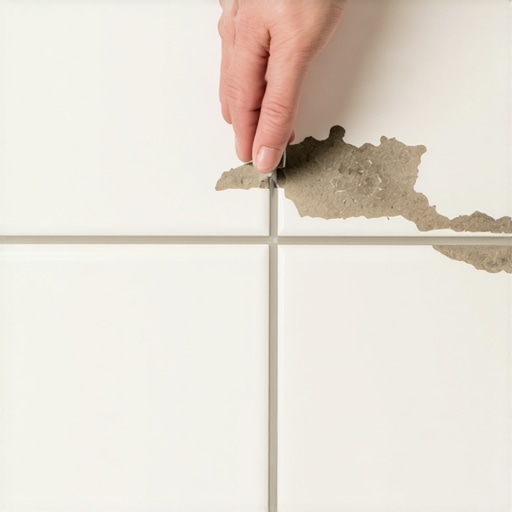
Most guys skip the leveling compound. They think the underlayment will hide the dip. It won’t. I spent three days grinding concrete on a job last month just so the floor wouldn’t click like a castanet. That same lazy logic applies to tile and grout restoration. People think a quick scrub with a grocery store spray will fix twenty years of foot traffic and soap scum. It will not. Grout is a cementitious product, meaning it is essentially a rigid sponge full of microscopic pores. When you walk on it with dirty shoes or spray it with cheap chemicals, those contaminants do not just sit on the surface. They migrate deep into the molecular structure of the portland cement and sand aggregate, creating a permanent discoloration that defies standard cleaning. If you want that grout to look like it was laid yesterday, you have to understand the chemical bond and the physics of capillary action.
The molecular betrayal of porous grout
Porous cementitious grout acts as a vertical and horizontal suction system for dirt, grease, and bacteria. In showers and high-traffic areas, the grout joints absorb liquids through capillary attraction, pulling pigments and organic matter into the internal matrix of the cured cement. This is why a simple surface scrub rarely yields a perfect result. You are fighting against a material that was designed to be breathable, but in its breathability, it becomes a reservoir for filth. Most grout used in residential homes is sanded grout or unsanded grout, both of which rely on a water-to-cement ratio that determines the density of the final product. If the original installer used too much water in the mix, the grout becomes even more porous, like a dry coral reef, just waiting to soak up your mop water.
“A floor is only as good as the subfloor beneath it, deflection is the enemy of every joint.” – Master Flooring Axiom
Chemical warfare against deep set stains
Effective grout cleaning requires a high pH alkaline cleaner to break down organic oils and a neutralizing rinse to prevent chemical residue. Many people reach for vinegar, thinking it is a safe natural cleaner, but vinegar is an acid. Acid etches the cement, eating away at the top layer of the grout and making it even more porous for the next round of dirt. You are literally destroying the floor to clean it. Instead, you need a penetrating alkaline agent that can emulsify the oils trapped in those pores. For heavy mineral deposits in showers, a brief application of a buffered phosphoric acid can work, but it must be handled with extreme care to avoid damaging the tile finish. You should look for grout restoration secrets for long lasting results at grout restoration secrets for long lasting results to understand the balance of chemistry needed for various stone and ceramic types.
| Cleaner Type | pH Level | Effect on Grout | Best Use Case |
|---|---|---|---|
| Vinegar | 2.5 | Destructive / Etching | Never use on cement grout |
| Neutral Cleaner | 7.0 | Safe / Maintenance | Daily cleaning of sealed floors |
| Alkaline Degreaser | 10.5 | Deep Cleaning | Removing kitchen grease and oils |
| Acidic Grout Brightener | 3.0 | Top-Layer Stripping | Removing heavy mineral scale |
The 1/8 inch that ruins everything
Precision grout joints and consistent joint width are essential for a floor that remains cleanable over its lifespan. When grout joints are inconsistent or too wide for the chosen material, they create valleys where dirt collects. A 1/8 inch gap is the standard for most modern tile installations, but if your subfloor flexes, those joints will develop hairline fractures. These cracks are not just cosmetic, they are entry points for moisture. Once water gets under the tile, it can cause the thin-set mortar to fail, leading to hollow tiles and eventually a complete system collapse. If you are noticing cracked grout, it is usually a sign of deflection in the joists or a poorly bonded underlayment. This is why I always tell people that showers with a style need a rock-solid foundation, which you can read about here showers with a style trendy ideas for small bathrooms.
Why your subfloor is lying to you
Subfloor deflection and vibrational resonance are the primary causes of grout failure and tile tenting. Even if the floor feels solid under your boots, a few millimeters of vertical movement under load will shear the grout bond away from the tile edge. This creates a micro-gap. You might not see it, but every time you mop, dirty water is being sucked into that gap through hydrostatic pressure. This is the ghost in the expansion gap. To fix this, you cannot just smear more grout over the top. You have to address the structural movement. Professional installers use uncoupling membranes like Schluter-Ditra to allow the tile and the subfloor to move independently, but in older homes, we are often stuck with whatever plywood or OSB was thrown down by a builder-grade crew decades ago. For those looking to upgrade their aesthetics while fixing these issues, chic baseboard designs can help hide the necessary perimeter expansion gaps, as seen at chic baseboard designs that transform rooms in 2025.
- Inspect the grout joints for any signs of powdering or crumbling.
- Test for porosity by dropping a small amount of water on the dry grout.
- Remove old sealer with a chemical stripper before attempting a deep clean.
- Apply an alkaline cleaner and let it dwell for at least ten minutes.
- Agitate the joints with a stiff nylon brush, never a wire brush.
- Extract the dirty slurry with a wet vacuum to prevent re-depositing dirt.
- Rinse the surface with clean, pH-neutral water.
- Dry the area completely before applying any new sealant or colorant.
The ghost in the expansion gap
Perimeter expansion joints are required by TCNA Handbook standards to prevent compressive stress from blowing out your grout. Every floor moves. Temperature changes and humidity fluctuations cause the tile assembly to expand and contract. If your tile is installed tight against the baseboards or walls without a soft joint of 100 percent silicone caulk, the floor has nowhere to go. It will buckle or the grout will turn to dust. I see this all the time in bathrooms where people grout the corner between the wall and the floor. That corner is a change of plane, and it must be caulked, not grouted. If you want to know how to refresh grout without replacing it, you have to start by replacing those cracked hard-joints with color-matched caulk, which you can find guidance on at how to refresh grout without replacing it.
“Cementitious grout is a structural component, but it is not a waterproof barrier; it is the first line of defense in a managed water system.” – TCNA Technical Bulletin
Deep restoration through color sealing
Epoxy based color sealers are the ultimate weapon for restoring old grout to a uniform, stain-proof finish. Unlike standard clear sealers that just sit in the pores, a color sealer is a topical and penetrating polymeric coating that creates an impermeable barrier. This is the only way to get a consistent look if the grout has been permanently stained by iron in the water or pet accidents. It also allows you to change the color of the grout without the dust-choked nightmare of grinding out the old material. However, the grout must be surgically clean for the sealer to bond. If there is even a trace of silicone oil or residue from a cleaner, the sealer will peel off like a sunburn within months. This is why tile cleaning tips for a sparkling bathroom always emphasize the prep work over the final application, as discussed at tile cleaning tips for a sparkling bathroom in 2025.
The contrarian truth about steam cleaners
High-pressure steam can actually degrade the integrity of your grout if used incorrectly. While many homeowners love the idea of “natural” cleaning with steam, the thermal shock can cause micro-fractures in the cement matrix. If you blast a 300-degree jet of steam into a cold tile floor, you are risking the bond between the grout and the tile edge. Over time, this leads to powdery grout that simply falls out. Steam should be used as a vapor tool to loosen surface grime, not as a pressure washer for your baseboards and showers. For a better approach to showers that wow, check out showers that wow modern designs for 2025 to see how large format tiles reduce the number of grout joints you have to worry about in the first place.
Maintenance of restored surfaces
Sustainable flooring maintenance requires a shift away from harsh chemicals toward systematic cleaning. Once you have restored your grout, the goal is to keep it from re-soiling. This means using microfiber mops that actually lift the dirt rather than pushing it into the joints. It also means keeping up with your baseboards makeover to ensure that dust and pet hair do not accumulate at the edges, which you can learn about at baseboards makeover ideas to elevate your space. If you are interested in eco-friendly tile solutions that are easier to maintain, look at eco-friendly tile solutions for sustainable homes in 2025. Finally, if you need professional help or have a commercial-grade disaster on your hands, do not hesitate to contact us for expert advice on hard surface restoration. Our privacy policy is available at privacy policy for your review.