
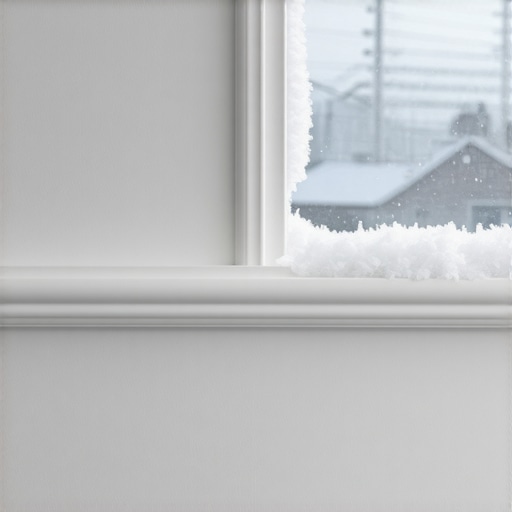
The physics of the disappearing baseboard
Look, I have spent twenty five years on my hands and knees with a moisture meter and a level, so let me tell you something straight. A floor is not a static piece of furniture; it is a living, breathing mechanical system. I once walked into a home where a fifteen thousand dollar wide plank walnut floor was cupping so badly it looked like a row of potato chips because the installer did not check the crawlspace humidity. The homeowner was blaming the wood, but the wood was just reacting to the environment. When the temperature drops and the furnace kicks on, your home becomes a vacuum for moisture. This is why you see those ugly gaps between your baseboards and your walls. It is not just aesthetics, it is a structural engineering challenge. Wood is an anisotropic material. It moves differently along its radial, tangential, and longitudinal axes. When the indoor relative humidity (RH) drops from a comfortable fifty percent down to fifteen percent in January, the bound water within the wood cells evaporates. The material shrinks. If the installation did not account for this seasonal cycle, the physical tension has to go somewhere. Usually, that tension results in the baseboard pulling away from the drywall or the flooring separating from the wall plate. This is the reality of hygroscopic materials in a climate controlled environment.
[IMAGE_PLACEHOLDER]
The cellular betrayal of winter air
Winter air is notoriously dry, and once you heat that air, its capacity to hold moisture increases while its actual moisture content stays the same. This creates a low relative humidity environment that literally sucks the water out of your baseboards and your flooring. In my shop, I keep a hygrometer in every corner because even a five percent shift can change how a miter joint closes. Most baseboards are made of either solid wood or Medium Density Fiberboard (MDF). While MDF is more stable than solid oak, it still reacts to the environment. Solid wood baseboards are essentially bundles of microscopic straws. When those straws dry out, they pull together. This shrinkage is most noticeable at the corners and along the long runs where the wood has more mass to move. If you used a builder grade pine, you are going to see more movement than if you used a dense hardwood. This movement is a physical law, not a suggestion.
“A floor is only as good as the subfloor beneath it; deflection is the enemy of every joint.” – Master Flooring Axiom
Every inch of wood in your home is fighting for equilibrium moisture content (EMC). In the summer, the wood swells as it absorbs humidity. In the winter, it sheds that weight. If your installer nailed the baseboard into the wall studs without allowing for this movement, or if they nailed through the baseboard into the flooring itself, you have created a mechanical lock that will fail. You can see some of the more resilient materials in chic baseboard designs that transform rooms in 2025 which often utilize profiles that hide this movement better than flat boards.
How the subfloor dictates the gap
The subfloor is the foundation of everything, and yet it is the most neglected part of the process. Most guys skip the leveling compound. They think the underlayment will hide the dip. It will not. I spent three days grinding concrete on a job last month just so the floor would not click like a castanet. If your subfloor has a dip or a crown, the baseboard is installed under tension. When the house settles or the wood shrinks in winter, that tension is released. The board pops. This is particularly common in homes with crawlspaces or basements where the moisture levels fluctuate wildly below the floor. If the subfloor expands while the finished floor shrinks, the baseboard is caught in a tug of war. I always recommend a high quality vapor barrier even if you are on a second floor. You have to isolate the materials from the moisture source. If you are planning a baseboards makeover, you must check the levelness of the floor along the perimeter first. If there is a gap larger than one eighth of an inch over a ten foot span, you are going to have problems when the heat comes on.
| Material Type | Shrinkage Rate | Moisture Resistance | Recommended Use |
|---|---|---|---|
| Solid Oak | High | Moderate | High-end custom homes |
| MDF | Low | Low | Standard residential |
| PVC/Composite | Negligible | Extreme | Bathrooms and basements |
| Engineered Wood | Minimal | High | Radiant heat zones |
The specific failure of baseboard adhesives and nails
Nail schedules matter. I see installers using two inch finish nails into half inch drywall and thinking it will hold. It will not hold. A finish nail only provides friction based on its surface area. When a three quarter inch thick baseboard starts to cup because of winter dryness, it generates hundreds of pounds of pressure per square inch. That little nail head is not going to stop it. The nail will either pull through the wood or, more commonly, pull out of the stud entirely. If the installer hit the drywall but missed the stud, the baseboard is basically held on by hope. I always use a stud finder and ensure I am hitting the framing. Furthermore, the chemistry of the adhesive matters. Some guys use construction adhesive on baseboards, which I hate. It makes it impossible to remove the board without destroying the drywall later. However, if you do not use a flexible sealant at the top, you are going to see a black line of shadow the moment the wood moves. If you have been looking at how to refresh grout without replacing it, you know that flexible materials are key to longevity. The same logic applies to baseboards. You need a caulk that has a high elongation percentage, meaning it can stretch and compress without tearing away from the substrate.
When grout meets the wall
The intersection of tile and baseboards is where I see the most failures in winter. People often try to use grout to fill the gap between the bottom of the baseboard and the tile floor. This is a rookie mistake. Grout is a rigid cementitious product. It does not move. When the floor expands and the wall stays still, the grout will crack and crumble into a mess. You should always use a color matched silicone or siliconized acrylic caulk at the change of plane. This allows the two surfaces to move independently. If you are dealing with tile cleaning tips for a sparkling bathroom, you will notice that the areas where grout has cracked are the first places to collect mold and dirt. In showers, this is even more critical. Movement in the house framing can cause grout lines to snap in the corners of showers with a style, leading to water intrusion.
“Waterproof does not mean movement proof; the joint is always the first point of failure.” – Tile Council of North America Standard
If your baseboards are pulling away from a tiled floor, check if the installer used grout instead of caulk. If they did, you need to scrape it out and replace it with a flexible sealant to prevent further damage to your subfloor.
The math of expansion gaps
Most people want their floor to fit tight against the wall, but that is a recipe for disaster. Every manufacturer of hardwood, laminate, or LVP requires an expansion gap, usually between one quarter and one half inch. The baseboard is designed to hide this gap. In the winter, the floor shrinks away from the wall, and the gap gets wider. If your baseboard was not wide enough to cover that gap, or if it was nailed to the floor instead of the wall, the movement becomes visible. Homeowners always ask why their waterproof vinyl is buckling. Usually, it is because they locked it under a heavy kitchen island or didn’t leave enough of a gap, killing the floor’s ability to breathe. While most people want the thickest underlayment, too much cushion actually causes the locking mechanisms on LVP to snap under pressure because it creates too much vertical movement. This vertical movement also puts stress on the baseboard joints. If you are maintaining grout restoration secrets for long lasting results, you understand that stability is everything. A floor that moves too much will destroy every finish around it.
Winter maintenance checklist for your baseboards
- Monitor your indoor humidity and aim for 35 to 50 percent relative humidity using a humidifier.
- Inspect the miter joints at the corners; if they are opening, it is a sign the house is too dry.
- Do not use wet mops on wood baseboards in winter as the moisture can cause localized swelling and then rapid cracking.
- Check the seal between the baseboard and the floor for any broken caulk lines.
- Avoid using rigid wood filler on gaps during the winter; wait for the wood to expand back in summer.
- Ensure your HVAC filters are clean to prevent excessive dust from settling into new gaps.
If you find that your gaps are permanent and do not close in the summer, it is likely that the wood has reached a new equilibrium or the fasteners have failed. In this case, a baseboard makeover is your best bet. You can also look into eco friendly tile solutions for areas like laundry rooms where moisture is more prevalent and wood baseboards are likely to fail. Remember that the goal is to work with the physics of your home, not against them. If your baseboards are moving, listen to what they are telling you about your indoor environment. For more information on our practices, you can visit our privacy policy or contact us for a consultation on your specific flooring issues.