
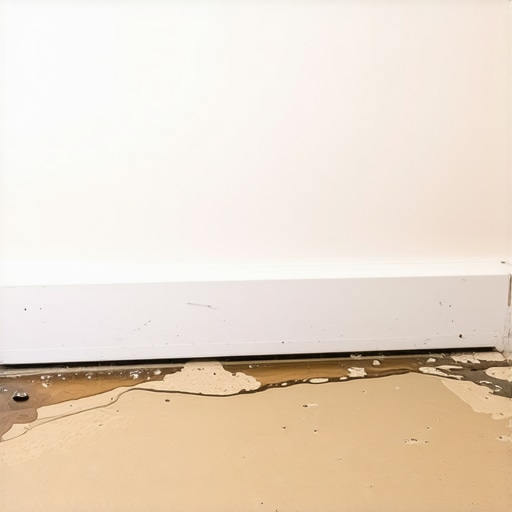
The hidden physics of warped bathroom trim
I have spent twenty-five years on my knees with a moisture meter and a level. I have seen things that would make a homeowner cry. I once walked into a house where a fifteen thousand dollar wide plank walnut floor was cupping so bad it looked like a potato chip because the installer did not check the crawlspace humidity. It is the same story with baseboards in a bathroom. You have a small leak from the toilet or a splash from the tub. You think you wiped it up. Three days later, the trim looks like a wavy noodle. It is not magic. It is the molecular reality of how building materials interact with H2O. When water meets the unsealed bottom edge of a baseboard, the structural integrity of the material begins to fail at a cellular level. This is why your baseboards are warped after a small bathroom flood. The moisture does not just sit on the surface. It travels through the grout and tile and finds its way into the porous core of the trim. [IMAGE_PLACEHOLDER]
The thirsty nature of wood fibers
Baseboard materials like MDF and finger-jointed pine are hygroscopic entities that naturally absorb moisture from the environment. When a bathroom flood occurs, the liquid water follows the path of least resistance. This usually means the water travels under the baseboard where the material is raw and unpainted. Most installers do not paint the bottom edge of the trim. This leaves the wood fibers exposed. Once the water touches these fibers, capillary action pulls the moisture upward into the core. In Medium Density Fiberboard, the urea-formaldehyde resins that hold the sawdust together begin to dissolve. The compressed fibers expand as they hydrate, but they cannot expand outward because of the paint on the front. This causes the internal tension that results in the classic warped look. If you are looking for better materials, you should check out chic baseboard designs that transform rooms in 2025 to see what works best in wet environments.
Capillary action through bathroom grout
Grout restoration and tile maintenance are the first lines of defense against moisture wicking into your walls. Even if you think your tile is waterproof, the grout between them is likely a cementitious product. Cement is porous. It acts like a hard sponge. When a small flood happens, the water stays in the grout lines for hours. This moisture then migrates horizontally until it reaches the edge of the room. This is where the grout meets the baseboard. If that transition was not sealed with a high quality 100 percent silicone caulk, the water will jump from the grout into the wood. This is why homeowners are often surprised to see warping on the other side of the room from where the leak started. The water traveled through the grout network. Following grout restoration secrets for long-lasting results can prevent this subterranean water travel. It is a structural engineering challenge that most people ignore until it is too late.
“A floor is only as good as the subfloor beneath it; deflection is the enemy of every joint.” – Master Flooring Axiom
The physics of the bottom edge
Hydrostatic pressure and surface tension determine how fast your trim fails when water is present on the floor. When water pools on a tile floor, it creates a meniscus at the edge of the baseboard. Surface tension pulls that water into the tiny gap between the trim and the tile. Even a small amount of water can be sucked an inch or more up the back of the baseboard. This is the dark side of the installation. Once the water is trapped behind the board, there is no airflow. It cannot evaporate. The wood sits in a high humidity microclimate for days. This leads to the expansion of the wood cells on the backside while the front side remains dry. This differential in moisture content is the exact physical mechanism of warping. You might see the paint start to crack or the board pull away from the wall. This is a sign that the structural bond of the wood has been compromised by the water load.
Why your subfloor is lying to you
Subfloor moisture levels often remain high long after the surface looks dry to the naked eye. If you have a plywood or OSB subfloor under your tile, that wood is also drinking the floodwater. I have seen jobs where the baseboards were replaced, only to warp again two weeks later. This happens because the subfloor was still wet. The moisture in the subfloor moves upward through evaporation, hitting the bottom of the new baseboards. You must use a pin-type moisture meter to check the subfloor before you ever think about installing new trim. If the moisture content is above twelve percent, you are asking for a failure. I spent three days grinding concrete on a job last month just so the floor would not click like a castanet because of moisture issues. It is about the chemistry of the bond and the physics of the environment. If you are renovating, look into showers with a style trendy ideas for small bathrooms to see how to properly waterproof these high risk areas.
The science of material response
Understanding how different materials react to water is necessary for a long lasting bathroom. Not all trim is created equal. MDF is the worst choice for a bathroom because it is essentially a sponge made of dust. Solid wood is better but can still cup and twist. PVC is the only truly waterproof option, though it lacks the aesthetic weight of real wood. Below is a comparison of how these materials handle a flood event.
| Material | Water Resistance | Swell Potential | Recovery Rate |
|---|---|---|---|
| MDF | Very Low | Extreme | 0% |
| Pine | Medium | Moderate | 40% |
| PVC | Total | None | 100% |
| Oak | Medium | Low | 60% |
The 1/8 inch that ruins everything
Expansion gaps and caulk joints are the most failed components in any bathroom flooring installation. The NWFA and TCNA standards are clear about leaving room for materials to move. However, in a bathroom, that expansion gap is a double edged sword. It allows for the natural movement of the house, but it also provides a gutter for floodwater to collect. If that gap is not filled with a flexible, waterproof sealant, it becomes a trap. I have seen countless DIY jobs where the homeowner used hard grout in the corner where the floor meets the wall. Grout will crack. When it cracks, it lets water in. You must use a color matched silicone. This allows the floor to breathe while keeping the water on the surface where you can actually dry it. For more tips on keeping things clean and dry, see tile cleaning tips for a sparkling bathroom in 2025.
Steps to take after a bathroom leak
If you find standing water in your bathroom, speed is the only thing that will save your trim. You have about four to six hours before the molecular bonds in MDF start to fail permanently. Follow this checklist to minimize the damage.
- Remove all standing water with a wet vacuum immediately.
- Pull the baseboards off the wall if the water was standing for more than an hour.
- Check the drywall behind the trim for moisture wicking.
- Set up a high volume air mover to dry the wall cavity.
- Use a dehumidifier to pull the grains of moisture out of the air.
- Do not reinstall the trim until the wall and floor are below 10% moisture content.
The ghost in the expansion gap
Hidden mold and structural rot are the long term consequences of ignoring warped baseboards. A warped baseboard is not just an eyesore. It is a red flag. It tells you that moisture was trapped long enough to change the physical shape of the wood. If there was enough water to warp the trim, there was enough water to grow mold behind the paper of the drywall. I always tell my clients that if the board is twisted, the wall is suspect. You need to look for the black spots. You need to smell for the musty scent of fungal growth. Replacing the trim without addressing the moisture in the wall is like putting a band-aid on a broken leg. It might look better for a day, but the underlying problem is still there. Professional how to refresh grout without replacing it techniques can help seal the surface, but they cannot fix a rotted plate behind the wall.
“Water is a patient thief; it will find the one unsealed edge in a room and destroy the entire assembly.” – Master Flooring Axiom
When you are ready to rebuild, consider using baseboards makeover ideas to elevate your space and choose materials that can actually handle the humidity of a bathroom. Modern PVC and composite trims can look identical to wood without the risk of warping. It is about choosing the right tool for the environment. Stop treating your bathroom like a dry bedroom. It is a wet zone. It needs a structural approach. Any installer who tells you that MDF is fine in a full bath is either lazy or lying. Stick to the physics. Stick to the standards. Your floor will thank you for it twenty years from now.