
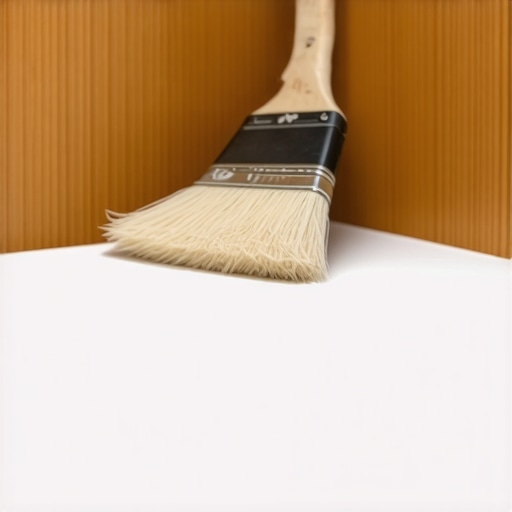
Why Your Bathroom Baseboards Need an Oil-Based Primer
I spent three days grinding concrete on a job last month just so the floor wouldn’t click like a castanet, and while I was down there, I saw the exact same mistake that ruins ninety percent of modern bathroom remodels. The installer had used high-end tile and expensive showers, but the baseboards were already furring out at the bottom. Most guys skip the leveling compound and they definitely skip the right primer. They think the underlayment will hide the dip or the paint will hide the moisture. It won’t. If you use a water-based primer on bathroom trim, you are essentially feeding the wood a slow-acting poison. I have seen fifteen thousand dollar wide-plank installs ruined by a simple lack of moisture management at the perimeter, and your bathroom baseboards are the front line of that battle.
The silent killer of bathroom trim
Oil-based primer creates a hydrophobic barrier that prevents water vapor from penetrating porous wood or MDF fibers. Unlike water-based primers that cause wood fibers to swell through grain raising, oil-based alkyd resins penetrate deeper and seal the substrate against humidity, preventing rot, peeling, and tannin bleed near wet zones. This is the fundamental physics of the bathroom environment. When you take a hot shower, the relative humidity in the room can spike to nearly one hundred percent within minutes. That vapor pressure seeks out any porous surface it can find. If your baseboards are coated in a standard latex primer, they are effectively open for business to every water molecule in the air. You need a chemical shield, not just a decorative layer. For more inspiration on how to handle these details, check out baseboards makeover ideas to elevate your space.
The chemical failure of water based products
Latex primers are suspended in a water medium. When you apply a water-based product to raw wood or Medium Density Fiberboard (MDF), the water in the paint actually triggers the cellular structure of the material to expand. In the trade, we call this grain raising. This creates a rough, sandpaper-like texture that requires more sanding and more coats, but more importantly, it leaves the internal structure of the board vulnerable. In high-moisture areas like those near showers, this vulnerability leads to the dreaded ‘bloated’ look where the bottom of the baseboard starts to mushroom out away from the wall. You can see this failure clearly in homes where the showers that wow modern designs for 2025 are installed but the trim work is neglected. The moisture travels through the grout lines and hits the bottom of the trim, where it is sucked up like a straw through a process called capillary action.
“A floor is only as good as the subfloor beneath it; deflection is the enemy of every joint.” – Master Flooring Axiom
The physics of the alkyd resin bond
Oil-based primers utilize alkyd resins, which are produced by the reaction of a polybasic acid with a polyhydric alcohol. These resins are incredibly sticky at a molecular level. They don’t just sit on top of the wood; they dive into the tracheids and vessels of the timber. As the solvent evaporates, the resins undergo a cross-linking polymerization process. This creates a dense, non-porous film that is much tighter than anything a water-based acrylic can offer. If you are designing showers with a style trendy ideas for small bathrooms, you have to realize that the smaller the room, the higher the concentrated vapor pressure. A small bathroom is a pressure cooker. Without an oil-based primer to lock out that pressure, your trim will fail within two years. It is a mathematical certainty.
| Primer Property | Oil-Based (Alkyd) | Water-Based (Latex) | Result in Bathroom |
|---|---|---|---|
| Moisture Resistance | Very High | Low to Moderate | Oil prevents swelling |
| Tannin Blocking | Excellent | Poor | Oil prevents yellowing |
| Grain Raising | None | Significant | Oil keeps surface smooth |
| Drying Mechanism | Oxidative Cross-linking | Evaporation | Oil creates tougher film |
The myth of the waterproof bathroom
People love to talk about ‘waterproof’ vinyl and ‘waterproof’ tile. Let me tell you something from twenty-five years in the dirt. Nothing is truly waterproof; it is only water-resistant for a specific duration. Even the best tile installation has grout, and grout is a mineral-based sieve. Water will pass through it. If that water hits a baseboard that hasn’t been properly sealed with an oil-based primer, it will find its way to the gypsum board behind the trim. Once the paper backing of your drywall gets wet, you are looking at a mold colony. Proper grout maintenance is part of the solution, and you should look into grout restoration secrets for long-lasting results to keep the moisture penetration to a minimum. But the primer is your secondary containment system. It is the fail-safe.
How to prepare baseboards for an oil primer
You cannot just slap oil primer over old paint and expect it to work. You need to understand the substrate. If you are working with new MDF, you need to scuff sand the factory finish. If you are working with solid wood, you need to ensure the moisture content is below twelve percent using a pin-style meter. Here is the checklist for a professional-grade seal.
- Scuff the surface with 120-grit sandpaper to break the surface tension.
- Remove every speck of dust with a tack cloth or a vacuum with a HEPA filter.
- Apply the oil-based primer in a thin, even coat. Do not over-work the brush.
- Wait at least twenty-four hours for full polymerization before top-coating.
- Sand the primer coat with 220-grit for a glass-smooth finish.
The contrarian truth about underlayment and trim
While most people want the thickest underlayment to make their floors feel soft, too much cushion actually causes the locking mechanisms on modern flooring to snap under pressure, which in turn creates gaps at the baseboard line. These gaps are the primary entry point for moisture. When the floor flexes, it acts like a bellows, sucking damp air under the baseboard. This is why the primer is so vital. It isn’t just about the face of the board. You must prime the back and the bottom edge. If you leave the bottom edge of your baseboard raw, you have left the door wide open for disaster. If you need help with a failing floor or trim, you can contact us for a professional evaluation.
The expansion gap ghost
I have seen it a thousand times. A homeowner wants a ‘seamless’ look so they push the baseboards tight against the tile. This is a structural sin. You need that 1/4 inch expansion gap. But that gap is a dark, damp cavern where mold thrives. By using a high-quality oil primer on all six sides of the baseboard, you make the wood inert. It no longer reacts to the humidity changes. It stops breathing, which in this case, is exactly what you want. You want a dead piece of wood that won’t move, won’t swell, and won’t rot. This is especially true if you are trying to maintain tile cleaning tips for a sparkling bathroom in 2025. Constant cleaning means constant exposure to liquids. Your primer must be ready for that. If you are looking for more sustainable options in your home, consider eco-friendly tile solutions for sustainable homes in 2025, but remember that even ‘green’ homes need the protection of a solid alkyd barrier on their trim.
Final thoughts on the perimeter seal
Don’t let a twenty-dollar gallon of paint ruin a five-thousand-dollar bathroom. Use the oil-based primer. Deal with the smell for a day. Open a window. The long-term durability of your home depends on the chemical bonds you create during the installation phase. If you’ve already noticed issues with your grout or trim, learn how to refresh grout without replacing it before the damage reaches the subfloor. For more details on the aesthetic side of things, look at chic baseboard designs that transform rooms in 2025. Protect your investment. Prime it right. For information on data usage, visit our privacy policy.