
The subfloor secret that contractors wont tell you
Most guys skip the leveling compound. They think the underlayment will hide the dip. It wont. I spent three days grinding concrete on a job last month just so the floor wouldnt click like a castanet. But moisture is the real ghost in the machine. I once saw a vanity that had swollen like a bloated carcass because a homeowner forgot a simple three dollar piece of stone. That moisture did not just sit on the counter. It traveled. It found the gap between the vanity and the drywall. It wicked up the baseboards. It moved through the floor joists. By the time I was called in, the subfloor was a mushy mess of black mold and rotted OSB. A splash guard is not a decoration. It is a structural dam. It is the only thing standing between your daily handwashing and a five thousand dollar floor replacement.
The anatomy of a bathroom splash zone
A splash guard serves as a moisture barrier that prevents water from penetrating the porous gap between your bathroom vanity and the adjacent drywall. This prevents mold growth, structural rot, and the swelling of cabinetry. It redirects liquid back onto the waterproof countertop surface rather than allowing it to seep into the wall. When you wash your hands, water physics dictates that droplets will migrate toward the nearest vertical surface. Without a guard, that surface is your drywall. Drywall is effectively paper and gypsum. It is a sponge. Once water hits that paper backing, it wicks upward through capillary action. This is how you end up with bubbling paint and crumbling plaster three feet away from the actual sink. This is especially true in areas with showers that wow modern designs for 2025 where high humidity is already taxing the walls.
“A floor is only as good as the subfloor beneath it; deflection is the enemy of every joint.” – Master Flooring Axiom
The physics of water travel and surface tension
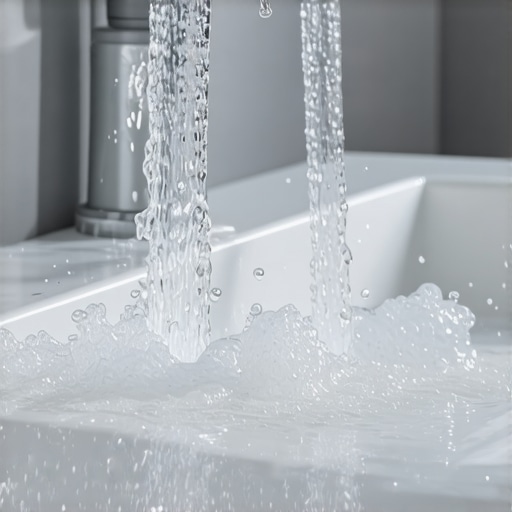
Water has a high degree of surface tension. It wants to cling. When you turn on a faucet, micro-droplets aerosolize. They land on the side of the vanity. If you have a gap, gravity pulls that water down. It does not just stay on the surface. It enters the micro-fissures of the vanity construction. Most modern vanities are made of MDF or particle board. These materials are comprised of wood fibers held together by resins. When water hits these fibers, they undergo a process called hygroscopic expansion. The fibers swell. The resin bonds break. Your vanity begins to delaminate. A side splash made of engineered stone or quartz provides a non-porous shield that breaks that surface tension and keeps the moisture on the deck where it can evaporate or be wiped away. This is the same principle we use when we talk about grout restoration secrets for long lasting results because protecting the substrate is the only way to ensure longevity.
The 1/8 inch that ruins everything
In the flooring world, we live and die by fractions of an inch. A gap of just one eighth of an inch between your vanity and the wall is enough to channel several gallons of water over the course of a year. Think about the math. Every time you brush your teeth, maybe a teaspoon of water hits that gap. Do that twice a day, three hundred sixty five days a year. That is a lot of liquid sitting behind a cabinet where there is zero airflow. No airflow means no evaporation. No evaporation means a permanent petri dish for Stachybotrys chartarum. I have seen baseboards that look fine on the outside but are completely hollowed out by rot on the inside. You need to check out baseboards makeover ideas to elevate your space to see how to properly integrate these elements with your flooring, but the splash guard is the first line of defense.
Material comparison for vanity protection
Not all splash guards are created equal. You need a material that matches the porosity of your countertop but provides a better seal than the wall. Quartz is king because it has a nearly zero percent absorption rate. Granite is good, but it is a natural stone and requires sealing. Marble is beautiful but soft and prone to etching from soap chemicals. If you are looking for eco friendly tile solutions for sustainable homes in 2025, consider recycled glass or porcelain splash guards. These materials offer the density needed to resist the osmotic pressure of standing water.
| Material | Porosity Level | Maintenance Needs | Structural Benefit |
|---|---|---|---|
| Quartz | Extremely Low | None | Superior moisture block |
| Granite | Medium | Annual Sealing | High durability |
| Marble | High | High | Aesthetic only |
| Porcelain | Near Zero | None | Extreme chemical resistance |
The chemistry of the adhesive bond
You cannot just slap a piece of stone on the wall and call it a day. You need to understand the bond. I use 100 percent silicone. Do not use acrylic caulk. Acrylic is water based. Over time, it will shrink and pull away from the stone, creating a new gap for water to enter. Silicone is a polymer that remains flexible. As the house shifts and the vanity expands or contracts with the seasons, the silicone stretches. It maintains the seal. This is the same level of detail required for how to refresh grout without replacing it. You have to use the right chemistry for the environment. In a bathroom, that environment is a tropical rainforest every time someone takes a hot shower.
[IMAGE_PLACEHOLDER]
Why your subfloor is lying to you
The subfloor might look dry, but it is a liar. If you do not have a splash guard, water is likely traveling down the back of the vanity and pooling on the subfloor. Because the vanity is bolted to the wall, you cannot see the damage. You will only notice it when the tile starts to crack or the grout begins to flake away. When grout fails, it is usually because the subfloor is flexing. And the subfloor is flexing because it is wet. It is a cycle of destruction. Even the most beautiful chic baseboard designs that transform rooms in 2025 cannot hide a sinking floor. You need to stop the water at the source. That source is the vanity edge.
“Water is the universal solvent; given enough time, it will dissolve your mortgage and your peace of mind.” – Master Flooring Axiom
The regional climate factor
If you are living in a place like Houston, the humidity is already at eighty percent. Your wood is already stressed. Adding vanity splashes to that environment is not an option; it is a requirement. In dry climates like Phoenix, the wood will shrink. That gap between your vanity and the wall will grow. A splash guard needs to be installed with enough silicone to bridge that gap as it fluctuates. This is why we focus so much on moisture meters. We need to know the baseline moisture content of the home before we even think about installing a floor or a vanity. Use tile cleaning tips for a sparkling bathroom in 2025 to keep the surfaces dry, but rely on the splash guard for the heavy lifting.
A checklist for professional installation
- Clean the wall and vanity surface with denatured alcohol to remove oils.
- Dry fit the splash guard to check for wall bows or irregularities.
- Apply a continuous bead of 100 percent silicone in a zigzag pattern.
- Press the guard firmly into place and hold for thirty seconds.
- Run a small bead of translucent silicone along the top edge and the corner.
- Tool the joint with a wet finger or a specialized tool for a smooth finish.
The final reality of the bathroom envelope
Think of your bathroom as a sealed envelope. Every time you introduce water, you are testing that seal. The vanity is one of the weakest points in the room because it joins three different materials: stone, wood, and drywall. Each of these materials reacts differently to heat and moisture. The splash guard acts as the mediator. It bridges the gap. It keeps the water in the sink. It keeps the rot out of the walls. It keeps the mold out of your lungs. If you are planning a renovation, do not let the contractor talk you out of it just because it is an extra step. It is the most important step for the long term health of your home. If you have questions about your specific setup, you should contact us to get an expert opinion on your subfloor integrity. Ignoring the splash guard is like building a house without a roof. It might look good for a week, but the first storm will prove you wrong. Protect the investment. Protect the floor. Install the guard.