
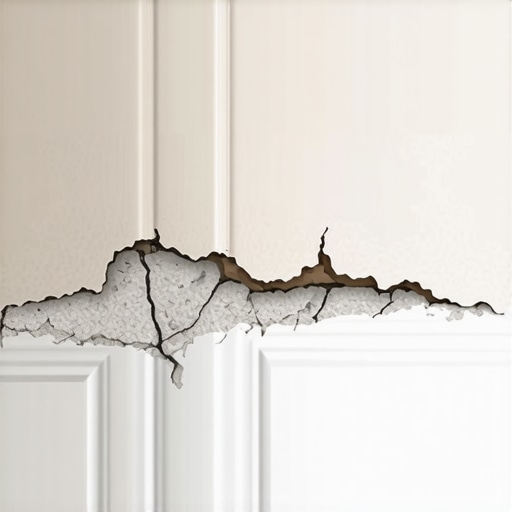
Why Your Corner Miters Are Opening Up in the Bathroom
I once walked into a house where a $15,000 wide-plank walnut floor was cupping so bad it looked like a potato chip because the installer didn’t check the crawlspace humidity. It was a disaster that could have been avoided with a simple moisture meter and twenty minutes of patience. That same lack of respect for the environment is exactly why the corner miters on your bathroom baseboards are splitting open like an overripe fruit. I have spent twenty five years with my knees on the subfloor and my hands in the sawdust, and I can tell you that wood does not care about your design aesthetic. Wood only cares about the laws of physics and the chemical reality of its surroundings. When you see a gap in a corner miter, you are looking at a failure of engineering, not just a cosmetic flaw. Most builders throw up baseboards as fast as they can with a pneumatic nailer and some cheap wood glue, but in a high moisture environment like a bathroom, that is a recipe for a call back. You have to understand that your bathroom is a micro-climate with radical shifts in relative humidity every time someone takes a hot shower. If you do not account for the microscopic expansion and contraction of the cellulose fibers in the wood, those beautiful 45 degree cuts will stay tight for about three weeks before they start to migrate. This is the reality of the trade that many modern contractors ignore because they are chasing a deadline instead of a standard.
The physics of a failing miter
Corner miters open because wood expansion and contraction occur primarily across the grain rather than along its length, leading to geometric distortion. Bathroom baseboards encounter high humidity levels from showers which swell the wood fibers, while subsequent drying cycles cause the wood to shrink and pull the 45 degree joints apart. Wood is a hygroscopic material, which is a fancy way of saying it acts like a sponge on a molecular level. Within the wood cell walls, water molecules bind to cellulose and hemicellulose through hydrogen bonding. When the relative humidity in your bathroom spikes during a shower, the wood absorbs this moisture and the cell walls swell. This expansion happens almost entirely in the radial and tangential directions. This means the board gets wider and thicker, but it barely gets longer. Because a miter joint is two 45 degree cuts meeting at a 90 degree angle, the expansion of the wood width forces the heels of the miter to push against each other, which inevitably forces the tips of the miter to pull away. It is a simple matter of leverage and geometry that no amount of finishing nails can stop. You are fighting against the structural intent of the tree itself.
“A floor is only as good as the subfloor beneath it; deflection is the enemy of every joint.” – Master Flooring Axiom
Humidity is a relentless invisible force
The relative humidity in a bathroom fluctuates between thirty percent and ninety percent within minutes, creating extreme osmotic pressure within baseboards and trim. These rapid environmental shifts cause the wood to reach its fiber saturation point, leading to physical deformation that breaks the bond of adhesives and mechanical fasteners. In regions with swampy humidity like Houston or the coastal areas of Florida, the air is constantly trying to push water into your trim. Conversely, in the dry heat of Phoenix, the wood is being sucked dry, causing it to brittle and crack. When you install baseboards in a bathroom, you are placing an organic material into a war zone. If you haven’t looked at chic baseboard designs that transform rooms in 2025, you might not realize that the material choice is the first line of defense. Solid wood is beautiful, but it is also the most volatile. Every time the steam rises from one of those showers that wow, the moisture vapor is looking for a way into the wood. If the back and bottom of the baseboard are not primed, the wood will absorb moisture from the rear, causing it to cup or bow, which ruins the miter at the front.
The deception of the subfloor and structural zooming
Subfloor moisture vapor transmission is the silent killer of bathroom trim because concrete slabs and plywood underlayments often harbor high levels of latent moisture. This vapor moves through the subfloor and into the baseboards from the bottom up, creating a moisture gradient that causes the bottom of the board to expand faster than the top. To truly understand why your miters are failing, we have to zoom into the subfloor chemistry. If your bathroom has a concrete slab, that slab is a breathing organism. Even if it looks dry, it is likely emitting several pounds of moisture vapor per one thousand square feet every twenty four hours. This is known as the Moisture Vapor Emission Rate. When you pin a baseboard tight against a tile floor, that vapor gets trapped behind the baseboard. This creates a high humidity pocket behind the wood while the front of the wood is exposed to the air conditioned room. This differential causes the board to warp. If the subfloor is not perfectly level, the baseboard is already under tension just to stay flat against the wall. That tension is like a loaded spring waiting for the wood to move so it can snap the miter joint open. Most guys skip the leveling compound and think the underlayment will hide the dip. It won’t. I spent three days grinding concrete on a job last month just so the floor wouldn’t click like a castanet and the baseboards would actually sit flush.
| Material Type | Moisture Resistance | Expansion Rate | Best Application |
|---|---|---|---|
| Solid Oak | Low | High | Living Areas |
| MDF | Very Low | Extreme | Dry Closets Only |
| Finger-Jointed Pine | Medium | Moderate | General Housing |
| PVC / Composite | High | Zero | Wet Bathrooms |
| Engineered Poplar | Medium-High | Low | High-End Bathrooms |
Why your choice of baseboard material matters
Medium Density Fiberboard is the worst possible choice for bathroom baseboards because the urea-formaldehyde resins used to bind the wood fibers are highly susceptible to moisture degradation. When MDF gets wet, it undergoes irreversible thickness swell, which physically destroys the integrity of miter joints and causes the paint to peel. I see it all the time in big box retail flips. They use cheap MDF because it is easy to cut and paint, but the second a kid splashes water out of the tub, that MDF acts like a wick. It sucks the water up and swells to twice its size. You can’t fix that. You have to rip it out. If you want a miter that stays tight, you need to use either a high quality PVC composite or a solid wood that has been back-primed and sealed on every single edge, including the miter cuts. If you are looking for baseboards makeover ideas to elevate your space, you must prioritize the material chemistry over the profile. A beautiful profile doesn’t mean anything if the corners are a mess of caulk and broken paint. For bathrooms, I always recommend a rot-resistant species or a fully synthetic product that mimics the look of wood without the cellular movement.
The moisture trap behind the tile
Capillary action draws water behind the baseboard through the small gap between the bottom of the trim and the surface of the tile, especially near showers and tubs. This liquid water is then absorbed into the end grain of the baseboard, leading to localized swelling and the eventual failure of the mitered corner. Most people think water just sits on top of the tile, but it finds every crack. This is why tile cleaning tips always emphasize keeping the grout sealed. If your showers with a style are not properly waterproofed at the transition to the floor, water will travel under the tile and up into the wall plate. This moisture then migrates into the back of your baseboards. The physics of capillary action are powerful. A gap as small as a hair can pull water several inches upward against gravity. Once that water is inside the wood, it begins to break down the lignin, which is the natural glue that holds wood fibers together. This is why you often see the bottom of bathroom miters opening up while the top stays relatively tight. The bottom is simply wetter than the top.
“Wood is a hygroscopic material, meaning it gains or loses moisture to remain in equilibrium with its environment.” – NWFA Standards
Grout and the structural movement of the house
Grout is a rigid cementitious product that cannot accommodate the natural settling of a house or the expansion of a subfloor, which often leads to cracks at the baseboard line. When the grout at the floor-to-wall transition fails, it opens a direct path for moisture to enter the wall cavity and rot the baseboards from the inside out. I always tell clients that grout is for the flat surfaces, but caulk is for the changes in plane. If your installer put grout where the baseboard meets the tile, it will crack. Houses are dynamic structures. They breathe, they settle, and they move with the seasons. If you have a problem with your grout, you should look into how to refresh grout without replacing it before the moisture damage reaches your baseboards. For those who already have significant staining, grout restoration secrets for long lasting results involve using epoxy-based grouts that are far more flexible and water-resistant than traditional Portland cement versions. A flexible seal at the base of the board is the only way to keep the miters from being stressed by floor movement.
Fixing the gap properly
To repair a failing bathroom miter, you must first stabilize the moisture content of the wood and then use a combination of mechanical fasteners and flexible fillers that can withstand future movement. Simply shoving more wood putty into a gap will fail because putty is rigid and will crack the next time the wood moves. The right way to do it is to pull the nails, clean out the old adhesive, and use a technique called coping for the inside corners. Coping involves cutting one board square against the wall and then using a coping saw to profile the end of the second board to fit over the first. This allows the wood to expand and contract behind the joint without opening a visible gap. For outside miters, you need to use a high-quality wood glue and 23-gauge headless pins that don’t split the wood. If you’re dealing with eco-conscious materials, you can find eco-friendly tile solutions for sustainable homes in 2025 that pair perfectly with low-VOC adhesives and water-based sealants. Don’t let a contractor tell you that caulk is the solution for a bad cut. Caulk is a sealant, not a structural component.
- Acclimate your baseboards in the bathroom for at least 72 hours before installation.
- Seal all six sides of every board with a high-quality primer.
- Cope the inside corners instead of mitering them at 45 degrees.
- Use a moisture-resistant adhesive in addition to finish nails.
- Leave a 1/16 inch expansion gap at the floor and fill with silicone caulk.
- Check the calibration of your miter saw before every job to ensure true 45 degree angles.
Proactive strategies for long term stability
Long term stability for bathroom trim requires a holistic approach that includes proper ventilation, moisture barriers, and the use of materials engineered for high humidity environments. While most people want the thickest underlayment, too much cushion actually causes the locking mechanisms on LVP to snap under pressure and creates instability for the baseboards resting on top. You have to think like an engineer. The goal is to manage the movement of the house and the moisture in the air. This means running your bathroom fan for at least twenty minutes after every shower to drop the relative humidity back to a safe level. It means checking your contact us page to find a professional who understands the NWFA standards. If you treat your floor as a performance surface rather than a decoration, your miters will stay tight for decades. It is about respecting the material and the science of the installation. A floor is a living part of your home. Treat it with the technical respect it deserves, and it won’t let you down. If you need more information on our standards, please see our privacy policy regarding site data and professional advice.