
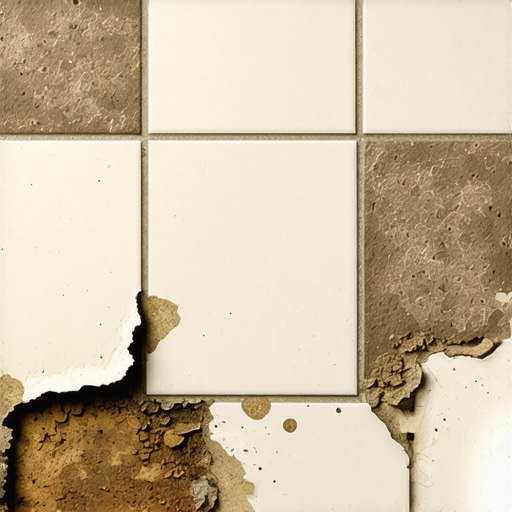
The sound of a floor failing is something you never forget. It starts with a sharp crack, like a small caliber pistol firing in your kitchen. Then you see it. The tile is no longer flat. It is lifting, pushing toward the ceiling, creating a hollow mountain range in the middle of the room. This is tenting. It is not a cosmetic flaw. It is a structural failure of the entire assembly. I spent three days grinding concrete on a job last month just so the floor wouldn’t click like a castanet. Most guys skip the leveling compound. They think the underlayment will hide the dip. It won’t. I had to rip up a whole entryway because the last installer ignored the moisture levels in the slab. They didn’t leave a gap at the wall. They thought they knew better than the physics of thermal expansion. They were wrong. This guide breaks down the science of why your floor is moving and how to stop the cycle of destruction before it starts.
The physics of pressure in rigid surfaces
Tile tenting occurs when the compressive forces within a floor assembly exceed the sheer strength of the adhesive bond. This happens because porcelain and ceramic tiles are rigid materials that expand and contract with temperature and moisture changes, requiring dedicated space to move without colliding. When that space is missing, the energy has nowhere to go but up. Every material has a coefficient of thermal expansion. In a flooring system, you have a sandwich of different materials: the concrete or wood subfloor, the thin-set mortar, the tile itself, and the grout. If the concrete shrinks while the tile expands, the bond is put under extreme tension. If the installer used a cheap, non-modified thin-set, the bond will snap. This is why we see tenting most often in large open areas where the cumulative expansion of fifty tiles adds up to a quarter inch of movement that has no place to go.
The subfloor secret and hidden moisture
A subfloor that is not properly cured or leveled is the primary cause of long-term tile failure. Concrete slabs must cure for at least twenty eight days to allow for initial shrinkage before any tile is bonded to the surface to prevent shear stress. I have walked onto too many jobs where the contractor was in such a rush that they laid tile on green concrete. As that concrete dries, it physically gets smaller. The tile does not. This creates a massive tug-of-war beneath your feet. If the slab is uneven, the thin-set will be thicker in some spots and thinner in others. This variation causes uneven curing and uneven shrinkage. You end up with a floor that is under constant internal stress. Use a moisture meter. Use a ten-foot straight edge. If you find a dip greater than an eighth of an inch, you grind or you fill. There is no middle ground in professional flooring.
“A floor is only as good as the subfloor beneath it; deflection is the enemy of every joint.” – Master Flooring Axiom
Why your perimeter gaps matter more than the tile
Perimeter gaps are intentional voids left between the edge of the tile and the wall to allow for natural movement. These gaps are typically hidden by baseboards and provide the necessary breathing room for the entire floor assembly to expand without buckling. If the tile is installed tight against a wall or a structural column, it has no room to breathe. When the summer humidity hits, the tile grows. If it hits the wall, the force is pushed back into the center of the room. This is how you get tenting. I always tell homeowners that the baseboard is not just a trim piece. It is a functional cover for a critical engineering gap. When you are looking for chic baseboard designs, make sure they are thick enough to cover at least a quarter inch of expansion space at the edge of your tile field. This small detail is the difference between a floor that lasts fifty years and one that pops in five.
Adhesive chemistry and the molecular bond
The chemical composition of your mortar determines whether your floor can survive the shifting environment of a modern home. High-performance polymer-modified thin-sets create a flexible bond that can absorb small amounts of movement without shearing away from the substrate. We look for ANSI A118.4 or A118.15 standards. These mortars contain latex and other polymers that act like microscopic shock absorbers. If you use a basic dry-set mortar on a large format porcelain tile, you are asking for trouble. Porcelain has a water absorption rate of less than point five percent. This means it is very hard for the mortar to grab onto it. You need the chemistry of the polymers to create a mechanical and chemical lock. Without it, the tile will simply sit on top of the mortar until the first temperature swing causes it to let go.
| Adhesive Type | Best Use Case | Flexibility Rating |
|---|---|---|
| Modified Thin-set | Porcelain and Large Format | High |
| Unmodified Thin-set | Small Ceramic on Plywood | Low |
| Epoxy Mortar | Chemical Resistance Areas | Extreme |
| Mastic | Wall Tiles Only | None |
The danger of moisture in wet areas
Showers and bathrooms represent the highest risk for tile tenting due to constant thermal cycling and humidity. High moisture levels can weaken the bond of the grout and thin-set if the waterproofing membrane was not installed according to TCNA standards. When you look at showers that wow, you see the beauty, but I see the waterproofing layers underneath. If water gets under the tile, it can cause the thin-set to re-emulsify or cause the substrate to swell. This is especially true in small bathrooms where the ventilation might be poor. The steam causes the tile to expand rapidly, and if the grout joints are too narrow, the tiles will crush each other. This is why we use specific movement joints in wet environments, even if they don’t look as pretty as a solid line of grout. Protecting your investment means understanding that the wet environment is constantly trying to tear the floor apart.
The math of movement joints
The Tile Council of North America specifies that movement joints must be placed every twenty to twenty five feet in each direction for interior installations. For areas exposed to sunlight or moisture, this frequency increases to every eight to twelve feet. Most residential installers ignore this. They grout the entire floor into one giant, rigid sheet. When the sun hits a large sliding glass door, the tile in that area heats up and expands. If there is no soft joint, usually a color-matched silicone caulk instead of hard grout, the floor will tent right at the heat source. You must calculate the expected movement based on the size of the room. If you are doing a long hallway, you need a break. This is non-negotiable science. If you need to fix old grout that has cracked from this stress, you can look into grout restoration to replace hard grout with flexible sealants in key areas.
“Movement joints are essential for every tile installation to accommodate the expansion and contraction of the assembly.” – Master Flooring Axiom
Professional installation checklist
- Verify the concrete slab is at least 28 days old and fully cured.
- Check for a flat surface within 1/8 inch over a 10 foot span.
- Leave a 1/4 inch expansion gap at all vertical surfaces and walls.
- Use a polymer-modified thin-set rated for porcelain.
- Ensure 95 percent mortar coverage for wet areas and large tiles.
- Install flexible movement joints every 20 feet minimum.
- Acclimate the tile to the room temperature for 48 hours.
Maintaining the structural integrity of your floor
Regular maintenance and inspection of your grout lines can prevent moisture from reaching the bond coat and causing hidden damage. Cracked grout is often the first sign that your floor is under stress and needs attention before the tiles begin to lift. If you see cracks, don’t just smear more grout over them. That is a band-aid on a broken leg. You need to investigate why it cracked. Is the subfloor moving? Is there an expansion joint missing? For those looking to keep their surfaces clean without damaging the bond, following tile cleaning tips is essential. Avoid harsh chemicals that can degrade the grout and allow water to seep behind the tile. If the grout is looking tired but the tile is solid, you can learn how to refresh grout to keep the system sealed. For those committed to long term sustainability, choosing eco-friendly tile solutions often involves using materials with higher thermal stability, which can naturally resist the forces that lead to tenting. If you are currently seeing your floor rise up in the middle of the room, it is time to stop. Do not walk on it. You risk shattering the tiles. You need to remove the affected area, grind the subfloor back to a clean state, and reinstall with the proper movement joints that should have been there from the start. If you have questions about a failing floor, you should contact us to discuss a structural assessment. Proper flooring is an engineering feat, not just a weekend project.”