
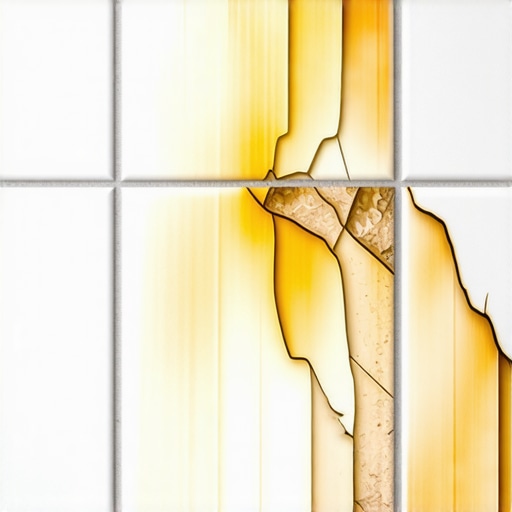
The chemistry of a failed bond
Grout sealant peels because of poor surface adhesion, residual moisture, or chemical incompatibility between the sealer and the cementitious grout. If the grout was not fully cured or if a film-forming sealer was applied over an existing wax, the bond will inevitably fail and delaminate.
I once walked into a house where a $15,000 marble shower was shedding its sealant like a lizard in the desert. The homeowner was frantic. They thought the stone was melting. In reality, the installer had wiped a topical acrylic sealer over damp grout lines less than six hours after finishing the project. I spent three days on my knees with a nylon brush and a heat gun just to undo that single hour of laziness. It was a chemical divorce between the substrate and the protective layer. Most guys skip the leveling compound or the proper drying time. They think the underlayment or the sealer will hide their haste. It won’t. I spent years grinding out mistakes like that just so the floor wouldn’t click like a castanet or peel like a sunburned back.
The physics of grout is actually quite simple but rarely respected. Cementitious grout is a porous network of microscopic voids. When you mix grout, water creates channels as it evaporates. If you seal those channels too early, you trap moisture inside the matrix. As that moisture tries to escape, it creates hydrostatic pressure. This pressure is stronger than the adhesive bond of a cheap topical sealer. The result is the unsightly flaking you see in your shower. You need to understand the molecular reality of what is happening under your feet.
“A floor is only as good as the subfloor beneath it; deflection is the enemy of every joint.” – Master Flooring Axiom
The microscopic reality of porous cement
Portland cement grout is not a solid mass but a crystalline structure filled with tiny capillaries that absorb liquids through capillary action. When you apply a sealer, you are either filling these holes or coating the surface to block them. If the sealer cannot penetrate, it sits on top and fails.
When we talk about grout, we are talking about a material that is constantly breathing. In a high-humidity environment like a bathroom, the tile and grout are under constant thermal and hygroscopic stress. If you use a film-forming sealer, you are essentially plasticizing the surface. This works for a while, but eventually, the moisture from the subfloor or the steam from the shower will find a way behind that film. Once it gets behind the plastic, the bond is dead. I prefer penetrating sealers, also known as impregnators. These use silane or siloxane molecules that are small enough to enter the pores and bond to the interior walls of the grout. They don’t leave a film, so there is nothing to peel. It is about working with the physics of the material rather than trying to suffocate it.
The ghost in the expansion gap
Expansion gaps are the most misunderstood part of any tile or hardwood installation. If a floor is locked against a wall or a heavy kitchen island, it cannot move during seasonal changes. This lack of movement leads to buckling, grout cracking, and sealant failure as the stress translates through the joints.
People always ask why their waterproof vinyl is buckling. Usually, it is because they locked it under a heavy kitchen island, killing the floor’s ability to breathe. The same happens in showers. If the change of plane between the wall and the floor is filled with hard grout instead of a flexible sealant, the structure will crack. This cracking breaks the seal. Once the seal is broken, water gets under the sealant layer and starts the peeling process. You have to respect the 1/8 inch gap. That tiny space is the difference between a floor that lasts thirty years and one that fails in three. When considering showers that wow modern designs for 2025, do not forget that the engineering matters more than the color palette. If the structure moves and the grout stays rigid, the grout loses every time.
| Sealer Type | Longevity | Mechanism | Risk of Peeling |
|---|---|---|---|
| Topical Acrylic | 1-3 Years | Film-forming surface coat | High |
| Penetrating Silane | 5-10 Years | Molecular bond inside pores | Zero |
| Solvent-Based Impregnator | 8-15 Years | Deep pore saturation | Low |
| Water-Based Sealer | 3-5 Years | Surface and shallow pore fill | Medium |
The humidity trap in modern showers
High humidity levels in a bathroom prevent grout from reaching its full structural integrity before a sealer is applied. If the ambient moisture is too high, the evaporation process slows down, leading to trapped water molecules that interfere with the chemical curing of the sealant.
I have worked in places like Houston and Miami where the air is so thick you can chew it. In those environments, you cannot follow the instructions on the back of a bottle that was tested in a dry lab in Ohio. You need to wait longer. You need fans. You need to use a moisture meter on the grout itself. If you are looking for grout restoration secrets for long lasting results, the first secret is patience. You cannot rush the cure. I have seen guys try to use hair dryers to speed up the process. All that does is crack the grout. The hydration of cement is a chemical reaction, not just a drying process. If you stop that reaction by sealing it too early, the grout will never reach its rated strength. It will be soft, dusty, and the sealer will peel off the top because the grout underneath is disintegrating into powder.
How to refresh grout without replacing it
Refreshing grout involves a deep mechanical cleaning to remove failed sealants and surface contaminants followed by the application of a high-quality penetrating sealer. If the grout is structurally sound but discolored, a professional-grade colorant can be used to re-stain and seal the lines in one step.
If your sealant is already peeling, you have a job ahead of you. You cannot just put more sealer over the top. That is like painting over rust. You have to get the old stuff off. I use a stiff nylon brush and a specialized alkaline cleaner. Avoid acid cleaners if you can, because they eat the lime in the cement and make the grout even more porous. Once you have it clean and dry, really dry, you can look into how to refresh grout without replacing it properly. This is the stage where you decide if you want to change the look. A lot of people are moving toward eco-friendly tile solutions for sustainable homes in 2025, which often involve using low-VOC sealers that are safer for the air in your home but require more precise application techniques. Do not cut corners here.
- Strip the old peeling sealer using a chemical stripper or mechanical abrasion.
- Clean the grout lines with a pH-neutral or slightly alkaline cleaner.
- Allow the area to dry for at least 48 to 72 hours with active ventilation.
- Test a small area with a drop of water to see if it absorbs.
- Apply a penetrating sealer and wipe off the excess within three minutes.
The relationship between tile and baseboards
Baseboards act as the finishing trim that covers the necessary expansion gaps at the perimeter of a tile floor. Without properly installed baseboards, the edges of the tile are exposed to moisture infiltration and physical damage, which can lead to grout failure at the edges of the room.
I see it all the time in cheap flips. They run the tile right up to the drywall and then smear a bunch of caulk in the gap. It looks terrible and it fails almost immediately. You need that gap for the house to settle and move. Then you cover it with a solid piece of trim. If you are looking for baseboards makeover ideas to elevate your space, remember that they serve a structural purpose first and an aesthetic one second. They protect the wall from the mop and they hide the engineering gap. In modern bathrooms, we are seeing more chic baseboard designs that transform rooms in 2025 by using waterproof materials like PVC or treated composites that won’t rot when the floor gets wet. This is especially important near showers where the steam is constant.
“Tile is only as waterproof as the person who installed the pan and the membrane; the grout is just for show.” – TCNA Standard Observation
The 1/8 inch that ruins everything
The difference between a successful installation and a total failure is often less than an eighth of an inch in subfloor flatness or expansion spacing. High spots in a concrete slab will cause large format tiles to lip and grout lines to stress and crack under foot traffic.
I spent three days grinding concrete on a job last month just so the floor wouldn’t click like a castanet. The homeowner thought I was crazy. They wanted to know why I was making so much dust. I told them that if I didn’t get that floor flat to within 1/8 inch over ten feet, their expensive tile would start snapping within a year. When tile moves, the grout cracks. When the grout cracks, the sealer peels. It is a chain reaction. You have to get the foundation right. If you want a sparkling bathroom, you should check out these tile cleaning tips for a sparkling bathroom in 2025, but remember that no amount of cleaning will fix a broken subfloor. You can find more info at our contact us page if you are in over your head. It is better to ask for help before you pour the thin-set than after the grout starts peeling like a bad sunburn. Take your time, check your moisture, and use the right chemistry. That is the only way to build a floor that lasts. “