
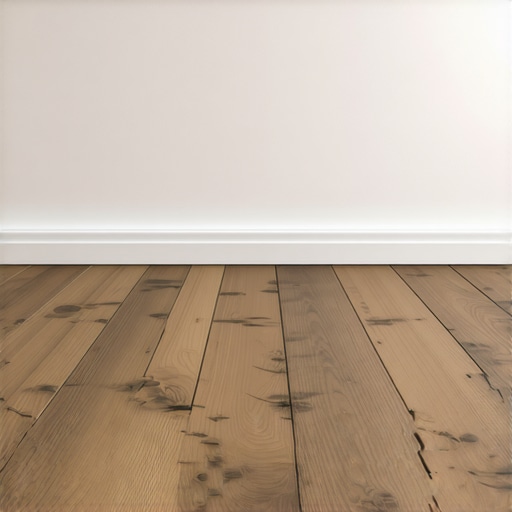
The ghost in the expansion gap
Baseboards warp primarily due to the physics of hygroscopic expansion where the wood or MDF fibers absorb moisture from the air or the subfloor. This occurs when the moisture content of the material does not match the equilibrium moisture content of the home environment. When wood cells swell, they exert thousands of pounds of pressure per square inch. If the installer did not leave an expansion gap or failed to acclimate the material, the baseboard has nowhere to go but out. It buckles. It twists. It fails. I once walked into a house where a $15,000 wide-plank walnut floor was cupping so bad it looked like a potato chip because the installer didn’t check the crawlspace humidity. The baseboards were the first to go. They popped right off the drywall, leaving a gap you could slide a deck of cards through. It was a total failure of structural engineering. I spent three days grinding concrete on a job last month just so the floor wouldn’t click like a castanet. That same moisture that causes floors to click will rot your trim from the back side. You see a pretty piece of painted wood. I see a organic sponge waiting to react to a 5 percent change in relative humidity. This is not about aesthetics. It is about the science of wood movement. If you want to avoid this, start by looking at baseboards makeover ideas to elevate your space but focus on the material density first.
Why your subfloor is lying to you
A subfloor may feel dry to the touch while still emitting high levels of moisture vapor transmission that destroys baseboard adhesives and wood fibers. Concrete is a porous material that acts like a straw, drawing water from the earth through capillary action. If you do not have a 6-mil poly vapor barrier under your slab, that moisture is moving upward. When it reaches your flooring, it gets trapped. The baseboard sits right at the intersection of the wall and the floor, which is the prime exit point for trapped vapor. This is why you see the bottom edge of the trim starting to flare out first. The back of the board is wetter than the face. This creates a tension imbalance. Most guys skip the leveling compound. They think the underlayment will hide the dip. It won’t. If the floor is not flat within 3/16 of an inch over a 10-foot radius, the baseboard will be forced into a curve that it cannot maintain. Eventually, the nails will pull out of the studs. This is especially true when using chic baseboard designs that transform rooms in 2025 if they are made of cheap fiberboard. Fiberboard is essentially compressed paper. Once it gets wet, the chemical bonds of the glue inside the board dissolve. It turns back into mush.
“A floor is only as good as the subfloor beneath it; deflection is the enemy of every joint.” – Master Flooring Axiom
The 1/8 inch that ruins everything
Acclimation is the process of allowing wood trim to reach its equilibrium moisture content within the specific temperature and humidity of the final installation site. Skipping this step for 48 to 72 hours is the number one cause of warping in new builds. If the trim came from a cold, damp warehouse and you nail it into a bone-dry house in Phoenix, it will shrink. If you take dry trim and install it in the swampy humidity of Houston, it will swell and buckle. While most people want the thickest underlayment, too much cushion actually causes the locking mechanisms on LVP to snap under pressure, which then puts upward force on your baseboards. The floor needs to float. If you pin the floor down with the baseboard, you have effectively locked a moving engine. Something has to break. Usually, it is the trim. You need to leave at least a 1/4 inch gap between the flooring and the wall. The baseboard should cover this gap without being pressed down so hard that it prevents the floor from sliding horizontally.
Moisture Content and Material Performance
| Material Type | Max Moisture Content | Expansion Risk | Best Environment |
|---|---|---|---|
| Solid Oak | 6-9% | Extreme | Stable Climate |
| MDF Fiberboard | 5-8% | High | Low Traffic |
| Finger-Jointed Pine | 7-10% | Moderate | General Living |
| PVC Trim | 0% | Zero | Wet Areas |
The capillary trap in your grout
Moisture from bathroom tile and showers can travel through grout lines and under the baseboard through capillary action. If the grout is not sealed or if the waterproof membrane in the shower fails, the baseboard becomes the exit path for that water. This is why you see black mold or peeling paint at the bottom of baseboards near the bathroom door. You need to be looking at showers that wow but also ensure they are built on a solid TCNA-approved pan. If the shower floor is not sloped correctly, the water will find the path of least resistance. Often, that path leads right to your baseboards. Proper maintenance is also a factor. If you use too much water when cleaning, you are feeding the warping process. Check out tile cleaning tips for a sparkling bathroom to keep things dry. If your grout is already failing, look into grout restoration secrets before the moisture destroys the walls. You can also learn how to refresh grout without replacing it to keep that barrier intact.
“Substrate preparation is the most important part of any tile installation; if the wall is not plumb, the baseboard will never sit flush.” – Tile Council of North America Standard
The chemistry of failed adhesives
Standard construction adhesives often fail because of plasticizer migration or high pH levels in concrete that dissolve the chemical bond. Many modern baseboards are installed with a combination of finish nails and glue. If you use a water-based adhesive on a damp wall, the glue will never fully cure. It stays in a semi-liquid state, allowing the wood to pull away as it dries. I prefer polyurethane adhesives. They are waterproof and provide a structural bond that can handle the torque of a warping board. However, even the best glue cannot save you from a wet wall. If your baseboards are warping, check for a slow leak behind the drywall. Even a pinhole leak in a copper pipe will saturate the bottom plate of the wall. The wood baseboard will suck that water up like a wick. It will buckle. It will rot. It will cost you thousands. For areas prone to moisture, consider eco-friendly tile solutions for sustainable homes which are much more stable than wood. If you are seeing these issues now, it is time to contact us for a professional evaluation before the damage spreads to the framing.
Checklist for a Warping-Free Installation
- Test the subfloor with a pinless moisture meter.
- Acclimate all trim in the room for 72 hours.
- Verify the HVAC system is operational and set to normal living conditions.
- Use stainless steel finish nails in high-moisture areas.
- Seal the back and bottom edges of wood trim before installation.
- Leave a 1/4 inch expansion gap for the flooring.