
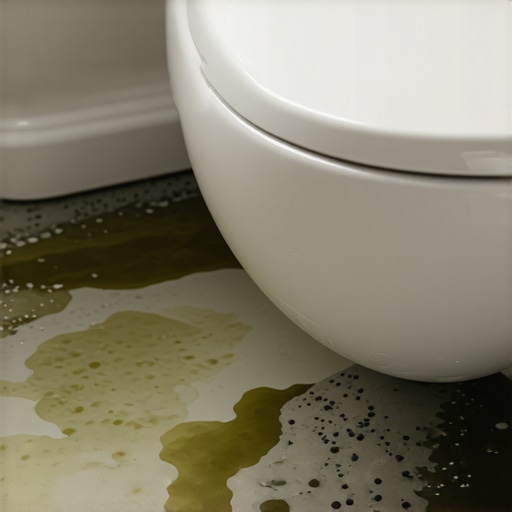
Why Your Bathroom Subfloor Is Spongy Near the Toilet
I spent three days grinding concrete on a job last month just so the floor wouldn’t click like a castanet. Most guys skip the leveling compound because they think the underlayment will hide the dip. It won’t. I have seen it a thousand times, homeowners walking into a room and feeling that sickening give beneath their feet. When it happens near a toilet, you are not just looking at a minor repair. You are looking at a structural failure. I have spent 25 years on my knees with a moisture meter and a level, and I can tell you that a spongy floor is a cry for help from the skeletal system of your house. It usually smells like damp earth and old oak dust. It is the smell of a subfloor that has lost its fight against the physics of water. Most people think a bathroom floor is just a surface for tile or vinyl, but it is actually a performance surface that must manage heavy loads and constant moisture fluctuations. When that tile starts to crack or the grout pops out, the damage underneath is already done.
The mechanical failure of the wax ring
Spongy subfloors near toilets are almost always caused by a failed wax ring or a leaking flange that allows water to seep into the plywood layers or OSB subfloor. This moisture penetration leads to cellulose degradation and structural rot. When the wax ring loses its seal, every flush sends a small amount of water underneath the floor covering. It does not take a flood to ruin a floor. It takes a tablespoon of water every hour for three years. The water sits on the subfloor and cannot evaporate because it is trapped between the waterproof flooring and the subfloor material. This creates a petri dish for rot. The capillary action pulls the moisture deep into the wood fibers, causing them to swell and then collapse. This is why you feel that bounce. The wood is literally dissolving under your weight. If you ignore this, the toilet flange will eventually sink, making the leak even worse.
“A floor is only as good as the subfloor beneath it; deflection is the enemy of every joint.” – Master Flooring Axiom
The biological reality of wood rot in wet zones
Bathroom subfloor rot is the result of fungal growth such as Serpula lacrymans which digests the lignin and cellulose that give wood its compressive strength. Once the moisture content of the wood hits 20 percent, these fungi begin to feast. They move through the wood fibers like a microscopic web, breaking down the chemical bonds that hold the subfloor together. You might think the grout is protecting your floor, but grout is actually porous. It is not a water barrier. If you want to keep your bathroom dry, you need to understand how to refresh grout without replacing it to maintain the surface, but the real protection happens at the membrane level. When the subfloor becomes spongy, the modulus of elasticity drops to near zero. The wood becomes more like a sponge than a structural board. This is where the physics of deflection ruins everything. As you step on the floor, the board bends, the fasteners pull through the soft wood, and the tile above it snaps like a cracker.
| Subfloor Material | Moisture Tolerance | Stiffness Rating | Common Failure Mode |
|---|---|---|---|
| CDX Plywood | Moderate | High | Delamination |
| OSB | Very Low | Medium | Edge Swelling |
| Cement Board | High | Low | Brittle Fracture |
| Magnesium Oxide | Very High | High | Fastener Pull-through |
The ghost in the expansion gap
Expansion gaps at the perimeter of a bathroom floor are essential for allowing the materials to move without buckling or tenting. When water leaks from a toilet, it often follows the path of least resistance toward these gaps. I have seen cases where the moisture travels all the way to the walls, causing mold growth behind the baseboards. If you are looking at chic baseboard designs that transform rooms in 2025, make sure you are not just covering up water damage. A dark stain at the bottom of the trim is a telltale sign of a subfloor disaster. The water wicks up the end grain of the wood, causing the paint to bubble. By the time you see the bubble, the subfloor is already a soggy mess. I always tell homeowners that the 1/8 inch gap at the wall is the most important part of the installation. Without it, the expanding wet wood will push against the wall studs and can even move the baseboards out of alignment.
The structural anatomy of a toilet flange
Toilet flanges must be secured to a solid subfloor to maintain a watertight seal with the closet bolts and the wax ring. If the subfloor is soft, the flange will move every time someone sits on the toilet. This movement is the death knell for the seal. You can replace the wax ring a dozen times, but if the flange is sitting on a sponge, it will leak again within a week. You have to cut out the rot. I don’t care how much it costs or how long it takes. You have to get back to solid joists. Sometimes I have to sister in new 2×8 lumber because the original joists have started to decay. This is why I distrust click-lock shortcuts in bathrooms. They hide the symptoms until the floor is ready to collapse. If you are planning showers that wow modern designs for 2025, do not neglect the foundation. A beautiful shower on a weak floor is just a disaster waiting for an audience.
- Inspect the closet bolts for any side-to-side movement or wobble.
- Check the grout lines around the toilet base for fine cracks or powdering.
- Use a non-invasive moisture meter to check the perimeter of the flange.
- Look for discoloration in the basement or crawlspace directly below the toilet.
- Press your heel firmly into the floor near the toilet to feel for any deflection.
- Examine the baseboards for any swelling or peeling paint.
- Check if the toilet is sitting level or if it has developed a tilt.
- Smell for musty odors that linger even after a deep cleaning.
- Inspect the ceiling below for water rings or sagging drywall.
- Check the subfloor thickness to ensure it meets TCNA L/360 deflection standards.
Why grout is not a moisture barrier
Cementitious grout is a porous material that allows vapor transmission and liquid moisture to pass through to the thin-set mortar and subfloor. Many people think that keeping a clean bathroom is enough, but even the best tile cleaning tips for a sparkling bathroom in 2025 won’t stop a leak from below. Water is a patient enemy. It finds every microscopic crack. If the tile was not installed with a waterproof membrane like Schluter-Ditra or a liquid-applied barrier, the subfloor is at risk every time the floor gets wet. When the subfloor gets spongy, the shear stress on the thin-set bond becomes too much to handle. The tile detaches from the substrate, and you start to hear a hollow sound when you walk. That is the sound of a failure. It is the sound of the bond between the ceramic and the wood being snapped by moisture expansion.
“The structural integrity of a tiled surface is directly proportional to the rigidity of the substrate and the absence of moisture-induced expansion.” – TCNA Technical Manual
The chemistry of the structural bond
Polymer-modified thin-set creates a chemical and mechanical bond between the tile and the subfloor, but this bond requires a stable substrate to function. When moisture enters the equation, it interferes with the hydration process of the cement. If the wood subfloor is wet, it will suck the moisture out of the thin-set before it can properly cure. This leads to a weak, powdery bond. Furthermore, the tannins in certain woods like oak can bleed out when wet, staining the grout and even the tile itself. If you are struggling with aesthetic issues, you might need grout restoration secrets for long-lasting results, but no restoration will fix a chemical bond failure caused by a wet subfloor. You need to ensure the hydrostatic pressure from a damp crawlspace isn’t pushing moisture up into your bathroom floor from the bottom side.
The 1/8 inch that ruins everything
Perimeter expansion joints must be filled with 100 percent silicone sealant rather than hard grout to accommodate the natural movement of the subfloor. Many installers make the mistake of grouting the floor right up to the baseboards or the shower curb. When the subfloor expands due to the high humidity of a bathroom, the grout has nowhere to go. It cracks. Then, water from the showers or the toilet leak enters those cracks. If you are looking for showers with a style trendy ideas for small bathrooms, remember that the transition between the shower floor and the bathroom floor is a critical junction. It must be flexible. If it is rigid, it will fail. The sponginess you feel is often the result of years of small amounts of water bypassing these rigid joints and rotting the subfloor joist. It is a slow, silent killer of bathrooms.
Remediation steps for a solid foundation
Subfloor replacement requires removing the toilet, pulling up the damaged flooring, and cutting out the rotted wood back to the center of the nearest floor joists. You cannot just patch a small hole. You have to remove the entire area of delaminated plywood. I always use 3/4 inch tongue and groove plywood, glued and screwed to the joists with construction adhesive. This creates a monolithic structure that won’t squeak or bounce. Once the new subfloor is in, I install a waterproof uncoupling membrane. This protects the new wood from any future leaks. If you are already doing a baseboards makeover as part of the repair, check out baseboards makeover ideas to elevate your space to ensure your new trim is moisture-resistant. Finally, ensure the toilet flange is set at the correct height, which is 1/4 inch above the finished floor surface. This ensures a proper wax ring compression.
Final word on structural integrity
A spongy floor is not a suggestion, it is a warning. It tells you that the moisture barrier has failed and the structural components are being eaten by fungi. Do not wait for the toilet to fall through the floor into the basement. Address the wax ring seal, the subfloor rigidity, and the waterproofing strategy immediately. A bathroom should be a sanctuary, not a structural liability. By the time you notice the bounce, the lignin in your subfloor is already gone. Get the tools, pull the toilet, and fix it right. Your home’s bones depend on it.”,