
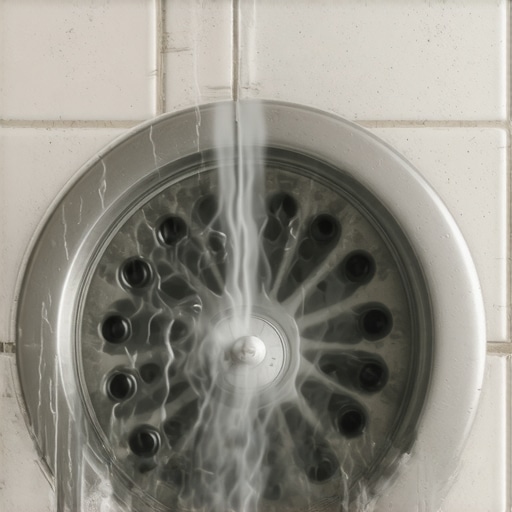
I spent three days grinding concrete on a job last month just so the floor would not click like a castanet. The homeowner thought it was a simple tile swap. It never is. When you hear that wet, rhythmic gasping coming from your shower drain, you are not just hearing water. You are hearing a structural failure of the atmospheric balance in your plumbing. I have spent twenty-five years with sawdust under my nails and a moisture meter in my pocket, and I can tell you that a gurgle is the plumbing equivalent of a floor joist screaming under too much weight. It is an engineering red flag that your drainage system is fighting for its life against vacuum pressure and physical blockages. Most people look at the tile and think it looks pretty. I look at the drainage pitch, the vent stack integrity, and the hydrostatic pressure of the P-trap. If your drain is gurgling, your home is trying to tell you that the physics of fluid dynamics are currently working against you. This is not about aesthetics. This is about preventing a catastrophic backup that ruins your subfloor and expensive hardwood in the adjacent room. To understand this, we have to look past the ceramic surface and into the dark, wet chemistry of your waste lines.
The air pocket screaming for help
Shower drain gurgling occurs when negative air pressure or a partial obstruction forces air through the water seal of the P-trap. This creates a vacuum effect where the system pulls air from the room because the plumbing vent is blocked or the waste line is restricted by debris. I once walked into a house where a expensive wide-plank walnut floor was cupping so bad it looked like a potato chip because the installer did not check the crawlspace humidity, but the real culprit was a leaking, gurgling drain that had been saturating the subfloor for months. When water flows down a pipe, it needs air behind it to move. If that air cannot get in through the roof vent, it sucks it through your shower drain. That sound is the water seal being broken. It is a violent physical reaction. You are hearing the atmospheric pressure of your bathroom trying to equalize with the sewer gas in your pipes. If this continues, the water seal evaporates or gets sucked out entirely, and then you have sewer gas entering your living space. That is not just a nuisance. That is a health hazard. We solve this by looking at the vent stack first, then the trap, and finally the slope of the pipe itself.
“A floor is only as good as the subfloor beneath it; deflection is the enemy of every joint.” – Master Flooring Axiom
When the vent stack loses its breath
Plumbing vents are the lungs of your home drainage system that regulate internal pipe pressure and allow sewer gases to escape safely through the roof. When a vent is clogged with bird nests, ice, or leaf debris, the falling water in the drain creates a siphon effect. Think about a straw. If you put your finger over the top and lift it out of a glass, the water stays in. If you release your finger, the water falls. Your vent stack is that finger. Without that air, the water in the pipe creates a vacuum behind it. This vacuum is strong enough to pull the water right out of your P-trap. I have seen this happen in high-end remodels where the contractor forgot to tie the new shower into the existing vent stack. The result is a gurgle that sounds like a drowning man. You can check this by climbing on the roof, if you have the stomach for it, and checking the stack for obstructions. If you see a squirrel nest or a tennis ball, you have found your ghost. But if the vent is clear, the problem is deeper in the guts of the house. It is likely a partial clog that is acting like a piston, pushing air ahead of it and pulling it behind it.
| Slope Ratio | Flow Velocity | Air Gap Percentage | Risk Level |
|---|---|---|---|
| 1/8 inch per foot | Low | 90% | High Sedimentation |
| 1/4 inch per foot | Optimal | 50% | Ideal Performance |
| 1/2 inch per foot | Extreme | 10% | Siphonage Risk |
Tile installation errors that trap air
Tile shower pans require a precise pre-slope and waterproofing membrane to ensure that water moves toward the drain without saturating the mortar bed beneath. If the tile was installed by a hack who did not understand the TCNA standards, you might have water pooling under the tile. This interstitial water can create air pockets that gurgle when new water is added to the system. I hate it when guys skip the leveling compound. They think the underlayment will hide the dip. It won’t. In a shower, that dip becomes a reservoir for bacteria and stagnant water. If your grout restoration secrets for long-lasting results are not working, it might be because the grout is constantly wet from below. That moisture travels through the capillary action of the thin-set and can lead to a musty smell that people mistake for a drain issue. The gurgling could be air escaping from the saturated mud bed as the weight of the showering person forces it out. It is a structural failure of the waterproofing system. You see this often in “builder-grade” homes where they rushed the pan installation. They use a single-stage drain instead of a three-piece integrated drain, and the weep holes get clogged with mortar. When the weep holes clog, the water has nowhere to go. It sits. It rots. It gurgles.
Structural deflection and the gurgling P-trap
Subfloor deflection refers to the amount of vertical movement a floor system experiences under a load, which can shift plumbing alignment and break P-trap seals. If your floor joists are undersized or rotting, the shower pan will flex when you step in it. This movement can slightly tilt the P-trap. A P-trap relies on a perfect water seal. If that trap tilts even a fraction of an inch, the seal depth is reduced. A shallow seal is easily broken by minor pressure changes. I have seen 15,000 dollar floors ruined because the installer did not account for the weight of a stone shower. You need to look at the L/360 rating for tile or L/720 for natural stone. If your joists are bouncing, your pipes are bouncing. This movement can also lead to cracks in your tile cleaning tips for a sparkling bathroom in 2025 won’t save you if the grout is cracking from the bottom up. When the trap seal is thin, any wind gust over your roof vent or any flush of a nearby toilet will suck enough air to cause that gurgling sound. It is a mechanical failure caused by structural inadequacy. You need to stiffen the subfloor with blocking or sistering joists before you even think about the plumbing.
“Drainage relies on atmospheric balance; without venting, the water becomes a piston in a cylinder.” – Plumbing Physics Standard
Chemical reactions inside the drain line
Soap scum and hair boluses create a biofilm that narrows the diameter of the pipe, increasing fluid friction and causing air turbulence. This is not just a clog. It is a chemical sludge. When you mix alkaline soaps with acidic body oils and hard water minerals like calcium and magnesium, you get a waxy substance that coats the inside of the 2-inch PVC. This narrowing causes the water to fill the entire pipe diameter. Ordinarily, a drain pipe should only be half full of water. The top half is for air. When the pipe is restricted, the water occupies the entire space, pushing all the air out. This is called full-bore flow. It creates a massive amount of suction. If you have been looking at showers that wow modern designs for 2025, remember that even the most beautiful linear drain will fail if the underlying pipe is choked with ten years of hair and conditioner. You need a mechanical snake to clear this. Chemical cleaners are a joke. They are mostly sodium hydroxide which can generate heat and damage the glue joints of your pipes. If you have older cast iron pipes, the chemicals will just accelerate the corrosion. The gurgling is the sound of that air trying to fight its way past the moving wall of water in a restricted pipe.
The baseboard warning sign
Baseboards and perimeter trim often show the first signs of moisture damage caused by a leaking or improperly vented shower system. If you notice your baseboards makeover ideas to elevate your space are being ruined by swelling or mold at the floor line, the gurgling drain might be the cause. When a drain gurgles, it often indicates back-pressure. That pressure can force water out of the slip joints or clean-out plugs under the floor. This water travels along the subfloor and hits the baseboard. I have seen guys try to hide this with caulk. Caulk is not a structural repair. If your chic baseboard designs that transform rooms in 2025 are starting to pull away from the wall, check the humidity behind them. A gurgling drain is a symptom of a pressurized system, and a pressurized system is a leaking system. You should always use a moisture meter to check the walls surrounding the shower. If the percentage is above 12 percent, you have a leak. The gurgling is just the audible warning. The silent killer is the rot happening in the dark.
- Check the roof vent for physical obstructions like nests or leaves.
- Snake the drain with a 1/2 inch power auger to remove biofilm and hair.
- Verify the P-trap slope using a laser level from the crawlspace.
- Inspect grout lines for pinhole leaks that allow air to enter the mud bed.
- Test the water seal depth by measuring the distance from the drain grate to the water surface.
The bottom line for your plumbing
Do not ignore the gurgle. It is the sound of a system that is out of balance. Whether it is a blocked vent, a hair clog, or a failing subfloor causing pipe deflection, the result is the same. You are risking your home’s structural integrity. While most people want the thickest underlayment, too much cushion actually causes the locking mechanisms on LVP to snap under pressure, and similarly, too much water in a pipe causes the air to snap. You need to maintain that 50 percent air-to-water ratio. If you are planning showers with a style trendy ideas for small bathrooms, ensure your plumber uses 2-inch lines and proper venting. And if you are still having issues, check your eco-friendly tile solutions for sustainable homes in 2025 to ensure they are not contributing to the problem. Fix the physics, and the sound will go away. If you need more help, you can always contact us or read our privacy policy. Keep your subfloors dry and your vents clear. That is the only way to build a floor that lasts a lifetime.
Comments
One response to “Why Your Shower Drain is Gurgling After Use”
Reading through this detailed breakdown really highlights how complex home plumbing issues can be, especially when it comes to something as seemingly simple as a gurgling drain. I once had a similar problem where the vent stack was clear, but the drain still gurgled oddly. It turned out that the pipe had a partial clog deeper in the system, which I was able to resolve with a professional snake. It makes me wonder how many homeowners overlook the importance of regular inspection and maintenance of vent stacks and P-traps. Has anybody found a good way to check for these issues early before they escalate into costly repairs? I’ve learned that frequent use of chemical cleaners can actually worsen the problem by accelerating corrosion in older pipes, so I prefer mechanical cleaning methods myself. It really emphasizes how vital proper installation and periodic checks are — especially for tile shower pans or in homes with subfloor deflection. Has anyone used digital tools like laser levels or moisture meters to monitor these conditions over time? Would be curious to hear others’ experiences or suggestions.