
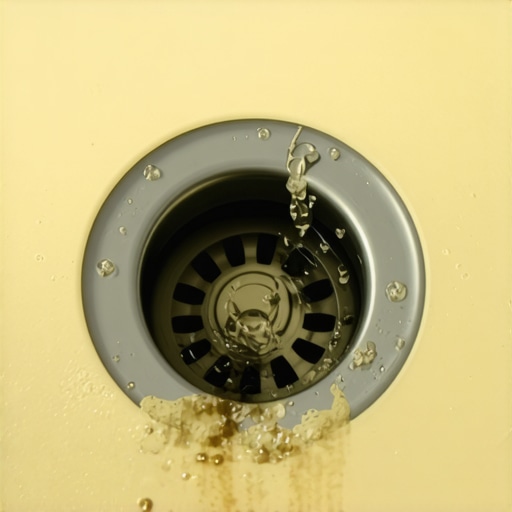
I spent three days grinding concrete on a job last month just so the floor wouldn’t click like a castanet and the same principle applies to your plumbing. Most guys skip the leveling compound and most homeowners ignore the structural integrity of their shower assemblies until the stench of hydrogen sulfide is practically peeling the paint off the walls. I once walked into a luxury bathroom where the homeowner had spent forty thousand dollars on Carrara marble but the room smelled like a municipal waste plant. The culprit was not the marble. It was a failed P trap and a complete lack of understanding regarding how water moves through a tile assembly. If you are smelling sewage in your shower it means the barrier between your nose and the city sewer line has been compromised. This is a mechanical failure that requires a mechanical solution not a scented candle. You have to look past the aesthetics and understand the physics of the drain. The smell usually comes from two places. It is either sewer gas bypassing the trap or a biological colony living in your grout and hair clogs. Both are signs of a system that is failing to perform its primary function of waste removal.
The physics of the failed water seal
A shower drain smells like sewage primarily because the water seal in the P trap has evaporated or been siphoned away allowing sewer gas to enter the home. This curved pipe under the floor is designed to hold a specific volume of water that acts as an airtight plug. When that water vanishes the gases from the sewer line including methane and hydrogen sulfide travel up the pipe and into your bathroom. This often happens in guest bathrooms where the shower is rarely used. The water simply evaporates over time. However if you use the shower daily and still smell sewage you likely have a venting issue. When your plumbing vent on the roof is blocked by a bird nest or debris the pressure in the system changes. As water flows down other pipes in the house it creates a vacuum. That vacuum sucks the water out of your shower trap like a straw. Without that water you are essentially living inside the sewer system. You need to verify that your roof vents are clear before you start ripping out tile. It is a simple matter of atmospheric pressure. If the system cannot breathe it will steal the breath of your P trap.
The biological reality of grout and biofilm
Biofilm is a complex colony of bacteria and mold that thrives on the organic matter trapped within porous grout lines and drain assemblies. While sewer gas is a plumbing failure biofilm is a maintenance and material failure. Grout is essentially a hard sponge. If it was not sealed properly or if the sealant has worn off it absorbs body oils and soap scum. This creates a food source for bacteria like Serratia marcescens which is that pink slime you see in the corners. Over time this colony grows deep into the grout matrix and down into the drain throat. The smell is a byproduct of their metabolic processes. It is earthy and pungent. If you find your grout is looking dingy you should look into how to refresh grout without replacing it because removing that organic load is the only way to stop the odor. You can scrub the surface all day long but if the bacteria are living in the pores of the cement the smell will return within forty eight hours. You have to use an enzyme based cleaner that actually eats the organic matter. Bleach just turns the surface white while the roots of the colony stay alive in the subfloor transition.
“A floor is only as good as the subfloor beneath it; deflection is the enemy of every joint.” – Master Flooring Axiom
The hidden danger of failed shower pan liners
A failing shower pan liner allows water to sit in the mortar bed where it becomes stagnant and creates a swamp like environment under your tile. This is the most expensive cause of a sewage smell. In a traditional thick bed mortar installation there is a waterproof liner buried under a couple of inches of sand mix. If the installer did not create a preslope under that liner the water will not migrate toward the weep holes in the drain. Instead it just sits there in the mortar bed. It turns into a fermented soup of bacteria and old skin cells. I have seen subfloors completely rotted out because of this. The water has nowhere to go so it just rots the wood and produces a smell that is indistinguishable from a septic leak. You might notice the smell gets worse right after you shower. That is because the fresh water is displacing the old stagnant water and forcing the odors out through the grout lines. If you see your chic baseboard designs starting to swell or discolor at the bottom near the shower you have a major moisture problem. That water is wicking into the wall plates and the structural framing. At that point you are not just looking at a plumbing fix but a full structural restoration.
| Source of Odor | Specific Scent Profile | Primary Technical Solution |
|---|---|---|
| Dry P Trap | Sharp Sewer Gas / Methane | Refill trap with water or check roof vent |
| Biofilm Buildup | Musty / Rotten Veggie | Enzyme cleaner and grout deep cleaning |
| Failed Pan Liner | Swampy / Sour / Earthy | Full demolition and liner replacement |
| Hair Clog Decomposition | Rotten Egg / Sulfur | Mechanical removal of the clog and disinfection |
The chemical breakdown of hair and soap scum
Hair clogs act as a structural framework for soap scum and skin cells to accumulate which creates an anaerobic environment for sulfur producing bacteria. When you pull a hair clog out of a drain and it smells like a nightmare that is because the bacteria at the center of the mass are producing hydrogen sulfide gas. They are shielded from your cleaning chemicals by the outer layers of the clog. This is why liquid drain cleaners are mostly useless for odors. They might burn a small hole through the center of the mass to let water pass but the bulk of the rotting organic material stays stuck to the walls of the pipe. You need to mechanically remove the hair. Once the pipe is clear you should follow up with a high concentration of sodium percarbonate or an enzyme digester. This breaks the chemical bonds of the biofilm. This is especially true in regions with high humidity like Florida or the Gulf Coast where the ambient moisture prevents the drain from ever drying out. In these climates the biological growth is accelerated and you have to be much more aggressive with your tile cleaning tips to maintain a sanitary environment. If you ignore the drain throat you are ignoring the source of eighty percent of bathroom odors.
- Inspect the P trap for water levels every two weeks in unused bathrooms.
- Check the roof vent stack for blockages twice a year.
- Use enzyme based cleaners instead of caustic acids to preserve pipe integrity.
- Seal your grout lines annually to prevent organic absorption.
- Remove the drain grate and manually clear hair every month.
The intersection of baseboards and moisture migration
Baseboards act as a secondary indicator of moisture failure within the shower assembly and often hide the initial signs of mold growth. If your shower is smelling like sewage you need to get on your hands and knees and check the perimeter where the tile meets the wall. Water often escapes through hairline cracks in the grout or a failed silicone bead. Once it hits the subfloor it travels. If you have installed premium baseboards makeover ideas you will notice the MDF or wood starts to puff up. This is a sign that the moisture is not staying in the drain. It is saturating the floor system. The smell you are experiencing might be the subfloor rotting. I have seen many homeowners mistake a rotting subfloor for a sewage leak. It is a distinct smell but unless you have spent years in the trade you might not know the difference. Both require immediate intervention. If the grout is failing you might look into grout restoration secrets to seal the system back up. But if the wood is soft the tile has to come up. There is no shortcut here. You cannot seal in a smell that is coming from a decaying structure. It will only get worse and the mold spores will eventually enter your HVAC system.
“Water is the most patient force in the universe; if there is a hole in your waterproofing it will find it.” – Master Flooring Axiom
The final word on sewer gas mitigation
Solving a sewage smell in the shower is about methodical elimination of variables. Start with the easiest fix which is running the water to fill the P trap. If the smell persists move to a deep cleaning of the grout and the drain throat with an enzyme digester. If the odor remains after a thorough mechanical cleaning then you are looking at a venting issue or a failure of the waterproof membrane. Do not waste your money on air fresheners. They only mask the chemical signals of a failing system. You need to treat your bathroom as a piece of engineering. Every component from the tile to the subfloor to the plumbing vents must work in harmony. If one part of that chain breaks the result is a foul smelling and potentially hazardous environment. Keep your grout sealed and your drains clear of organic debris. If you maintain the structural integrity of the installation the odors will take care of themselves. If you have questions about specific materials or need a professional assessment you can always contact us for expert guidance on your flooring and tile needs.