
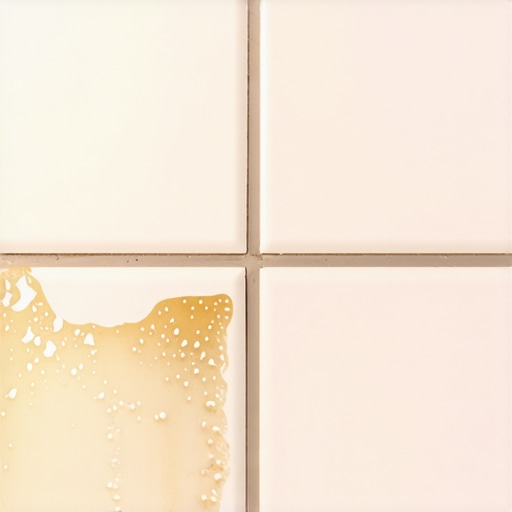
Most guys skip the pre-slope. They think the liner will just push water to the drain by sheer luck. It won’t. I spent four days tearing out a two-year-old bathroom last month because the installer did not understand that water sits in the mud bed like a stagnant pond when the pitch is wrong. When you walk into a bathroom and feel that slick, jelly-like coating under your feet, you are not just looking at a cleaning issue. You are feeling a failure of engineering. That slime is a biological colony, a biofilm that has set up shop in the pores of your grout and the micro-textures of your tile. It thrives on the very things you use to get clean. If your floor feels like a slip-and-slide, it is because the physics of your drainage and the chemistry of your cleaning routine have reached a breaking point.
The invisible biofilm empire
Biofilm is a collective of microorganisms that adhere to tiled shower floors and grout lines, creating a slimy texture. This occurs when soap scum, skin cells, and residual moisture provide a nutrient-rich environment for bacteria like Serratia marcescens to thrive in showers. These bacteria secrete an extracellular polymeric substance, which is basically a sticky glue that protects the colony from standard surface scrubbing. This is why you can scrub a floor and have it feel slick again just forty-eight hours later. You are only taking the top off the colony. The root stays buried in the cementitious grout. To truly fix this, you have to understand the microscopic topography of your floor. Even the smoothest looking ceramic tile has valleys at the molecular level where these organisms hide. When we talk about tile cleaning tips for a sparkling bathroom in 2025, we are really talking about the disruption of these biological films before they can harden into a permanent membrane. The pinkish or orange tint you see is often the first sign of Serratia marcescens. It is not mold. It is an opportunistic bacterium that loves the phosphates and fats found in modern soaps. If your ventilation is poor, you are essentially running a laboratory for bacterial growth every time you turn on the hot water.
Why your grout is a sponge
Cementitious grout is a highly porous material that acts like a microscopic sponge for organic waste and moisture. Unless it is sealed correctly with a high-quality penetrative sealer, the grout lines in showers will absorb body oils and soap residue. This absorption provides the subsurface nutrients required for biofilm to grow from the inside out. Most homeowners do not realize that grout is essentially just sand and cement. It is full of air pockets. When you wash your hair, the fats from your conditioner are driven into these pockets by the force of the water. Once inside, they go rancid and become a buffet for microbes. This is why grout restoration secrets for long-lasting results always emphasize the importance of deep extraction before resealing. If you seal over a dirty floor, you are just vacuum-sealing the bacteria inside, where they will continue to eat the organic material until the seal fails. I have seen grout that was so saturated with skin oils that it felt soft to the touch, like wet cardboard. That is a structural failure waiting to happen. Once the grout integrity is gone, water begins to migrate behind the tile and into the wall cavity, leading to much bigger problems than just a slippery floor.
“A floor is only as good as the subfloor beneath it; deflection is the enemy of every joint.” – Master Flooring Axiom
The failure of the 1/4 inch slope
Proper drainage requires a minimum slope of one-quarter inch per foot toward the drain assembly to ensure gravity-led water evacuation. When a shower pan is flat-spotted or has birdbaths, water pools in low areas, allowing biofilm and calcium deposits to accumulate rapidly. This is the structural zooming part that most people ignore. If your floor feels slimy in specific patches, take a six-foot level to it. I bet you find a dip. In many showers that wow modern designs for 2025, installers are moving toward large format tiles. This is a mistake in a traditional mud bed because large tiles cannot follow the curve of a drain pitch without lippage. Lippage creates tiny dams. These dams hold back a few millimeters of water. That water evaporates, leaves behind soap solids, and the cycle of slime begins. You need to ensure the weep holes in your drain are clear too. A three-piece drain assembly has small holes designed to let water that gets under the tile escape. If those are clogged with thin-set or hair, the entire mud bed stays saturated for weeks. You are literally standing on a wet sponge that never dries out. That constant moisture is what feeds the slime on the surface. No amount of bleach will fix a drainage failure. You can also look at how your chic baseboard designs that transform rooms in 2025 interact with the wet area. If moisture is wicking out of the shower and into the baseboards, you have a waterproofing failure at the transition.
| Grout Type | Porosity Level | Slime Resistance | Best Use Case |
|---|---|---|---|
| Sanded Grout | High | Low | Large joints, low-moisture areas |
| Unsanded Grout | Medium | Moderate | Polished stone, thin joints |
| Epoxy Grout | Zero | High | Steam showers, commercial kitchens |
| High-Performance Cement | Low | High | Residential showers with heavy use |
Chemical warfare in the shower pan
Chemical cleaning agents can often worsen a slimy floor if they are not neutralized or rinsed away completely. Many common cleaners leave behind a surfactant film that acts as a binding agent for dust and skin cells, creating a secondary layer of slime. I tell my clients to stop using those daily misting sprays. They are basically liquid plastic that builds up over time. If you want to know how to refresh grout without replacing it, start by using a pH-neutral cleaner and a stiff nylon brush. Avoid wire brushes because they will leave metal traces that will eventually rust and stain your grout. The contrarian truth is that the most powerful tool in your arsenal is not a chemical, it is a squeegee. If you remove the water and the soap solids before they have a chance to settle, the bacteria have nothing to eat. They starve. People want a magic spray, but the magic is in the physics of evaporation. If the floor is dry, the slime cannot grow. This is especially true for showers with a style trendy ideas for small bathrooms where ventilation is often an afterthought. In small spaces, the humidity stays high for hours after a shower, providing the perfect tropical climate for Serratia to bloom.
“Cementitious grout must meet ANSI A118.6 standards to ensure structural integrity and resistance to moisture ingress in wet environments.” – TCNA Handbook for Ceramic, Glass, and Stone Tile Installation
The physics of soap scum and body oils
Soap scum is a chemical precipitate formed when calcium and magnesium minerals in hard water react with sodium stearate in bar soap. This insoluble white solid creates a tacky surface on tile and grout, which then traps microscopic debris to form a slimy membrane. If you use bar soap, you are essentially greasing your floors. Liquid body wash is different, it is a synthetic detergent that usually does not create the same precipitate. But even then, the oils in your hair conditioner are designed to stick to surfaces. They stick to your hair, and they stick to your floor. Over time, these oils undergo oxidation and become a polymerized layer of gunk. This layer is hydrophobic, meaning it repels water but attracts more oil. This is why your floor feels greasy even when it is dry. To break this bond, you need a degreaser, not just a disinfectant. If you are interested in eco-friendly tile solutions for sustainable homes in 2025, look for enzymatic cleaners that eat organic oils without using harsh acids that can etch your stone or dissolve your grout.
Slime prevention checklist
- Squeegee the floor after every single use to remove soap solids.
- Switch from bar soap to liquid detergent-based body wash.
- Check that the bathroom fan is moving at least 50 CFM of air.
- Apply a high-quality penetrating sealer to grout lines every six months.
- Clear the drain weep holes during any deep cleaning session.
- Inspect the transition between the tile and the baseboards for water wicking.
Restoration versus replacement
Grout restoration is the process of mechanically or chemically removing the top layer of contaminated grout to reveal clean, structural material underneath. If the slime has penetrated the entire depth of the grout joint, the bond between the tile and the substrate may be compromised, requiring a full re-grout. I have had customers ask if they can just paint over the slime with a grout pen. That is like putting a band-aid on a gangrenous wound. The bacteria will just eat the paint from the bottom. You need to use a professional-grade steam cleaner to blast the biofilm out of the pores. Heat is the only thing that consistently kills the colony without destroying the tile. If the tile is loose or sounds hollow when you tap it, you have reached the end of the line. The moisture has already rotted the subfloor or the backer board. In those cases, you are looking at a full tear-out. It is a hard truth, but 25 years in the trade has taught me that you cannot fix a rotten foundation with a bottle of bleach. If you are noticing issues with the surrounding trim, you might need baseboards makeover ideas to elevate your space once the structural moisture issues are resolved. Do not ignore the warning signs. A slimy floor is the house telling you that it is failing to manage water. Listen to it. If the problem persists after a deep clean, it is time to call a professional who understands the TCNA standards and the physics of a proper shower pan. You can always contact us for a technical assessment of your flooring situation. Stop treating the symptoms and start addressing the structural cause of the biological growth in your bathroom.