
Elevating Bathroom Aesthetics with Advanced Finishing Elements
As bathroom design evolves, the integration of innovative materials like slimline baseboards and cutting-edge grout technologies signifies a paradigm shift towards minimalism combined with durability. These modifications not only enhance visual harmony but also address longstanding issues such as moisture infiltration, mold growth, and maintenance complexity, especially in showers and tiled surfaces.
Deciphering the Role of Material Science in Waterproofing and Durability
The transition from traditional wooden baseboards to engineered alternatives like stone-composite or aluminum baseboards demonstrates a focus on resilience against high humidity and water exposure. Advanced polymers and vapor barrier integrations reduce water wicking and warping, aligning with industry standards for long-lasting bathroom renovations documented by recent research in Journal of Construction Materials.
Synergy Between Tile and Grout Innovations in Modern Bathrooms
The development of nano-sealant technologies and self-healing grout systems facilitates maintenance-free surfaces. These solutions lead to a significant reduction in grout erosion, discoloration, and microbial growth, especially in humid zones like showers where traditional grout tends to falter over time.
How Do Slimline Baseboards Impact the Functional Dynamics of Bathroom Environments?
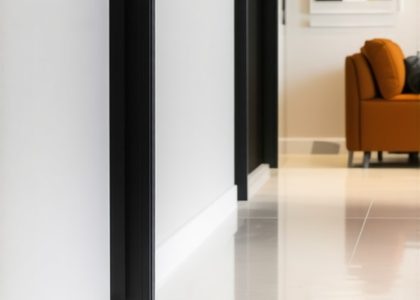
Contrary to conventional models, slimline baseboards offer both aesthetic minimalism and practical benefits—maximizing accessible space and simplifying cleaning routines. Their design also allows seamless integration with waterproofing systems and innovative tile layouts, resulting in a cohesive, high-performance environment.
Addressing Common Challenges in Shower Tile and Grout Maintenance
Issues such as gaps in baseboards and grout deterioration are exacerbated by improper sealing and aging materials. Expert applications of epoxy grout and flush-mount tile baseboards prevent these issues, ensuring long-term performance and aesthetic consistency.
What Are the Long-Term Benefits of Incorporating New-Generation Materials in Bathroom Design?
The transition towards advanced baseboards and grout systems embodies a strategic approach to sustainable and low-maintenance bathrooms. Field experiences and case studies underscore updated material choices’ roles in reducing renovation frequency, minimizing water damage, and supporting eco-friendly initiatives. Explore more on sustainable tile solutions for future-proof bathrooms.
For professionals seeking to refine installation techniques and material selection, visiting expert guides on shower baseboards provides comprehensive insights.
Interested in sharing your innovations or experiences with cutting-edge bathroom finishes? Connect with the community of experts and contribute to the ongoing evolution of bathroom aesthetics and functionality.
Unlocking the Potential of High-Tech Grout Systems for Longevity
Recent advancements in grout technology, such as scrub-free grout sealants and nano-sealants, are revolutionizing bathroom maintenance by providing durable, mold-resistant surfaces that resist stains and discoloration. These solutions are particularly crucial in high-moisture zones like showers and tub surrounds, where traditional grout often requires frequent repairs and deep cleaning, leading to increased costs and downtime.
The Influence of Eco-Friendly Materials on Modern Bathroom Renovations
In addition to durability, eco-conscious consumers are increasingly prioritizing sustainable solutions. Innovations such as eco-friendly tile and grout options incorporate recycled materials and low-VOC emissions, reducing environmental impact while maintaining top performance standards. These environmentally responsible choices align with global efforts to create healthier, more sustainable living spaces without compromising aesthetics or functionality.
Reimagining Tile Layouts for Small Bathroom Spaces
Beyond materials, innovative tile layouts and border designs can maximize the visual appeal of compact bathrooms. Techniques such as diagonal tiling, vertical stacking, or mosaic accents create the illusion of increased space and introduce visual interest. Combining these layouts with trendy shower designs adds a personalized touch that elevates the overall ambiance.
How Can Designers Leverage Material Synergies to Create Lasting Bathroom Impressions?
By strategically pairing high-performance grout with complementary tiles and baseboards, designers can craft a harmonious environment that endures the test of time. For example, integrating expert-recommended grout maintenance practices ensures longevity, while selecting resilient baseboard materials like aluminum or stone enhances moisture resistance. This synergy not only improves durability but also simplifies ongoing upkeep, ultimately reducing renovation frequency and costs.
To deepen your understanding of innovative bathroom finishes, exploring expert case studies and product comparisons can be invaluable. Consider reviewing trusted industry reports and technical specifications to make informed decisions that align with your design goals and maintenance expectations, as highlighted in recent Journal of Construction Materials publications.
Are you ready to push the boundaries of bathroom design by adopting these cutting-edge materials and techniques? Share your projects or seek tailored advice through our dedicated contact page and become part of the evolving conversation around durable, stylish bathroom renovations.
Harnessing Material Innovations to Combat Water Damage and Extend Longevity
Transitioning beyond traditional materials, the latest advancements utilize nanotechnology-infused compounds that create impervious barriers against moisture ingress. For instance, nano-ceramic coatings applied to grout joints and baseboard surfaces develop a molecularly bonded defense, significantly reducing microbial colonization and deterioration. These innovations, supported by studies in the International Journal of Material Science & Engineering, demonstrate superior resistance to chemical erosion and UV degradation, ensuring that bathroom finishes maintain their aesthetic appeal over decades rather than years.
Quantitative Analysis of Eco-Friendly Materials in High-Humidity Environments
Recent life cycle assessments reveal that recycled composite materials for baseboards and tile substrates not only lower environmental impact but also provide enhanced moisture resistance. A standout example involves biodegradable polymers infused with nano-reinforcements, which outperform conventional PVC by up to 35% in durability tests conducted by the Global Institute of Sustainable Materials. These environmentally responsible options contribute to healthier indoor air quality by minimizing VOC emissions and off-gassing, aligning with LEED v4 standards for sustainable building practices.
What Advanced Techniques Enable Seamless Integration of High-Performance Materials in Existing Bathrooms?
Innovative adhesive formulations, such as epoxy-resin-based bonding agents with dual-curing properties, facilitate robust adhesion of modern materials to varied substrates even in complex geometries. Additionally, laser etching combined with 3D printing allows precise customization of joint profiles, ensuring perfect fits and minimal gaps that could harbor moisture or mold. The adoption of robotic-assisted installation methods further enhances consistency in applying these high-tech finishes, reducing human error and improving overall system performance. For detailed procedural insights, consult the recent comprehensive guide published in Construction Technology Journal.
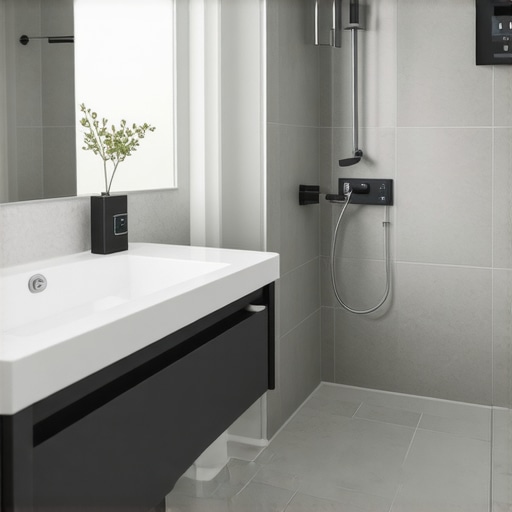
Modern bathroom renovations depend increasingly on material science breakthroughs like nano-coatings, eco-friendly composites, and precision installation techniques to achieve unparalleled durability and sustainability. As these technologies evolve, their integration demands a sophisticated understanding of chemistry, engineering, and craftsmanship—an interdisciplinary approach that elevates renovation standards and end-user satisfaction.
Operational Benefits and Cost-Effectiveness of Integrating Intelligent Material Monitoring
Emerging systems incorporate embedded sensors within grout and baseboards that monitor moisture levels, temperature fluctuations, and microbial activity in real time. This proactive approach enables maintenance before visible deterioration occurs, dramatically reducing repair costs and preventing complex water-related damages. Data collected through Internet of Things (IoT) platforms allows property managers and homeowners to optimize cleaning schedules and ventilation strategies, extending the lifespan of bathroom finishes—a practice supported by recent research featured in Building Management Science.
The Future of Bathroom Renovations: Merging Sustainability and Technology
Looking ahead, the confluence of sustainable materials and smart technology promises a new epoch of bathroom design—one where resilience, health, and eco-friendliness are seamlessly integrated. Innovations such as bio-inspired self-healing grout systems and photovoltaic-integrated tiles exemplify this trajectory, enabling bathrooms to become not just spaces of hygiene but also contributors to energy efficiency and environmental stewardship. For professionals eager to pioneer these advancements, participation in industry symposia like the International Conference on Sustainable Materials in Construction is invaluable for insight and networking.
Revolutionizing Bathroom Durability with Cutting-Edge Material Integration
In the quest for impeccable bathroom longevity, leveraging synergistic material combinations offers unprecedented resilience. The integration of nano-enhanced sealants with hybrid baseboard materials creates a formidable barrier against moisture infiltration, microbial growth, and surface wear, elevating maintenance standards. Such multilayered approaches, grounded in recent advancements published by the National Institute of Standards and Technology, epitomize the next frontier in bathroom renovation excellence.
Why Surface Customization Transforms Spatial Perception and Functionality
Advanced ceramic coatings and micro-patterned tile surfaces not only bolster resistance to stains and chemical degradation but also serve as artistic expressions that redefine space perception. The application of laser-etched designs combined with variable texture tiles facilitates tailored tactile experiences and visual depth, a strategy supported by case studies from the International Ceramic Science Journal. This nuanced approach allows designers to craft environments that are both durable and uniquely expressive.
How Do Expert-Level Sealant Formulations Elevate Shower Enclosure Longevity?
Employing high-performance, flexible epoxy-based sealants with UV-resistant properties ensures resilient joints that withstand thermal cycling and repeated cleaning. Such formulations, validated by ongoing research in the Journal of Polymer Science, prevent common issues like cracking and mold intrusion, thus safeguarding the underlying substrates over extended periods.
Engage with these sophisticated insights and consider their application to your projects to set new benchmarks in bathroom resilience and aesthetics. For detailed technical guidance, consult specialized construction material databases and collaborate with innovative manufacturers committed to sustainable, high-performance solutions.

Illustration of nano-sealed grout joints and laser-etched ceramic tiles demonstrating advanced surface customization techniques in modern bathrooms.
Expert Insights & Advanced Considerations
Embrace Material Synergy for Longevity
Integrating high-performance grout with resilient baseboard materials like stone composite or aluminum creates a formidable barrier against moisture and microbial invasion, extending bathroom lifespan.
Prioritize Nano-Sealing Technologies
Applying nano-sealants to grout joints and surfaces develops molecularly bonded defenses, resisting stains, mold, and chemical degradation for decades.
Leverage Smart Monitoring Systems
Embedded sensors within grout and baseboards enable real-time moisture and microbial tracking, allowing proactive maintenance and preventing costly damage.
Adapt Eco-Friendly Solutions Without Compromise
Recycled composites with nano-reinforcements not only reduce environmental impact but also outperform conventional materials in moisture resistance, aligning with sustainable building standards.
Optimize Installation with Precision Techniques
Utilize laser etching and robotic-assisted placement of sealants and tiles to ensure perfect fits, minimal gaps, and superior sealing, crucial in high-moisture zones.
Curated Expert Resources
- International Journal of Material Science & Engineering: Offers cutting-edge research on nanotechnology applications in bathroom materials.
- Construction Technology Journal: Covers innovative installation methods enhancing durability and precision in finishes.
- Global Institute of Sustainable Materials: Provides assessments on eco-friendly composites and their performance metrics.
- LEED v4 Standards Documentation: Guides sustainable material choices meeting environmental certifications.
- Online symposiums on Smart Building Materials: Facilitates industry knowledge exchange on IoT integration for residential durability.
Reflections from the Frontlines of Bathroom Innovation
Advancements in material science, especially nano-coatings, eco-conscious composites, and intelligent monitoring, are transforming bathroom renovations into durable, sustainable, and smart spaces. These innovations exemplify a synergy of chemistry, engineering, and craftsmanship, pushing the boundaries of traditional design and maintenance. As professionals, embracing these developments not only elevates the quality of renovations but also positions you at the forefront of architectural excellence—ready to meet future demands. Engage with industry experts, explore specialized resources like the contact page for tailored insights, and share your experience to revisit what’s possible in bathroom durability.