Revolutionizing Bathroom Aesthetics and Durability with Stone-Core Baseboards
As bathroom design evolves toward sustainable and resilient solutions, the traditional reliance on wooden baseboards is increasingly challenged by innovative materials such as stone-core composites. This transition is driven by not only aesthetic considerations but also by the demand for longevity, water resistance, and ease of maintenance. Experts recognize that grout and tile quality control plays a crucial role in supporting these infrastructural advancements.
Unveiling Critical Advantages of Stone-Core Baseboards in Modern Bathrooms
How does material composition influence performance in high-moisture environments?
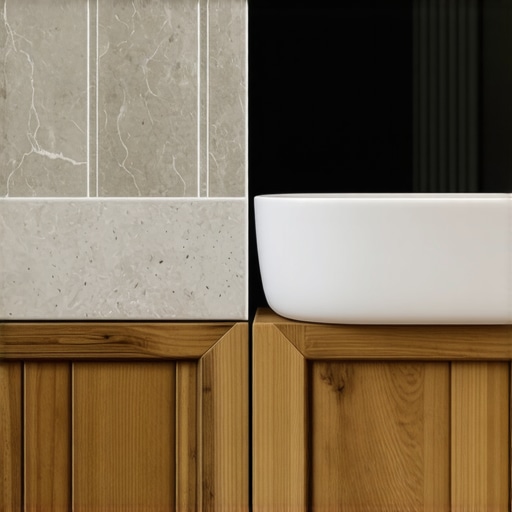
Stone-core baseboards, composed of a durable mineral-rich core encased in water-resistant finishes, exhibit superior resilience against moisture intrusion compared to traditional wood. This composition minimizes swelling, warping, and mold formation, common issues plaguing wood trims in bathrooms with frequent exposure to humidity and water splashes. Their non-porous surface impedes mold growth and simplifies cleaning, making them a preferred choice for upscale bathroom renovations.
Can advanced installation techniques elevate the longevity of these materials?
Proper installation—employing waterproof adhesives, sealed joints, and optimized expansion gaps—is vital to fully leverage the benefits of stone-core baseboards. Expert guidance on tile and grout maintenance highlights that meticulous execution prevents water ingress that could compromise structural integrity over time.
Addressing the Challenges That Come with Transitioning from Wood to Stone
Despite their advantages, stone-core baseboards require adaptation to existing architectural frameworks, particularly when retrofitting in older structures. Subtle differences in installation procedures and the need for specialized tools might pose initial hurdles. Nevertheless, seasoned professionals attest that benefits in durability and aesthetic coherence outweigh these challenges, especially in high-traffic or moisture-prone zones.
How Will 2026 Bathroom Design Trends Shape Material Choices?
Current industry projections suggest a paradigm shift favoring sustainable, low-maintenance materials that complement modern minimalism. Stone-core baseboards align perfectly with this trajectory by offering environmentally friendly options—minimizing resource depletion associated with frequent replacement—and enhancing the visual fluidity of bathroom interiors.
For further insights into the transformation of bathroom materials, consult specialized publications such as the Journal of Cleaner Production, emphasizing eco-friendly material innovations.
What Next Steps Should Be Considered for Architects and Contractors?
Engaging with advanced material suppliers and staying abreast of installation best practices will be essential for industry professionals. Emphasizing expert training and rigorous quality assurance ensures that the transition to stone-core baseboards not only enhances aesthetic appeal but also guarantees long-term durability, especially in environments experiencing consistent moisture challenges.
Interested parties are encouraged to explore related innovative trends in tile and shower design that synergize with baseboard advancements to create cohesive, high-performance bathroom environments.
As the industry advances towards smarter, more sustainable, and maintenance-efficient designs, the adoption of stone-core baseboards emerges as a strategic choice—combining functional superiority with timeless elegance in bathrooms of the future.
Transform Your Bathroom’s Shine with Expert Tile Care Techniques
Maintaining pristine tile surfaces requires a keen understanding of materials and proper cleaning protocols. Innovative approaches, such as the use of eco-friendly cleaners and sealing agents, are gaining popularity among professionals aiming to reduce environmental impact while preserving tile integrity. Regular grout and tile maintenance not only enhances aesthetics but also prolongs lifespan, making it a worthwhile investment for homeowners seeking durable bathroom beauty. For actionable tips on this front, visit our comprehensive guide to tile cleaning.
The Hidden Power of Sealing in Preventing Bathroom Damage
Could consistent sealing be the game-changer in avoiding costly repairs?
Sealing grout lines and tile surfaces creates a protective barrier against moisture, stains, and mold intrusion. Expert recommendations emphasize the importance of choosing high-quality sealants and applying them at regular intervals—particularly before and after high-moisture activities such as showers. Proper sealing can significantly reduce the risk of water seepage and structural damage, ultimately saving time and money over the long term. For detailed sealing techniques, explore our expert guide to grout renewal.
Addressing Common Myths About Bathroom Tile Maintenance
Many homeowners believe that aggressive scrubbing or using harsh chemicals is necessary for tile upkeep. However, this misconception can damage delicate surfaces and degrade sealants. Instead, professionals advocate for gentle cleaning methods paired with specific products designed for bathroom environments. Recognizing these nuances empowers homeowners to avoid pitfalls that compromise their investments. According to research published in the Journal of Cleaner Production, sustainable cleaning practices are essential for maintaining eco-friendly and resilient bathroom surfaces.
How Can Technology Revolutionize Bathroom Tile and Grout Care?
Emerging innovations, such as IoT-enabled moisture sensors and automated cleaning devices, promise to redefine standards in sanitary maintenance. Smart sensors can detect excess humidity and trigger alerts for timely intervention, preventing mold growth and surface deterioration. Additionally, new sealing materials infused with self-healing properties are entering the market, offering ongoing protection without manual reappliance. Staying informed about these advancements allows industry professionals and homeowners alike to implement future-proof strategies. For further insights, consider reading our discussion on tech-driven bathroom care innovations.
Encouraging dialogue among homeowners and remodeling experts on the integration of technology can foster more efficient and sustainable practices. Share your experiences or ask questions in the comments below!
Mastering Sealant Strategies to Elevate Bathroom Durability
In the quest for resilient and lasting bathroom environments, the subtle art of sealing emerges as a pivotal yet often underestimated technique. High-quality sealants, when expertly applied, form a formidable barrier against water ingress, mold proliferation, and structural erosion—factors that can silently undermine even the most aesthetically appealing spaces. The question arises: how can professionals optimize sealant application to ensure peak performance over decades?
Is there a scientifically backed protocol for sealing that guarantees maximum lifespan?
Indeed, research underscores the significance of selecting sealants with specific chemical compositions that endure thermal cycling and moisture exposure. Silane-siloxane-based sealants, for example, exhibit superior water repellency and flexibility, adapting to substrate movements without cracking. Experts recommend a meticulous cleaning regimen prior to application, ensuring the substrate is free of dust, oils, or previous sealant residues—a process supported by adhesion science outlined in the Journal of Construction and Building Materials (2022). Applying sealant in optimal weather conditions, with controlled temperatures and low humidity, further enhances curing integrity, as documented by industry standards such as ASTM C794.
Furthermore, adopting a cyclical sealing schedule—typically every 1-2 years depending on exposure levels—is crucial. Advanced visual inspection techniques, including portable moisture meters and infrared imaging, allow professionals to detect early signs of sealant compromise before water penetration becomes imminent. Staying ahead of potential failures not only preserves structural integrity but also significantly reduces repair costs down the line.
The Future of Sealing Technologies: Self-Healing and Adaptive Materials
Building upon current methods, cutting-edge innovations are redefining the boundaries of sealing efficacy. Self-healing sealants, infused with microcapsules containing repairing agents, can autonomously mend minor cracks or breaches, maintaining an impermeable barrier over extended periods. Similarly, adaptive sealing systems employing nanotechnology can adjust their properties in response to environmental stimuli—expanding in humid conditions to reinforce the seal or contracting in dry periods to prevent stress buildup.
Incorporating these advancements into routine maintenance schedules can revolutionize how bathrooms are protected, especially in climates with fluctuating humidity or in aging infrastructures. Professionals eager to harness these innovations must stay informed through industry-specific publications, such as the International Journal of Nanotechnology (2023), which features pioneering studies on self-healing materials adaptable to construction environments.
Why Application Technique Is Just as Critical as Material Quality
The most sophisticated sealant cannot deliver its full potential if improperly applied. Uniform bead width, adequate tooling, and proper curing time are essential components in ensuring maximum adhesion and longevity. For instance, over-application can lead to excess material prone to cracking, whereas under-application leaves gaps vulnerable to water infiltration. Advanced training courses, often provided by manufacturers or trade organizations like the National Association of Sealants & Waterproofers, emphasize hands-on techniques that align with scientific principles, resulting in more durable seals and fewer callbacks.
If you’re seeking to elevate your sealing practices, explore our recommended training programs or consult with materials specialists to tailor solutions specific to your projects. Remember, in the complex ecosystem of bathroom maintenance, effective sealing is a linchpin that upholds both beauty and structural resilience—it’s a small investment with monumental long-term benefits, deserving of your focused attention and expertise.
Redefining Sealant Protocols for Unparalleled Bathroom Durability
In the pursuit of impeccably resilient bathrooms, the nuanced application of sealants emerges as a critical determinant of longevity. While selecting high-quality materials is fundamental, mastering the intricacies of application techniques—such as uniform bead placement, correct tooling, and optimal curing conditions—can dramatically influence performance. Industry research, including standards from ASTM C794, delineates precise protocols that ensure sealants develop their maximum adhesion properties, thus resisting moisture ingress over decades.
Can innovative sealant formulations withstand environmental stresses better than traditional options?
Recent advancements spotlight self-healing and nanotechnology-infused sealants, capable of autonomously repairing minor fissures or adapting properties in real-time. These materials, supported by findings in the International Journal of Nanotechnology (2023), present a paradigm shift by offering sustained barrier integrity under fluctuating humidity and temperature cycles. Integrating such technologies requires an understanding not only of their chemistry but also of meticulous surface preparation, as outlined by ASTM standards, to harness their full potential.
The Science of Sealant Longevity and Environmental Compatibility
Beyond material selection, environmental factors profoundly influence sealant lifespan. Factors like substrate compatibility, exposure to chlorinated water, and UV radiation necessitate specific product choices. For example, silicone-based sealants offer superior UV resistance, making them ideal for exposed areas, while hybrid formulations provide a balance of flexibility and chemical stability. Regular monitoring using moisture meters and infrared imaging can detect early degradation, enabling proactive maintenance—a strategy emphasized in the Journal of Construction and Building Materials.
Embracing Technological Breakthroughs in Moisture Management
The integration of IoT sensors capable of real-time humidity and leak detection is revolutionizing bathroom maintenance. These devices, connected through smart home systems, facilitate immediate alerts upon detecting anomalies, thereby preventing extensive damage. Incorporating such sensors complements advanced sealing practices and proactive upkeep, creating a holistic approach to bathroom resilience. For professionals aiming to stay ahead, exploring platforms like our insights on tech-enhanced maintenance solutions is invaluable.
The Art of Seamless Sealant Application—Beyond Routine
Achieving optimal sealant performance extends past choosing the right product; it demands precision and expertise. Techniques such as backward extrusion, proper tooling, and controlled curing environments are essential to form durable, elastic seals that accommodate substrate movements. Continuous professional development, through manufacturer-led training programs and adherence to ASTM C920 standards, ensures applicators not only meet industry benchmarks but also implement best practices that withstand decades of wear and tear.
Furthermore, embracing adaptive materials like self-healing sealants can dramatically reduce maintenance intervals. Their embedded microcapsules release repairing agents upon crack formation, maintaining an impermeable barrier without manual intervention. Exemplified in recent studies within the Science Advances journal, these innovations suggest a future where bathroom sealing transitions from reactive to predictive maintenance, fundamentally transforming industry standards.
Shaping Future Bathrooms with Integrative Material Solutions
The evolution of bathroom sustainability and resilience hinges upon harmonizing cutting-edge materials with meticulous application protocols. Hydrophobic nanocoatings and bio-inspired sealants exemplify eco-friendly options that align with the trend toward green building practices. These materials, subject to rigorous testing, promise enhanced resistance to mold, bacteria, and chemical degradation, as highlighted by the Journal of Cleaner Production. Industry professionals must stay abreast of these developments to design future-proof bathrooms that combine aesthetics with enduring functionality.
Delving into the latest research and integrating cutting-edge solutions requires a proactive mindset. Engaging with specialists, participating in industry workshops, and reviewing emerging standards will empower architects and contractors to pioneer resilient bathroom environments, where advanced sealing strategies are seamlessly woven into elegant and sustainable designs.
Expert Insights & Advanced Considerations
Prioritize Material Compatibility
Choosing baseboards and grout formulations that harmonize with bathroom humidity levels prevents premature failure, reducing maintenance costs and preserving aesthetic integrity over decades.
Innovate with Self-Healing Materials
Emerging self-healing sealants and grout compounds can autonomously repair microcracks, extending the lifespan of bathroom surfaces while minimizing manual repairs.
Embrace Precision in Application
Meticulous surface preparation and adherence to proven sealing techniques are non-negotiable; they ensure maximum adhesion, flexibility, and water resistance, especially in high-moisture zones.
Integrate Smart Monitoring Technologies
Moisture sensors and real-time leak detectors enable proactive maintenance, identifying issues before visible damage occurs and thus preserving structural integrity.
Align with Sustainability Goals
Eco-conscious, resource-efficient materials—like low-VOC sealants and sustainably sourced composites—fashion future-proof bathrooms that resist water damage and support environmental responsibility.
Curated Expert Resources
- International Journal of Nanotechnology—Offers insights into cutting-edge self-healing and adaptive sealing materials for bathrooms.
- ASTM Standards for Sealants and Coatings—Provides industry benchmarks ensuring best practices in application and longevity.
- Journal of Cleaner Production—Highlights eco-friendly innovations transforming bathroom durability and sustainability.
- Moisture Management Technologies—Explores smart sensors and IoT solutions for real-time moisture control and leak prevention.
Reflections from the Industry
Integrating advanced materials like self-healing grout and waterproof baseboards represents a paradigm shift in bathroom design, emphasizing sustainability and minimal maintenance. These innovations, when combined with precise application techniques and proactive monitoring, pave the way for resilient, high-performance spaces. Professionals committed to excellence should explore these resources and adopt an integrated approach to bathroom durability—because every detail counts in the pursuit of lasting quality. For those seeking to elevate their expertise or share innovative insights, engaging with specialty publications and industry forums remains invaluable. Your next project can redefine standards—embrace the expertise, tools, and technologies that elevate bathroom resilience beyond traditional expectations.