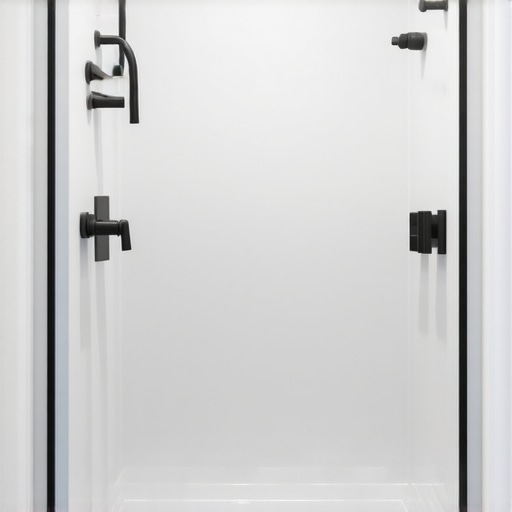
I spent three days grinding concrete on a job last month just so the floor wouldn’t click like a castanet. Most guys skip the leveling compound. They think the underlayment will hide the dip. It won’t. This obsession with the subfloor extends to every vertical surface in a bathroom. I once walked into a house where a custom master bath had been finished only two years prior. The baseboards were beautiful white MDF. They looked perfect until you got close. The bottom half-inch was swollen like a sponge. Black mold was creeping up the drywall. The homeowner was devastated. They spent eighty thousand dollars on a remodel only to have the foundation of their aesthetics rot from the inside out. This is why I refuse to install anything but quartz-composite baseboards in wet zones now. If you are building for 2026, you are building for longevity. You are building against the inevitable failure of traditional materials.
The death of the wooden baseboard in wet environments
Quartz-composite baseboards eliminate the risk of rot by utilizing a non-porous resin matrix that prevents moisture absorption entirely. Unlike wood or medium-density fiberboard, these engineered materials do not expand when exposed to high humidity or direct water contact. They are the primary solution for 2026 shower trim because they maintain structural integrity in saturated conditions. Wood is organic. It wants to return to the earth. When you put wood in a bathroom, you are inviting microbial growth. Even high-quality tropical hardwoods eventually succumb to the constant cycle of wetting and drying. This cycle causes the lignin in the wood fibers to break down. Quartz composite uses a vacuum vibro-compression process to create a surface with near-zero porosity. Water simply cannot penetrate the surface. It stays on the outside where it can be wiped away or evaporated. This is the difference between a floor that lasts five years and one that lasts fifty. When considering chic baseboard designs that transform rooms in 2025, the shift toward quartz is undeniable.
“A floor is only as good as the subfloor beneath it; deflection is the enemy of every joint.” – Master Flooring Axiom
Molecular density of quartz composite materials
The molecular structure of quartz-composite involves a high-density blend of approximately ninety-three percent natural quartz and seven percent high-performance resins. This ratio creates a material that is chemically inert and physically harder than most natural stones. The lack of internal voids means that capillary action cannot pull water into the core of the trim. In a shower environment, capillary action is the silent killer. It pulls moisture through grout lines and behind tiles. If your baseboard is porous, it acts like a wick. It sucks up the water and holds it against the wall studs. Quartz composite stops this process cold. The resin acts as a binder that locks every grain of silica into a solid mass. This mass is impervious to common household chemicals and acidic cleaners. This is mandatory for maintaining a sanitary environment. If you want to see how this fits with showers that wow modern designs for 2025, you have to look at the transition point where the wall meets the floor. This is where the quartz shines.
| Material Type | Water Absorption Rate | Janka Hardness (Equiv) | Lifespan in Showers |
|---|---|---|---|
| Solid Oak | 8 to 12 percent | 1360 | 2 to 5 years |
| MDF Trim | High Swelling | Low | 1 to 3 years |
| PVC Trim | 0 percent | Very Low | 10 to 15 years |
| Quartz Composite | Less than 0.05 percent | 7000 plus | 50 plus years |
Linear profiles for the modern wet room
The most effective quartz baseboard profiles for 2026 emphasize clean lines and minimal surface area for water to pool. Flat-top and eased-edge profiles are superior to traditional decorative moldings because they do not have deep crevices where soap scum and moisture can hide. In the swampy humidity of Houston, these flat surfaces are a godsend. They allow air to circulate freely. When you have a complex profile with many coves and beads, water sits in the valleys. This leads to mineral deposits and eventually mold. I always recommend a simple four-inch or six-inch flat quartz plank. It looks modern. It is easy to clean. It provides a massive amount of protection for the bottom of the drywall. If you are looking for baseboards makeover ideas to elevate your space, quartz offers a stone-like finish that wood simply cannot replicate. It feels heavy. It feels permanent. It feels like quality. This is the hallmark of the 2026 architectural shift toward durability.
The secret to waterproof transitions
A successful quartz baseboard installation relies on the chemistry of the sealant used at the floor-to-wall junction. Most people think a standard acrylic caulk is enough, but in a high-moisture zone, you must use a one hundred percent silicone sealant that matches the quartz color. This creates a flexible, waterproof gasket. While most people want the thickest underlayment, too much cushion actually causes the locking mechanisms on LVP to snap under pressure, and the same logic applies to baseboards. You do not want a thick, spongy bead of caulk. You want a thin, precise line. This line must bridge the expansion gap required by the flooring. If you are using tile, the quartz baseboard should be set slightly above the tile surface, with the gap filled with silicone. This prevents the baseboard from being pressured by any slight movement in the floor joists. This is structural engineering at a small scale. It is about managing the movement of the building while maintaining a seal. It is similar to the care taken in grout restoration secrets for long lasting results. You have to understand the materials to make them last.
- Ensure the subfloor is flat within one-eighth inch over ten feet.
- Use a diamond blade for all quartz cuts to prevent chipping.
- Apply a high-quality modified thin-set or epoxy adhesive to the back of the plank.
- Leave a two-millimeter gap at the corners for silicone expansion.
- Seal the top edge with a translucent silicone bead to prevent water from running behind the board.
“Proper moisture management is not about keeping water out; it is about controlling where it goes when it inevitably gets in.” – NWFA Technical Guidelines
Installation mechanics for high moisture zones
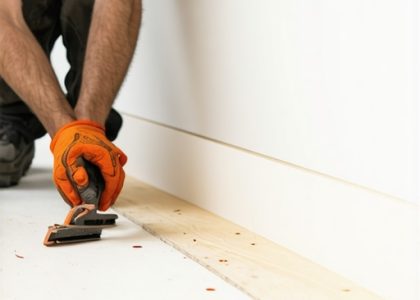
Installing quartz baseboards requires specialized tools including a wet saw and high-strength polymer adhesives. You cannot simply nail these boards into the studs like you would with pine. You are working with a material that has the density of granite. The process begins with a moisture test of the wall cavity. If the moisture levels are above twelve percent, you have a problem that a baseboard won’t fix. You have to solve the leak first. Once the environment is stable, you apply the adhesive in a serpentine pattern. This ensures maximum surface contact. You must support the boards while the adhesive cures. This often involves using heavy weights or temporary bracing. It is a slow process compared to a nail gun. It is also a permanent process. Once that quartz is on the wall, it is part of the building. This is why planning your layout is vital. You want to minimize seams. A single long run of quartz looks much better than multiple pieces. It also has fewer points of failure. This level of detail is what separates a master installer from a handyman. It is about the physics of the bond. If you need more tips on bathroom maintenance, check out tile cleaning tips for a sparkling bathroom in 2025. Proper care will keep your quartz looking new for decades. The dry heat of Phoenix will shrink your wood baseboards until they show a gap, but quartz remains stable. It is the only choice for a high-end, no-rot shower trim in the modern era.