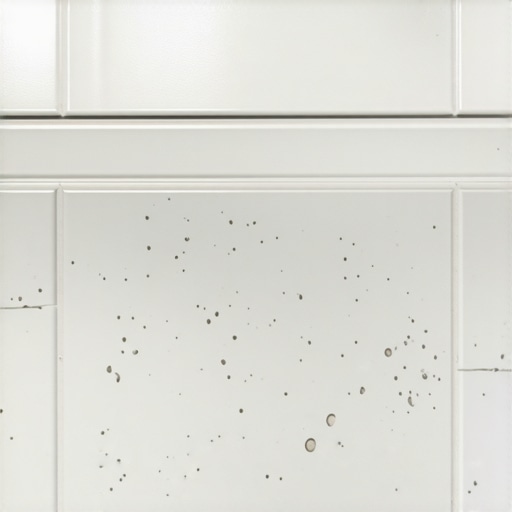
I once walked into a house where a five thousand dollar bathroom remodel was rotting from the floor up after only six months. The baseboards were swelling like sponges because the installer used water-resistant trim instead of a true composite. It was a mess of black mold and crumbling gypsum. I spent three days stripping out soggy MDF that had wicked up moisture from the shower pan. That is why I only trust quartz-composite for wet zones today. It is a structural necessity that keeps the wall cavity dry. You cannot negotiate with physics when it comes to standing water and capillary action. These materials are built to last longer than the house itself. In my twenty five years on the job, I have seen every shortcut fail. Quartz is the only thing that stands up to the pressure of modern bathroom environments. It does not matter how good the tile looks if the trim is rotting from behind. We are looking at a 2026 standard that prioritizes longevity over initial cost. The shift toward quartz-composite is driven by the need for a zero-porosity barrier. This is the only way to ensure a no-rot installation for the long haul.
The wet zone reality
Quartz-composite baseboards offer a zero-porosity surface that prevents water absorption and mold growth in high-moisture environments like showers. These materials combine crushed natural stone with polymer resins to create a density that outperforms traditional wood or MDF alternatives in every durability metric. They are the standard for no-rot shower trim in 2026. When you look at the molecular structure of these baseboards, you see a dense matrix of silica bonded by high-performance polymers. This creates a surface where the water vapor transmission rate is effectively zero. Traditional wood trim has cellular structures that act like tiny straws, pulling water up from the floor. Even the best paint job cannot stop the physics of capillary action at the bottom edge. Quartz eliminates this risk completely. It remains inert even when submerged. This is critical for transitions between the shower floor and the bathroom walls. You are creating a waterproof seal that protects the structural studs from rot. Most people think about the tile first, but the trim is what actually keeps the water out of the walls. I have replaced hundreds of feet of rotted wood in bathrooms. I have never had to replace a quartz-composite board due to moisture damage.
“A floor is only as good as the subfloor beneath it; deflection is the enemy of every joint.” – Master Flooring Axiom
The chemistry of the quartz resin bond
The resin bond in quartz-composite trim creates a hydrophobic barrier that resists thermal expansion and chemical degradation from bathroom cleaners. Unlike porcelain which can be brittle, the resin content provides a degree of flexibility that prevents cracking during the natural settling of a home. This makes it the ideal partner for high-performance grout. We are talking about a material with a Mohs hardness of 7, which is far tougher than any wood. The manufacturing process involves vacuum vibro-compaction, which removes all air pockets from the material. This lack of internal voids is what prevents bacteria from nesting inside the trim. When you install these boards, you are installing a medical-grade surface. The chemical resistance is also a major factor. Bleach and heavy detergents will strip the finish off wood or plastic trim over time. Quartz shrugs it off. It stays looking new for decades. You have to understand that the bathroom is a hostile environment. Between the humidity spikes and the chemical cleaners, only the strongest materials survive. For more information on maintaining these spaces, you should check out tile cleaning tips for a sparkling bathroom in 2025. It is about protecting your investment from day one.
| Material Type | Water Absorption Rate | Janka Hardness | Lifespan in Wet Zones |
|---|---|---|---|
| Quartz-Composite | < 0.05% | N/A (Mohs 7) | 50+ Years |
| MDF Trim | > 12% | Approx 500 | 2-5 Years |
| Solid Pine | > 8% | 420 | 5-10 Years |
| PVC/Vinyl | 0% | Soft (Varies) | 15-20 Years |
Selecting the right profile for your grout lines
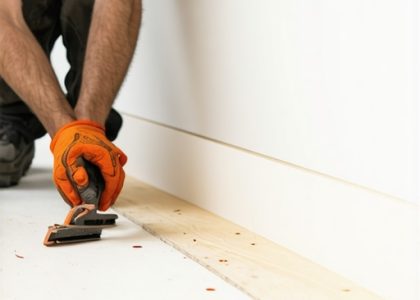
Choosing a quartz-composite baseboard requires matching the profile to the tile grout lines to ensure a watertight transition at the floor level. A flat-bottomed profile is essential for creating a tight silicone seal against the floor tile, preventing water from seeping into the subfloor. I always tell people that the profile is not just for looks. It determines how the water sheds off the wall. A sloped top edge is better than a flat ledge because it prevents water from pooling on top of the trim. This is especially important in small bathrooms where steam accumulates quickly. If you have a small space, you might want to look at showers with a style trendy ideas for small bathrooms to see how trim integration works. The thickness of the quartz board also matters. I prefer a 3/8 inch thickness. It provides enough surface area for the adhesive to grab the wall without sticking out too far into the room. A thinner profile can be prone to snapping if the wall is not perfectly flat. You have to remember that quartz is heavy. It needs a solid mechanical and chemical bond to the substrate. I always use a modified thin-set or a high-tack construction adhesive designed for non-porous surfaces. This ensures the board stays put for the next fifty years.
The myth of the waterproof wood baseboard
Wood baseboards can never be truly waterproof because the wood fibers naturally expand and contract with humidity, breaking the paint seal over time. This movement creates microscopic cracks that allow moisture to enter the core, leading to the inevitable rot and mold that plagues older bathrooms. I have heard every salesman claim their paint makes wood waterproof. They are lying. Wood is organic. It wants to breathe. When you trap it in a bathroom, it dies. Quartz-composite is inorganic. It does not react to humidity. It does not swell when the shower is running for thirty minutes. This stability is why it is the superior choice for showers that wow modern designs for 2025. You want a material that stays exactly the same size year-round. This prevents the grout from cracking at the corners. If the trim moves, the grout fails. If the grout fails, the water gets in. It is a simple chain of events that leads to a expensive repair bill. While most people want the thickest underlayment, too much cushion actually causes the locking mechanisms on floors to snap, and similarly, too much play in a baseboard joint will ruin your grout. You need a rigid, stable trim that stays where you put it. That is the quartz advantage.
“The substrate must be clean, dry, and flat within 1/8 inch in 10 feet before the first piece of trim touches the floor.” – TCNA Installation Guide
Five quartz composite baseboards for 2026
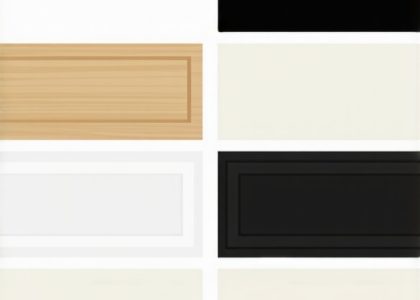
The top quartz-composite baseboards for 2026 include solid-core white, industrial charcoal, veined stone replicas, matte grey architectural, and flush-mount integrated profiles. Each of these options provides a specific aesthetic and functional benefit depending on the tile and shower design used in the project. The first is the Arctic White Solid Core. It is the workhorse of the industry. It matches almost every white subway tile and has a high resin-to-stone ratio for maximum flexibility during installation. Second is the Charcoal Industrial Slat. This is a darker, denser board designed for modern, high-contrast bathrooms. It is incredibly hard and resists scuffs from mops and cleaning equipment. Third is the Veined Calacatta Composite. This looks like high-end marble but has the strength of quartz. It is perfect for luxury showers where you want a high-end look without the maintenance of real stone. For those looking at baseboards makeover ideas to elevate your space, this is a top-tier choice. Fourth is the Micro-Beveled Grey Quartz. This has a slight angle at the top and bottom to hide minor imperfections in the wall or floor. It is my go-to for renovation projects where the walls are not perfectly plumb. Fifth is the Flush-Mount Architectural Trim. This requires a specialized track system and is designed to sit flush with the drywall. It creates a zero-clearance look that is popular in minimalist architecture. All five of these options use a 93 percent quartz and 7 percent resin mix. This is the sweet spot for durability and ease of cutting. You need a diamond blade and a steady hand to get the miters right, but the result is a joint that stays tight forever.
Installation checklist for no-rot trim
- Verify substrate moisture levels are below 3 percent before installation.
- Ensure the wall surface is flat within 1/8 inch over 10 feet.
- Use a diamond-tipped miter saw blade for clean, non-chipped edges.
- Apply a continuous bead of 100 percent silicone to the floor contact point.
- Back-butter the quartz trim with a high-tack polymer adhesive.
- Maintain a 1/16 inch gap at internal corners for movement.
- Seal all top edges with a high-grade bathroom caulk.
The ghost in the expansion gap
Expansion gaps are the most misunderstood part of flooring, but with quartz baseboards, they provide the necessary room for the subfloor to move without buckling the trim. Even though quartz itself is stable, the house around it is not, meaning you must leave space for the building to settle. I have seen floors buckle and baseboards pop off because the installer pinned them too tight. You need a 1/8 inch gap. This gap is the difference between a successful job and a failure. If you are dealing with old grout issues, you might look at grout restoration secrets for long-lasting results to see how to fix the damage before installing new trim. In the humid air of the Gulf Coast, the vapor pressure alone is enough to swell wood, but quartz remains unaffected. However, the subfloor beneath it will still react. You have to account for that movement. I always use a color-matched silicone in the gap. It provides a waterproof seal that remains flexible. This is how you prevent the ghost of moisture from entering your walls. You also have to be careful with grout. If you are wondering how to refresh grout without replacing it, remember that the trim seal is just as important as the floor grout itself. If the seal at the baseboard fails, the whole system fails.
The structural science of 2026 bathroom design
Modern bathroom design in 2026 focuses on a total systems approach where every component from the subfloor to the baseboard works as a single waterproof unit. This means moving away from the piecemeal approach of the past where different materials were expected to behave the same way under stress. We are seeing a move toward more sustainable materials too. You can learn about eco-friendly tile solutions for sustainable homes in 2025 to see how these trends are evolving. Quartz-composite is a part of this because it lasts so long. It reduces the need for repairs and replacements. This lowers the lifecycle cost of the bathroom. People often complain about the price of quartz trim, but they forget the cost of mold remediation. I would rather spend the money once on a quality material than three times on a cheap one. That is the mechanic’s logic. You do the job right the first time or you do not do it at all. The future of flooring is not about what looks the prettiest on a showroom floor. It is about what keeps the water where it belongs. Quartz-composite baseboards are a vital part of that future. They offer the density, the chemistry, and the physical properties required for a no-rot shower trim. I stand by them on every high-end job I do. If you want a bathroom that stands the test of time, you stop using wood in the wet zone. It is that simple. For more details on our standards, feel free to visit our contact us page or review our privacy policy. Structural integrity is the only thing that matters when the water starts flowing.